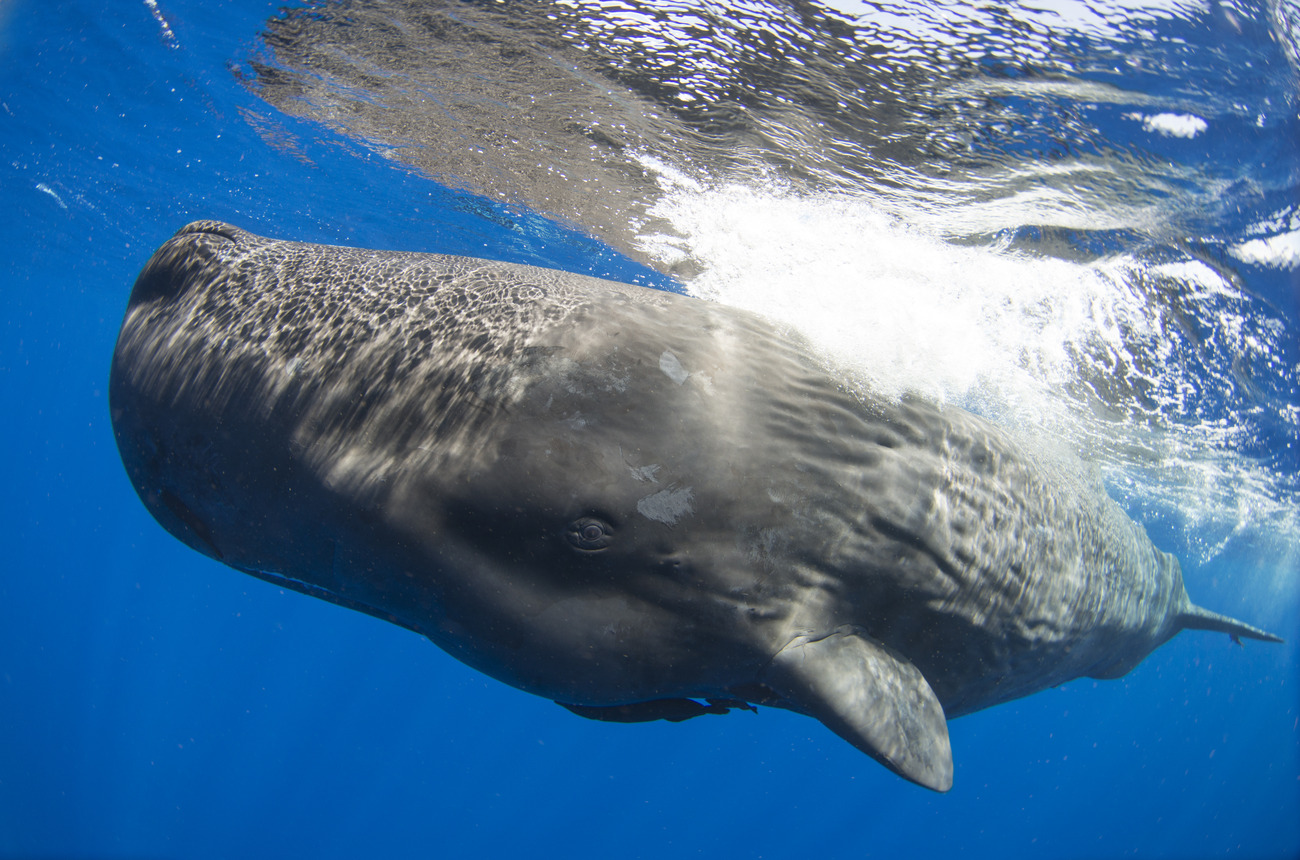

Sperm whales utilise a complex alphabet, with their own versions of vowels and diphthongs, in a communication system that may be more intricate than human language.
New research applied large language models to marine bioacoustics to identify the sophisticated structure which mirrors human speech patterns, reports The New York Times.
The findings come from Project CETI, a 50-plus-person team of marine biologists, AI experts, and linguists working to decode sperm whale communication. In a pilot study, artificial intelligence fed with annotated data predicted the type of click — known as a coda — the whale’s vocal clan and the individual whale with over 90 per cent accuracy.
“Whales may possess a communication system more intricate than our own, one that possibly predates human language by tens of millions of years,” said David Gruber, marine biologist and the head of Project CETI.
Inter-species translation
The organisation plans to release the Whale Acoustics Model later this year, a novel AI system capable of translating any audio into sperm whale vocalisations. This development aims to allow humans to potentially experience interaction with a whale in its own language for the first time.
Researchers are currently developing blueprints to evaluate these translations, aiming to dismantle barriers between human and whale interaction by using AI to bridge the divide with the natural world.
“To me, this is the real potential promise of A.I.: not to make us faster or more efficient, but to make us wiser,” said Gruber.



