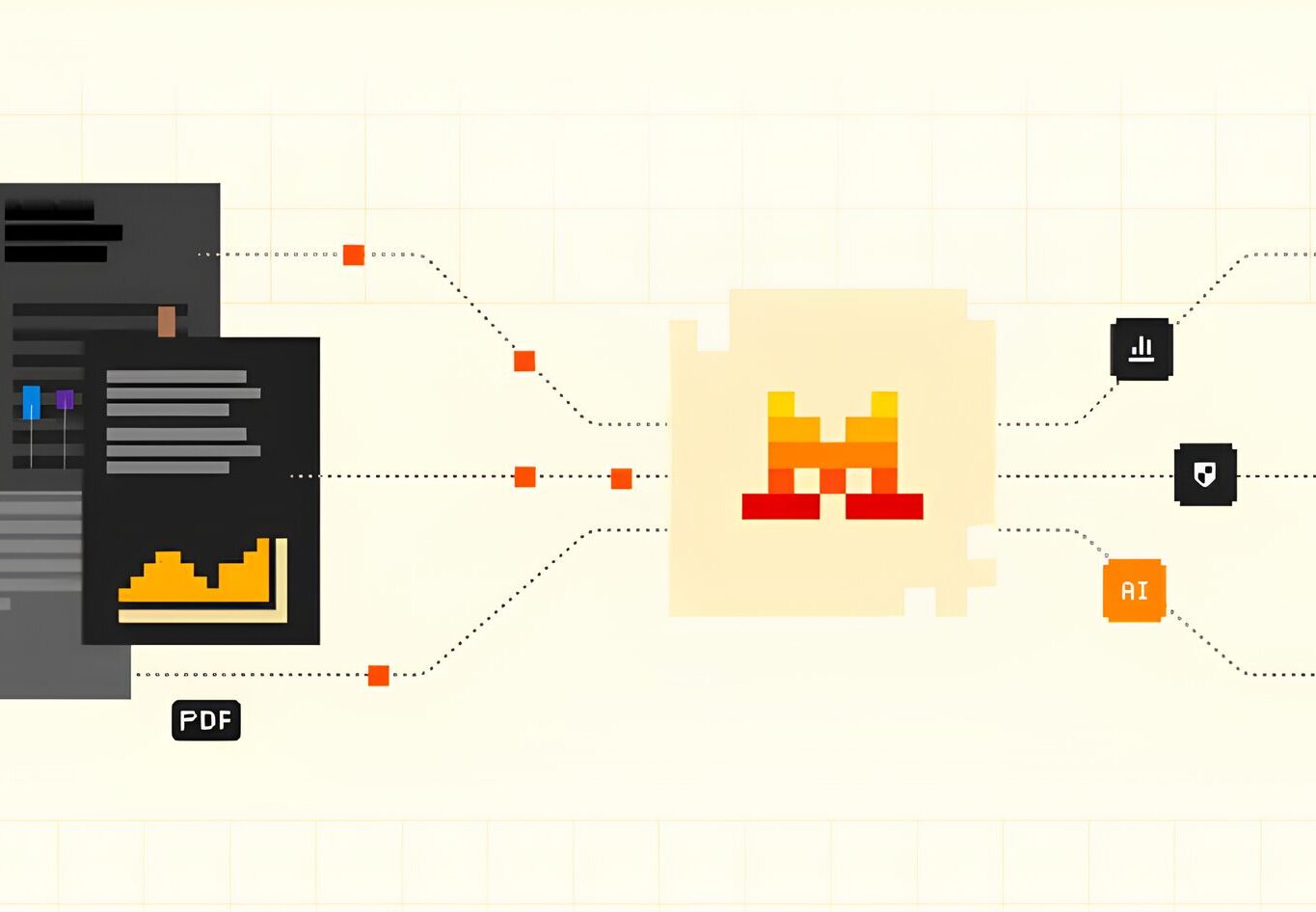

Europe’s leading artificial intelligence startup Mistral AI is turning to proprietary enterprise data to improve its models after exhausting most publicly available training resources, as the company seeks partnerships with legacy businesses holding untapped data reserves.
The Paris-based AI lab, whose models compete with OpenAI and Anthropic, believes the future of AI development now lies inside enterprises themselves, reports The Wall Street Journal.
“For the last three years, we’ve been able to compress human knowledge and make models increase across the board. But now we’re reaching a saturation point there and that means the next frontier is in getting access to a new kind of environment,” said Arthur Mensch, co-founder and chief executive of Mistral.
Mistral raised 1.7B€ in Series C funding at an 11.7B€ post-money valuation led by semiconductor equipment manufacturer ASML Holding NV, with participation from existing investors including DST Global, Andreessen Horowitz and NVIDIA.
ASML’s CEO highlighted the strategic partnership benefits. “The collaboration between Mistral AI and ASML aims to generate clear benefits for ASML customers through innovative products and solutions enabled by AI, and will offer potential for joint research to address future opportunities,” said Christophe Fouquet.
Mistral’s strategy involves forming partnerships with enterprises to train existing models on their proprietary data through post-training, embedding solution architects and applied AI engineers directly into client organisations to improve model performance with industry-specific context.
The approach allows Mistral to monetise services while offering open source AI free of charge. ASML serves as both investor and customer, exemplifying how the company taps enterprise data resources whilst building its business.
Mensch emphasised the comprehensive nature of their ambitions. “This investment brings together two technology leaders operating in the same value chain. We have the ambition to help ASML and its numerous partners solve current and future engineering challenges through AI, and ultimately to advance the full semiconductor and AI value chain,” he said.
However, Mensch warned that most companies struggle to achieve meaningful returns from AI implementations, reports The Wall Street Journal. “The curse of AI is that it looks like magic. So you can very quickly make something that looks amazing to your boss,” but it doesn’t scale or work more broadly, he said.
He believes companies must rethink organisational structures to fully leverage AI capabilities, potentially requiring fewer middle managers as information flows more easily through systems.