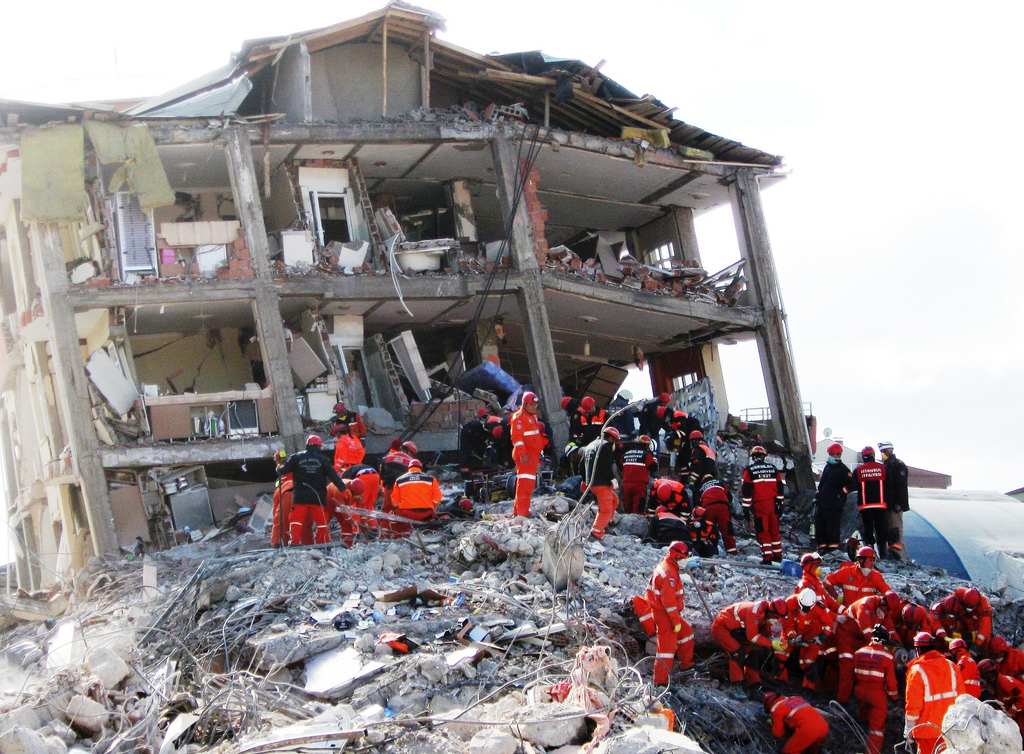

Artificial intelligence tools can forecast the risk of aftershocks seconds after an initial tremor, offering a significant improvement over current methods that can take several hours or days to process.
Machine learning models developed by researchers from the University of Edinburgh, the British Geological Survey, and the University of Padua can forecast where and how many aftershocks will occur in near real time.
Current forecasting systems, such as the widely used Epidemic-Type Aftershock Sequence (ETAS) model, involve running large numbers of simulations and can take several hours or days on a single mid-range computer.
The research team trained the new AI tools on earthquake data from California, New Zealand, Italy, Japan and Greece. They analysed the models’ ability to forecast the number of aftershocks within 24 hours of earthquakes of magnitude 4 or higher.
Faster results
When compared with the operational ETAS model used in Italy, New Zealand and the US, the AI tools showed similar performance in forecasting risk but produced results much faster.
“This study shows that machine learning models can produce aftershock forecasts within seconds, showing comparable quality to that of ETAS forecasts,” said PhD student Foteini Dervisi, of the University of Edinburgh’s School of GeoSciences and the British Geological Survey.
“Their speed and low computational cost offer major benefits for operational use: coupled with the near real-time development of machine learning-based high-resolution earthquake catalogues, these models will enhance our ability to monitor and understand seismic crises as they evolve.”
Researchers say that because the models were trained on records from regions with different tectonic landscapes, the technology could be used to forecast aftershock risk in most parts of the world that experience earthquakes.
Rapid forecasts could help authorities make decisions on public safety measures and resource allocation in disaster-hit areas.