
Artificial intelligence has successfully predicted the existence of previously unknown neuron types responsible for attention, which researchers subsequently discovered existed in the brains of living mice.
Researchers at the University of California – Santa Barbara used convolutional neural networks (CNNs) to investigate the neurophysiological foundations of “covert attention”; the ability to shift mental focus on a visual scene without moving one’s eyes.
The study, published in the Proceedings of the National Academy of Sciences, reveals that these AI models developed emergent attentional behaviours without being explicitly programmed with attention mechanisms. By analysing the inner workings of these artificial networks, the team identified specific “location opponent” neurons that boost activity at a target location whilst suppressing it elsewhere.
“This is a clear case of AI advancing neuroscience, cognitive sciences and psychology,” said Sudhanshu Srivastava, a postdoctoral researcher at UC San Diego.
Emergent biology
The team analysed a population of 1.8 million artificial neurons across 10 trained CNNs using a Posner cueing task, a visual test measuring target detection speed and accuracy. They discovered that covert attention — often thought to require specialised brain modules — can emerge naturally as a property of a system learning to detect targets.
Within the AI, researchers identified “neuron” types with response properties that had not previously been highlighted in attention studies. While most research focuses on neurons that are excited by attention, the AI identified units that are inhibited by cues, known as “cue inhibitory” neurons.
Most notably, they identified “location opponent” units. These specific neurons operate on a “push-pull” mechanism: they are excited by a target at one location but suppressed if the target appears in a competing location.
“The most surprising one is a ‘location opponent’,” said Miguel Eckstein, professor of psychological and brain sciences at UCSB. “It’s kind of a push-pull.”
A biological reality
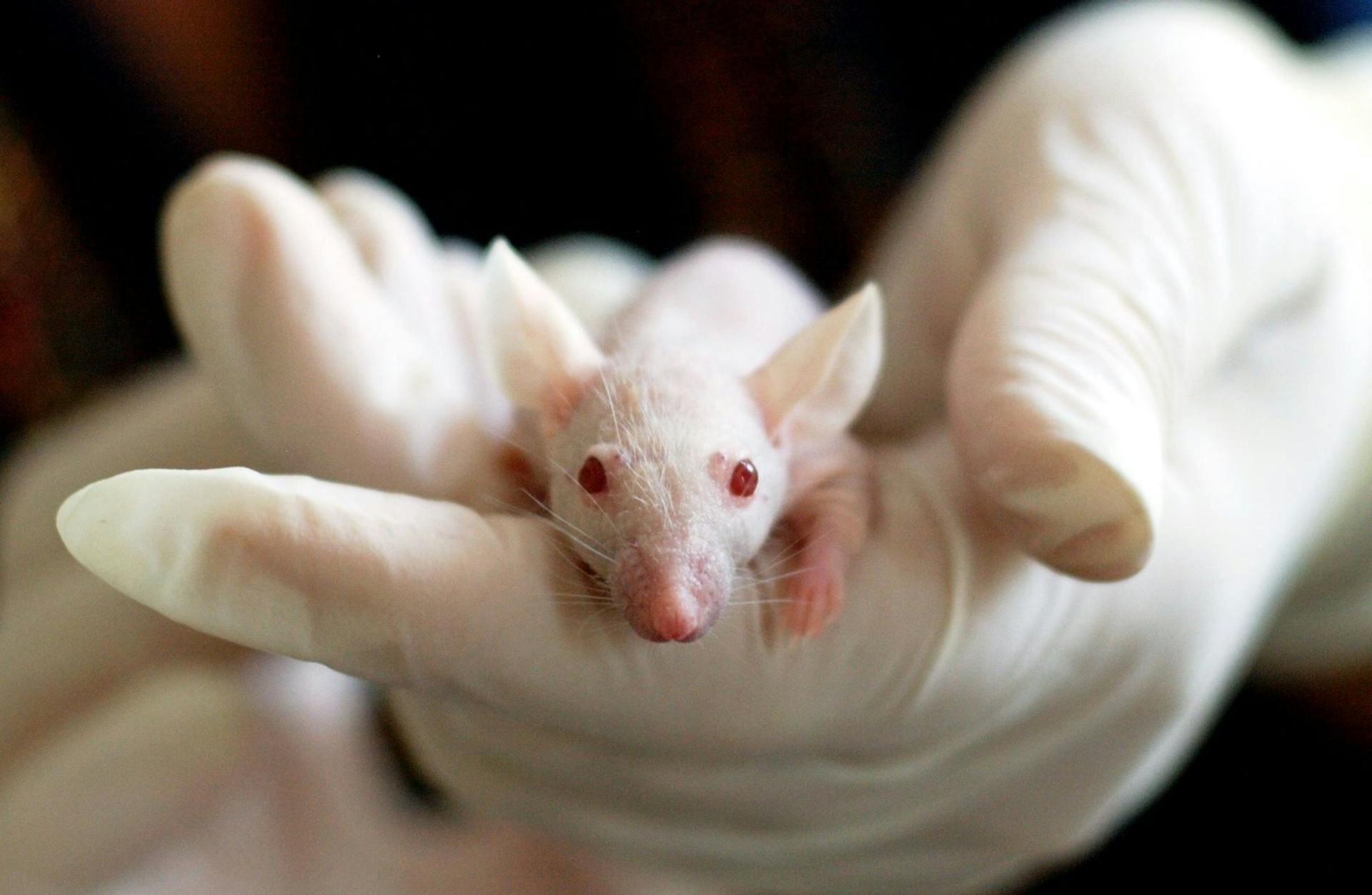
To determine if these artificial findings corresponded to biological reality, the researchers examined neural data from mouse brain studies. They confirmed that these location-opposing neurons exist in the mouse superior colliculus, a midbrain structure.
The study also found parallels with other neuron types, including those that sum signals from different locations. However, one specific type found in the AI — which combined cue opponency with excitatory summation for targets — was not observed in the mouse data, suggesting potential biological constraints that the digital models do not face.
The findings demonstrate that AI models can peer into the “black box” of neural processing, offering new insights into how the billions of neurons in biological brains optimise attention for accuracy.