
Road accidents are overwhelmingly caused by human error, yet the transport industry still relies on basic background checks and past experience to screen new hires. Now, scientists at the University of Sharjah have developed a ground-breaking machine learning model that can predict a motorist’s likelihood of crashing before they even get on the road.
Published in the journal Engineering Applications of Artificial Intelligence, the study outlines a new data-driven assessment framework designed specifically for taxi companies and commercial transport fleets.
Rather than waiting for accidents to happen, the researchers combined psychological profiling, physiological monitoring, and advanced simulator data to weed out high-risk drivers during the recruitment phase.
The anatomy of a risky driver
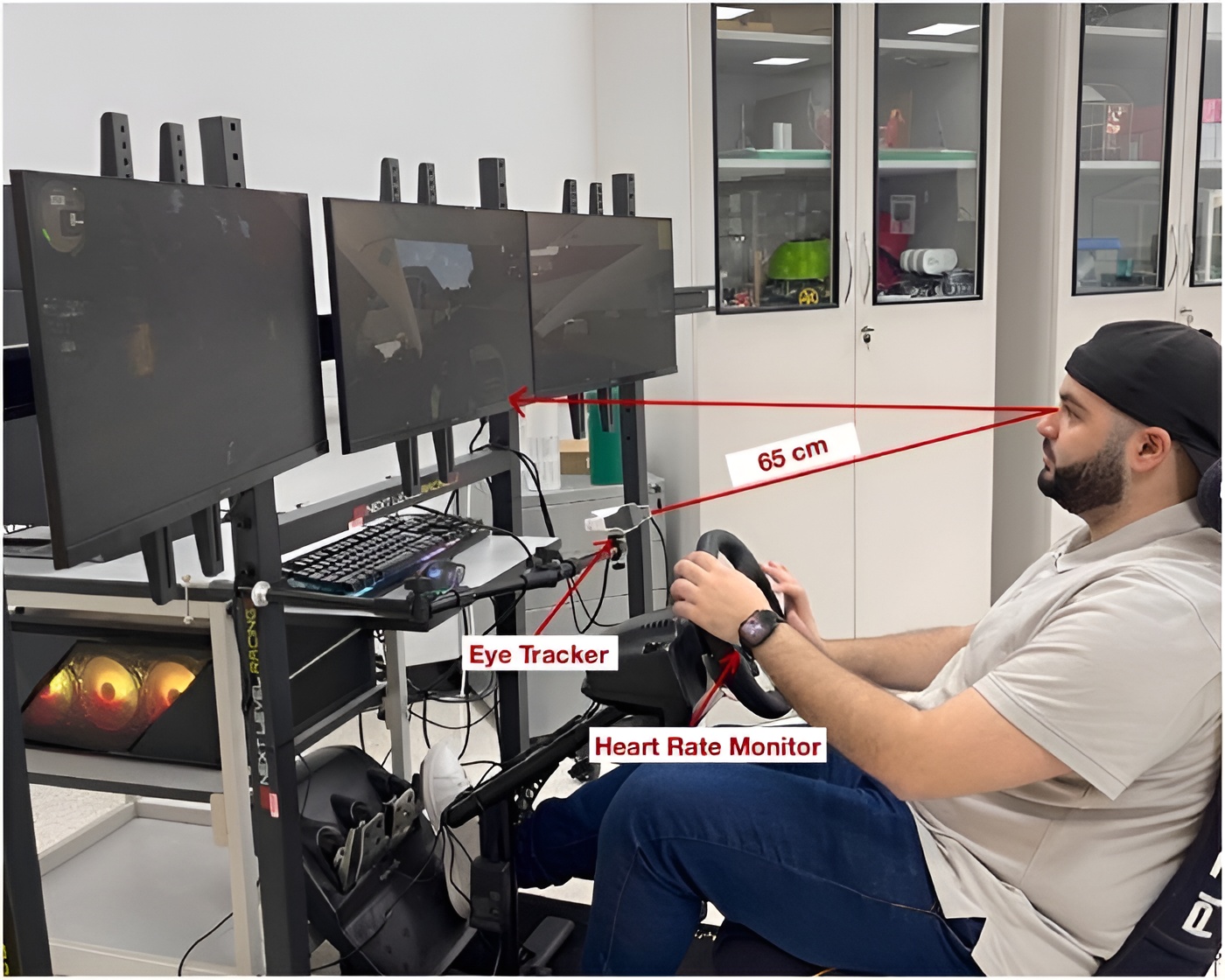
To build the predictive model, researchers had participants complete a structured psychological questionnaire to measure innate personality traits, such as conscientiousness and “sensation seeking”. The participants were then placed into a highly realistic driving simulator designed to replicate the chaotic, heavily congested urban traffic conditions of Dubai.
Dr Malek Masmoudi, the study’s lead author and an associate professor of industrial engineering, explained the process: “During the session, we recorded heart rate and detailed eye-movement indicators, including blink rate and gaze deviation. Using machine learning models, we analysed this integrated dataset to classify drivers as low-risk or high-risk based on objective outcomes such as accidents and traffic violations recorded during the simulation.”
The AI analysis revealed that a driver’s level of conscientiousness, sensation-seeking tendencies, and gaze distraction were the absolute best predictors of their real-world driving behaviour.
For example, the data showed that individuals who naturally score high on sensation-seeking — meaning they are drawn to excitement and risk — are significantly more likely to exhibit unsafe driving habits. Similarly, motorists whose gaze frequently strayed from the road during the simulation were highly prone to virtual collisions.
Preventing the crash
The researchers argue that this predictive technology should radically transform how commercial fleets hire and train their staff. Beyond simply rejecting dangerous applicants, the AI model can be used as a targeted training tool to help existing drivers recognise their own dangerous habits, such as poor attention control or stress mismanagement, and actively correct them.
Study co-author Professor Imad Alsyouf noted: “Risky driving is not random behaviour; it reflects measurable patterns in attention and personality. By combining psychology, physiology, and machine learning, we move from intuition-based recruitment to evidence-based safety decisions.”
For fleet operators, shifting to this preventive model could lead to significantly fewer accidents, lower insurance premiums, and vastly improved passenger safety. However, the researchers stressed that artificial intelligence should be used to strengthen human judgment rather than replace it entirely.
Dr Masmoudi said: “The safest accident is the one that never happens. That’s why safety must start before a driver ever touches the steering wheel. In the age of Industry 4.0, we have the tools to predict risk instead of just reacting to crashes. The question is no longer ‘How can we measure it?’ It’s ‘Why aren’t we using it?’”