
We all know the feeling: staring at a tax return or a difficult email, fully aware of what needs to be done, yet physically unable to push the mental “go” button. Now, scientists in Japan believe they have found the biological reason why.
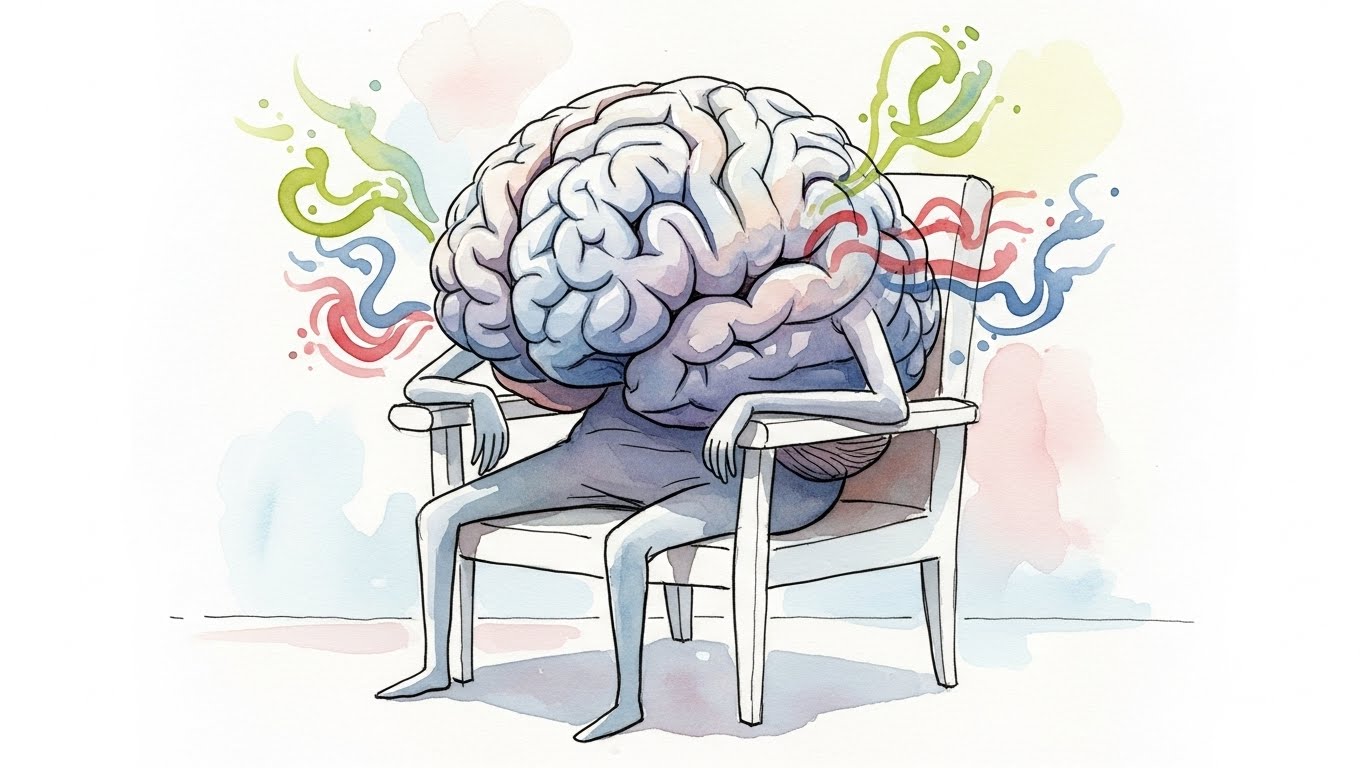
A research team at the Institute for the Advanced Study of Human Biology (ASHBi) at Kyoto University has identified a specific neural pathway that acts as a “motivation brake,” actively stopping us from acting when a task seems stressful or unpleasant.
The study, published in a peer-reviewed journal, suggests that procrastination on difficult tasks is not necessarily a failure of willpower, but a specific function of a brain circuit weighing cost against benefit.
The ‘VS–VP’ pathway
To understand how the brain decides not to act, the researchers focused on the connection between two deep brain regions involved in motivation: the ventral striatum (VS) and the ventral pallidum (VP).
Using macaque monkeys, the team set up two types of tasks. In the first, the monkeys received a reward for completing a task. In the second, the reward came with a catch: an unpleasant puff of air to the face.
As expected, the monkeys hesitated to start the task that came with the air puff. However, when the researchers used advanced genetic techniques to temporarily suppress the connection between the VS and the VP, the hesitation vanished. The monkeys became willing to start the unpleasant task immediately.
Crucially, the monkeys still understood the “cost” (the air puff) and the reward. The suppression didn’t change their judgment of the situation; it simply removed the brake that had prevented them from taking the first step.
Hope for treating depression
The findings offer a potential breakthrough for understanding “avolition”—a severe inability to initiate purposeful activity often seen in depression, schizophrenia, and Parkinson’s disease.
“People with avolition are not lazy or unaware: they know what they need to do, but their brain seems unable to push the ‘go’ button,” the researchers explained.
By identifying the VS–VP pathway as the culprit, the study opens the door for future treatments — such as Deep Brain Stimulation or targeted drugs — that could help patients “loosen” this brake when it becomes locked tight by disease.
The danger of burnout
However, the researchers warn that this neural brake exists for a reason. It serves as a safety mechanism that prevents us from engaging in tasks that are too costly or stressful.
“Overweakening the motivation brake could lead to dangerous behaviour or excessive risk-taking,” said Ken-ichi Amemori, the lead author of the study.
If the brake is removed entirely, a person may be unable to stop working, even in highly stressful situations, leading to severe burnout. The VS–VP circuit, therefore, is essential for keeping motivation within a healthy, sustainable range.