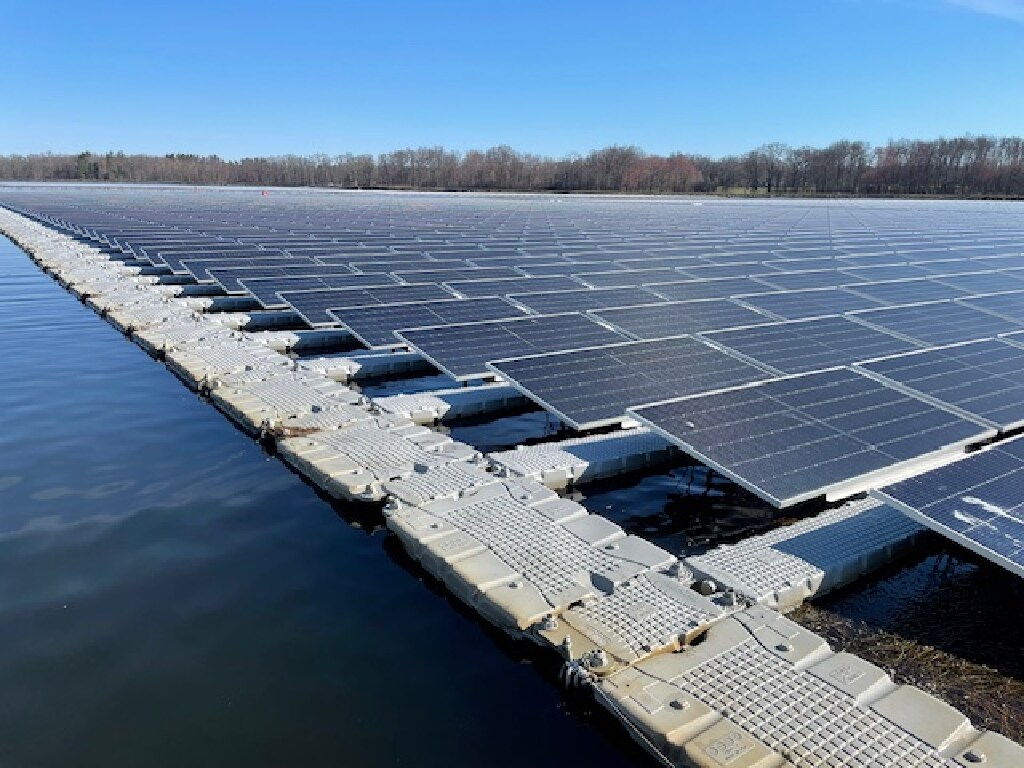

Floating solar panels consistently cool surface waters but introduce unpredictable habitat variability across different reservoir environments, preventing a standardised approach to deployment.
Researchers from Oregon State University and the US Geological Survey modelled the impact of floating solar photovoltaic systems on 11 reservoirs across six states.
The study found that while floating arrays reduce evaporation and boost panel efficiency by five to 15 per cent through cooling, they also alter water temperatures and oxygen dynamics. These changes influence habitat suitability for aquatic species in complex ways, such as cooler summer waters benefiting cold-water fish when panel coverage exceeds 50 per cent.
Ecology is messy
“Different reservoirs are going to respond differently based on factors like depth, circulation dynamics and the fish species that are important for management,” said Evan Bredeweg, lead author of the study and a former postdoctoral scholar at Oregon State. “There’s no one-size-fits-all formula for designing these systems. It’s ecology – it’s messy.”
The findings come as the US market considers expanding beyond small pilot projects. A National Renewable Energy Laboratory study estimated US reservoirs could host enough systems to generate 1,476 terawatt-hours annually, enough to power approximately 100 million homes.
However, researchers warned that the ecological impacts require careful, site-specific assessment to avoid repeating past mistakes made with other water infrastructure.
“History has shown that large-scale modifications to freshwater ecosystems, such as hydroelectric dams, can have unforeseen and lasting consequences,” Bredeweg said.