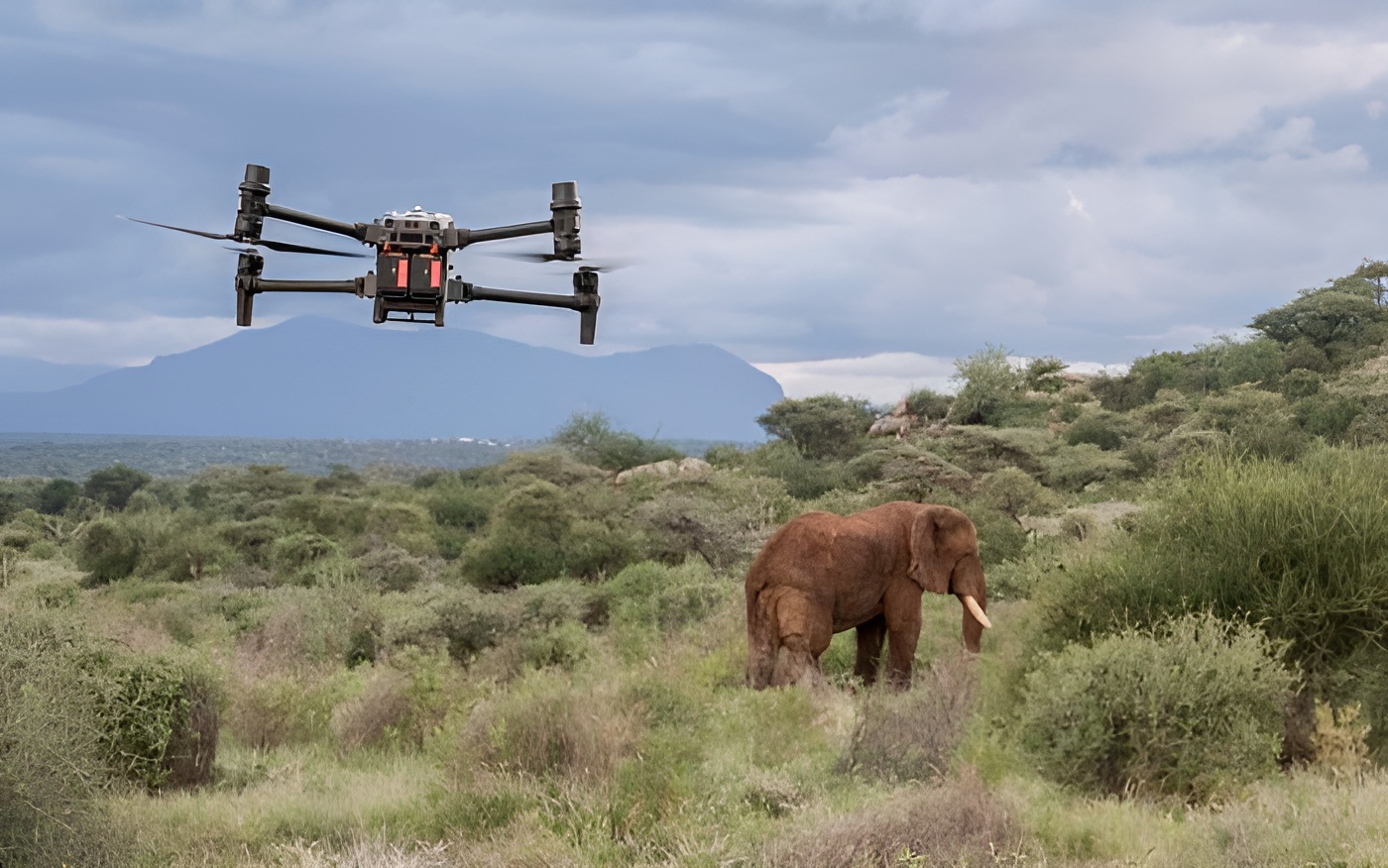
Elephants have stopped running from the buzzing of aerial drones, allowing scientists to transform technology previously used to scare herds away from crops into a powerful non-invasive surveillance tool.
A new study published in Scientific Reports reveals that the world’s largest land mammals can habituate to overhead aircraft within minutes, provided the pilots follow strict flight protocols.
Save the Elephants and the University of Oxford found that while drones often sound like swarming bees — a natural threat that usually sends herds panic-running — elephants quickly realise the machines are harmless when flown steadily at 120 metres.
The breakthrough allows conservationists to monitor complex social dynamics and nighttime behaviours that were previously impossible to observe from ground vehicles.
“Biodiversity is in crisis but we’re not standing still,” said Frank Pope, CEO of Save the Elephants. “New technologies are expanding our ability to perceive, analyse and understand the wild world in a way that was previously unthinkable. This study promises to open a new window onto how elephants work.”
Elephant families
Researchers conducted 35 trials involving 14 individually known elephant families in the Samburu and Buffalo Springs National Reserves in northern Kenya.
Although just under half of the animals showed mild signs of initial disturbance, such as lifting trunks or pausing activities, these reactions diminished rapidly. The data showed that disturbance behaviours faded within six minutes and were 70 per cent less likely to recur on successive flights.
“The way in which the drone is flown is crucial,” said Angus Carey-Douglas, the study’s lead author. “We found that not all elephants were disturbed, and those that were became less agitated both during a single flight and over repeated exposures.”
The study suggests that this habituation could last for months or years, demonstrating the species’ capacity for learning and adaptability.
This acceptance of aerial monitoring unlocks new capabilities for AI-enabled software, enabling it to search for patterns in data to automatically determine the age and sex of individuals. Additionally, thermal cameras are allowing researchers to study sleeping habits in the dark.
“This research demonstrates the power of a new and rapidly evolving technology that allows us to probe ever deeper into the secret lives of elephants,” said Professor Fritz Vollrath, Chairman of Save the Elephants and co-author from Oxford University’s Department of Biology. “For example, the onboard thermal camera penetrates the darkness, opening up detailed studies of night-time behaviour and sleeping patterns.”
The researchers emphasised that recreational drone flights remain prohibited in Kenya’s national parks to protect wildlife from unnecessary stress.