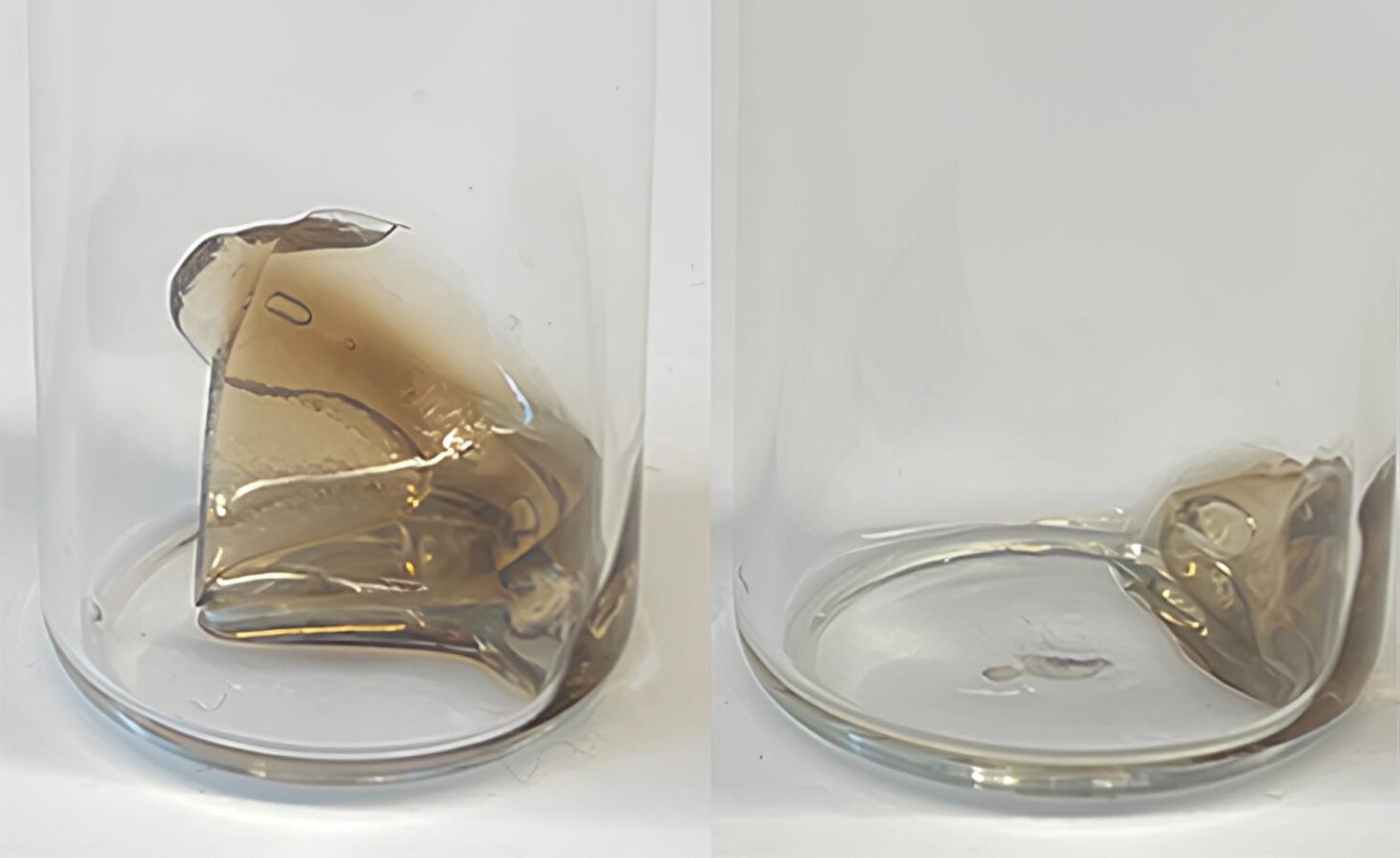

Chemists have developed synthetic plastics that self-destruct at pre-determined speeds by mimicking the molecular structure of DNA, potentially solving the global accumulation crisis.
A team from Rutgers University successfully engineered polymers that break down under everyday conditions without requiring heat or harsh chemicals, reports Nature Chemistry.
The innovation mimics the “helper groups” found in natural polymers like DNA and RNA, which allow biological materials to degrade once their purpose is served.
“Biology uses polymers everywhere, such as proteins, DNA, RNA and cellulose, yet nature never faces the kind of long-term accumulation problems we see with synthetic plastics,” said Yuwei Gu, assistant professor in the Department of Chemistry and Chemical Biology at Rutgers.
The researchers arranged the plastic’s chemical components to create a “pre-folded” structure, similar to creasing a piece of paper so it tears easily along a specific line.
This structural manipulation allows the material to break apart thousands of times faster than conventional plastics when triggered, whilst maintaining strength during use.
Programmable degradation
Crucially, the degradation timeline is fully programmable. By controlling the orientation of the chemical groups, engineers can manufacture materials that degrade over days, months, or years, depending on the application.
“Most importantly, we found that the exact spatial arrangement of these neighbouring groups dramatically changes how fast the polymer degrades,” said Gu.
This fine-tuning capability means single-use food packaging could be designed to disintegrate shortly after use, whilst durable goods like automotive parts could remain stable for years.
The breakdown process can be built in or activated externally using ultraviolet light or metal ions.
Early laboratory tests indicate that the liquid residue produced during degradation is non-toxic. However, the team is conducting further research to ensure environmental safety across the material’s entire life cycle.