
Artificial intelligence systems can simulate human brain activity without ever seeing a single piece of training data, provided they are built using a specific “biological blueprint”.
Research from Johns Hopkins University challenges the tech industry’s obsession with massive datasets, revealing that network architecture plays a far more critical role in learning than previously realised.
The findings, published in Nature Machine Intelligence, suggest that simply tweaking the structure of an AI system can allow it to rival models trained on millions of images, potentially rendering the current approach of burning “thousands of megawatts” of energy obsolete.
“The way that the AI field is moving right now is to throw a bunch of data at the models and build compute resources the size of small cities,” said lead author Mick Bonner, assistant professor of cognitive science at Johns Hopkins University.
“That requires spending hundreds of billions of dollars. Meanwhile, humans learn to see using very little data.”
Blueprints for building
Bonner’s team investigated three standard AI network designs used as blueprints for building systems: transformers, fully connected networks, and convolutional networks.
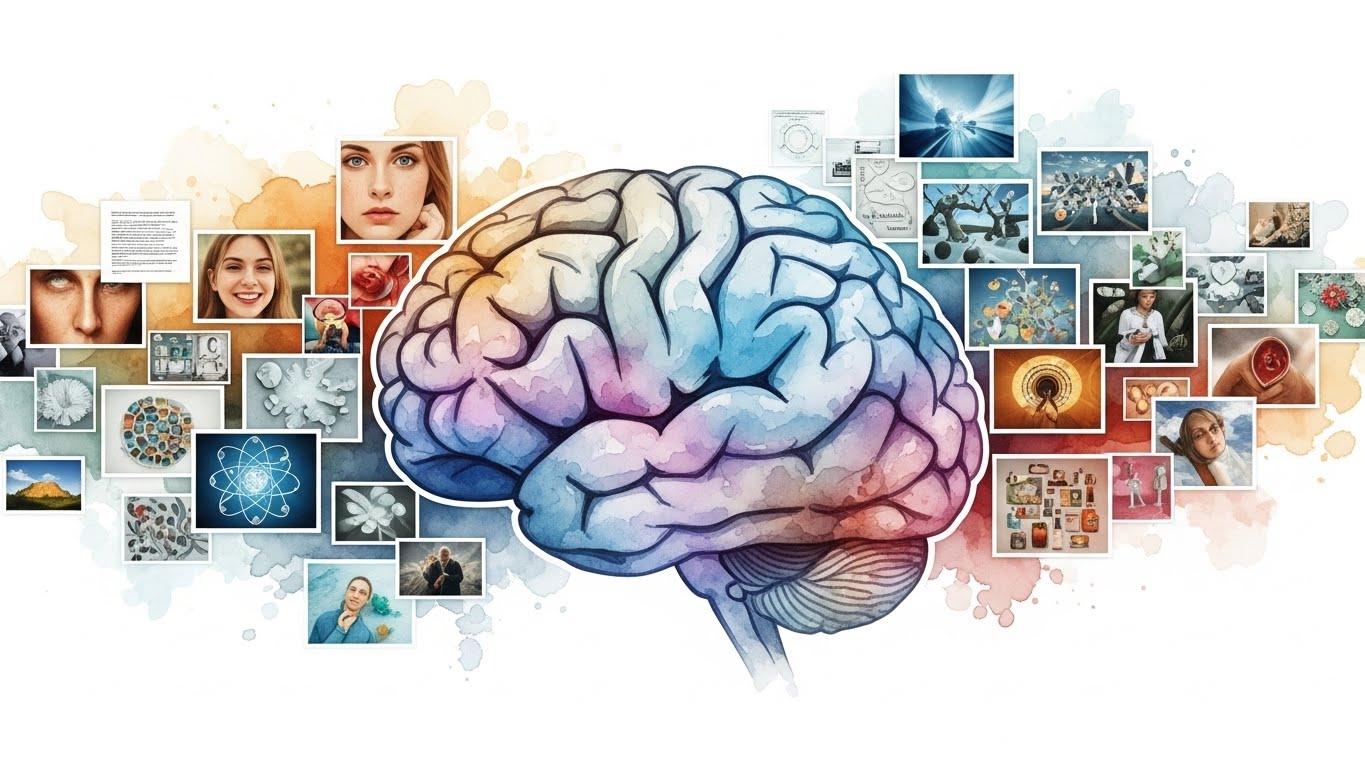
The scientists repeatedly modified these architectures to create dozens of unique artificial neural networks. They then exposed these completely untrained models to images of objects, people, and animals, comparing their internal activity to brain patterns observed in humans and primates viewing the same images.
While modifying transformers and fully connected networks produced little change, tweaking the architecture of convolutional neural networks produced activity patterns that closely mimicked those of the human brain.
Crucially, these untrained networks rivalled conventional AI systems trained on millions or billions of images.
“If training on massive data is really the crucial factor, then there should be no way of getting to brain-like AI systems through architectural modifications alone,” said Bonner.
“This means that by starting with the right blueprint, and perhaps incorporating other insights from biology, we may be able to dramatically accelerate learning in AI systems.”
The researchers are now developing simple learning algorithms modelled after biological processes to inform a new deep learning framework.