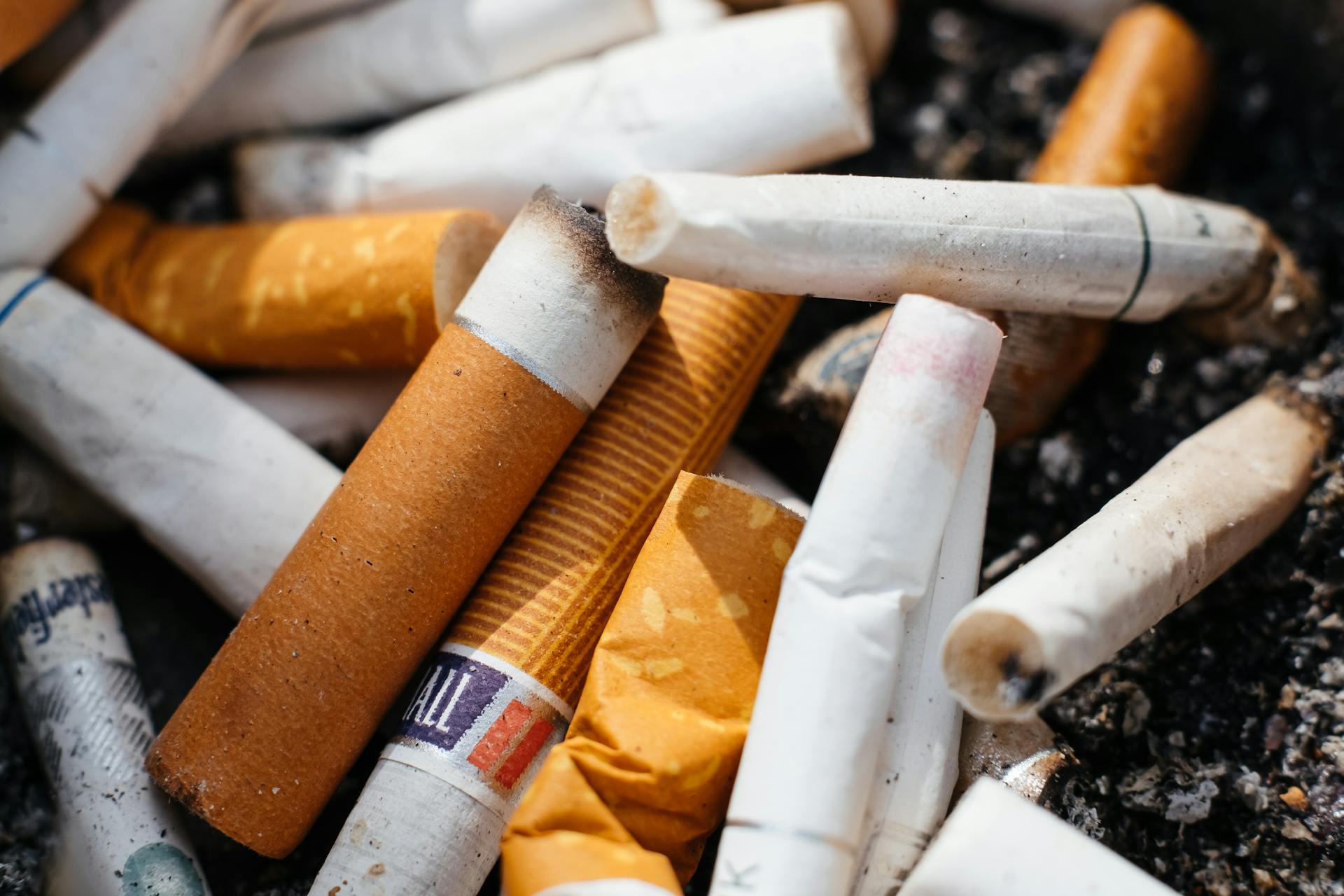

The billions of cigarette butts discarded every year could soon power your phone instead of polluting the ocean.
Cigarette butts, one of the most pervasive forms of litter on the planet, have been successfully transformed into high-performance materials for next-generation energy storage devices.
In a new study published in Energy & Environmental Nanotechnology, researchers detail a process that converts waste cigarette filters into “nanoporous biochar” – a super-efficient carbon material capable of storing massive amounts of energy.
“Our work shows that cigarette butts are not just a pollution problem, but also a valuable carbon resource,” said corresponding author Leichang Cao. “By converting them into functional porous carbon materials, we can address waste management while supporting clean energy technologies.”
From trash to treasure
Globally, more than eight million tonnes of cigarette butts are generated annually. Made primarily of cellulose acetate, they degrade slowly and leach toxic chemicals into soil and water.
To solve this, the research team developed a two-step process involving hydrothermal carbonisation (heating in water under pressure) followed by chemical activation and heat treatment at 700 degrees Celsius.
This intense process does two things:
- Doping: It introduces nitrogen and oxygen atoms into the carbon structure, which boosts conductivity.
- Pore creation: It forms a “hierarchical network” of microscopic pores. This honeycomb-like structure provides a massive surface area – more than 2,100 square metres per gram – allowing ions to move quickly and store charge efficiently.
The resulting material was tested as an electrode in supercapacitors – devices known for rapid charging and long life, often used in renewable energy systems.
The performance was exceptional. The cigarette-derived material achieved a specific capacitance of nearly 345 farads per gram.
Even more impressively, it retained more than 95 per cent of its capacity after 10,000 charge and discharge cycles, proving it is durable enough for real-world use.
“These results are remarkable for a carbon material derived entirely from waste,” said co-author Jinglai Zhang. “The combination of rich porosity and nitrogen and oxygen functional groups gives the electrode excellent conductivity, stability, and energy storage capability.”
The researchers highlight that this approach turns an environmental liability into a technological asset. Because cigarette butts are abundant and free, using them could lower the cost and carbon footprint of producing electrodes compared to traditional methods.
“This study highlights a circular solution… It opens new possibilities for turning everyday waste into materials that support sustainable energy systems,” said Cao.