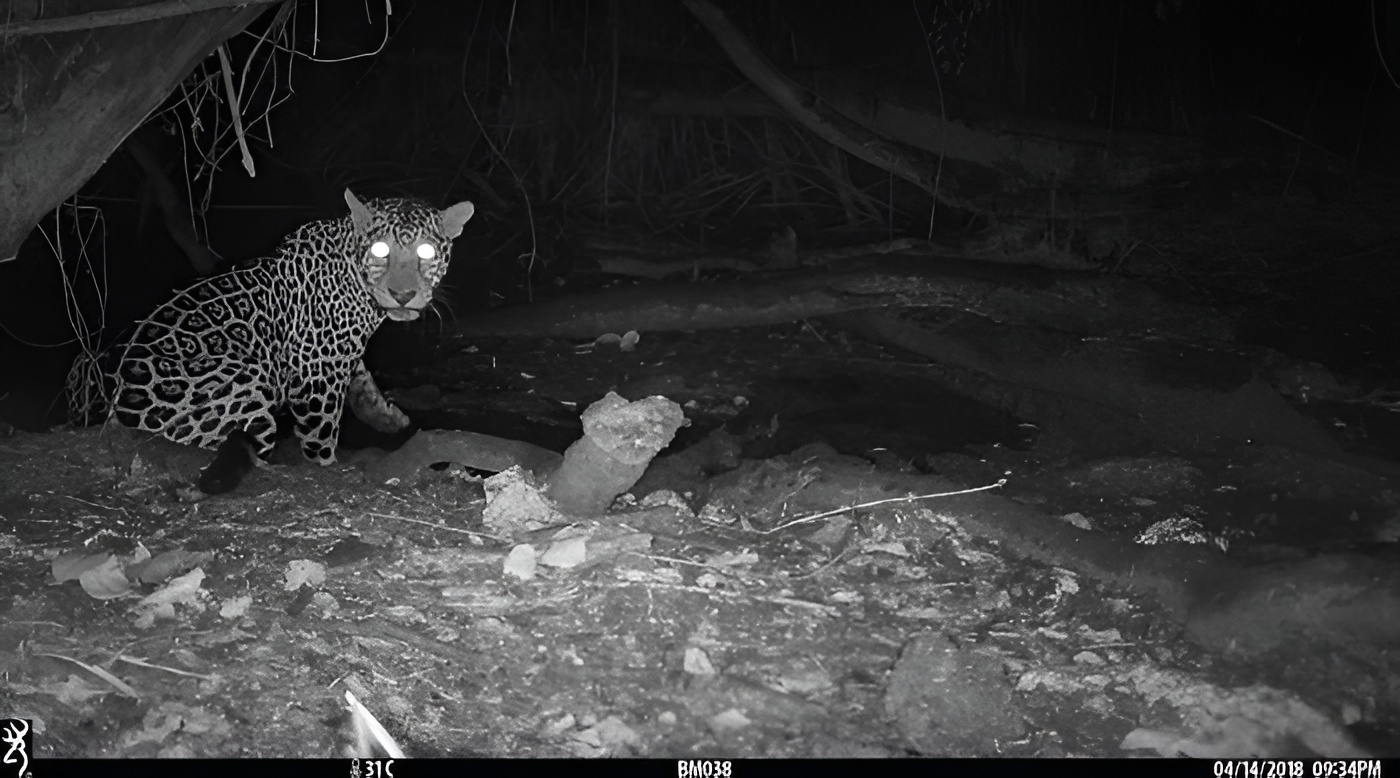

Artificial intelligence can now replace human experts in processing millions of motion-activated camera images, reducing a months-long data bottleneck to just a few days without compromising scientific accuracy. A new study led by Washington State University and Google has demonstrated that fully automated AI workflows produce ecological conclusions that closely match traditional human-led analysis.
The research, published in the Journal of Applied Ecology, tested the global AI classifier SpeciesNet across diverse ecosystems in Washington, Montana, and Guatemala. The team found that for most mammal species, AI-driven models were remarkably similar to expert-based models in identifying where animals occur and how they respond to their environment.
“We’re not trying to replace people,” said WSU wildlife ecologist Daniel Thornton, lead author of the study. “The goal is to help researchers get to answers faster so they can make better decisions about managing and conserving wildlife”.
Breaking the bottleneck
The use of camera traps has expanded rapidly, but the time required to manually identify species in millions of images remains a fundamental challenge that limits the scope of conservation projects. Even with assisted filtering, human review typically takes six to seven months — and occasionally up to a year — before analysis can begin.
By removing humans entirely from the analysis chain, researchers successfully processed large-scale datasets in a fraction of the time. The automated pipeline proved resilient to minor misclassifications, with results aligning with human experts in roughly 85% to 90% of cases.
“The key question wasn’t whether the AI got every image right,” said Dan Morris, a senior staff research scientist at Google and study co-author. “It was whether the ecological conclusions you care about would end up being basically the same”.
Real-time conservation
The transition to a fully autonomous workflow allows monitoring programs to progress almost immediately from photo collection to decision-making. This speed is critical for managing management-sensitive species such as jaguars, wolves, and grizzly bears.
While some limitations remain for identifying extremely rare or morphologically similar species, the researchers noted that the AI-based models were robust across multiple study sites and diverse wildlife communities. The study’s framework is now being made available to support international monitoring efforts, ensuring that processing capacity no longer constrains the scale of biodiversity conservation.
“The big takeaway is that this doesn’t have to be a bottleneck anymore,” Thornton said. “If we can process data faster, we can respond faster, and that’s really what matters for conservation”.



