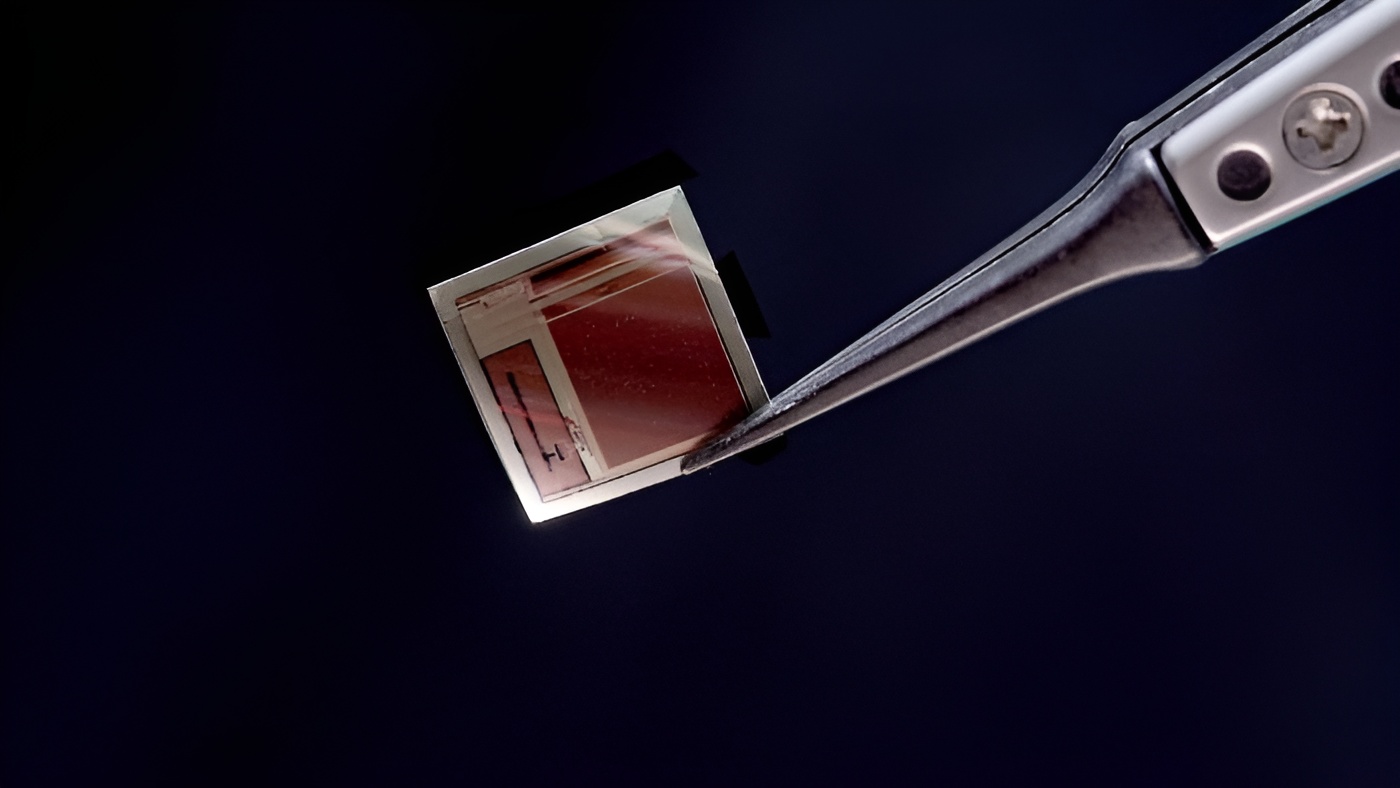
A new brain-computer interface that rests on the brain “like a piece of wet tissue paper” promises to revolutionise the treatment of neurological conditions by establishing a wireless, high-bandwidth connection between the brain and external computers.
Researchers at Columbia University have developed the Biological Interface System to Cortex (BISC), a single silicon chip that shrinks the bulky electronics of traditional implants into a flexible circuit just 50 micrometres thick.
Unlike current state-of-the-art interfaces that require large canisters of electronics wired through the skull, the new device can be inserted through a minimally invasive incision and slides directly into the space between the brain and the skull.
“Our implant is a single integrated circuit chip that is so thin that it can slide into the space between the brain and the skull, resting on the brain like a piece of wet tissue paper,” said Ken Shepard, professor of electrical engineering at Columbia University. “We are now doing the same for medical implantables, allowing complex electronics to exist in the body while taking up almost no space.”
Higher throughput
The implant occupies less than one-thousandth the volume of conventional devices yet integrates 65,536 electrodes and 1,024 simultaneous recording channels. It transmits data via a custom ultrawideband radio link at 100 megabits per second, at least 100 times higher throughput than any competing wireless device.
A wearable relay station powers the implant wirelessly and connects it to external networks via WiFi, effectively forming a network connection from any computer to the brain. This high-bandwidth data flow allows brain signals to be processed by advanced AI models for decoding complex intentions or perceptions.
“This high-resolution, high-data-throughput device has the potential to revolutionise the management of neurological conditions from epilepsy to paralysis,” said Dr Brett Youngerman, neurosurgeon at NewYork-Presbyterian/Columbia University Irving Medical Center. “The paper-thin form factor and lack of brain-penetrating electrodes or wires tethering the implant to the skull minimise tissue reactivity and signal degradation over time.”
The system was developed under a DARPA programme and combines microelectronics with cutting-edge neuroscience. To bring the technology to market, the researchers have launched a spin-off company, Kampto Neurotech, which is currently raising funds to advance the system toward human use.
“By combining ultra-high resolution neural recording with fully wireless operation, and pairing that with advanced decoding and stimulation algorithms, we are moving toward a future where the brain and AI systems can interact seamlessly — not just for research, but for human benefit,” said Shepard.