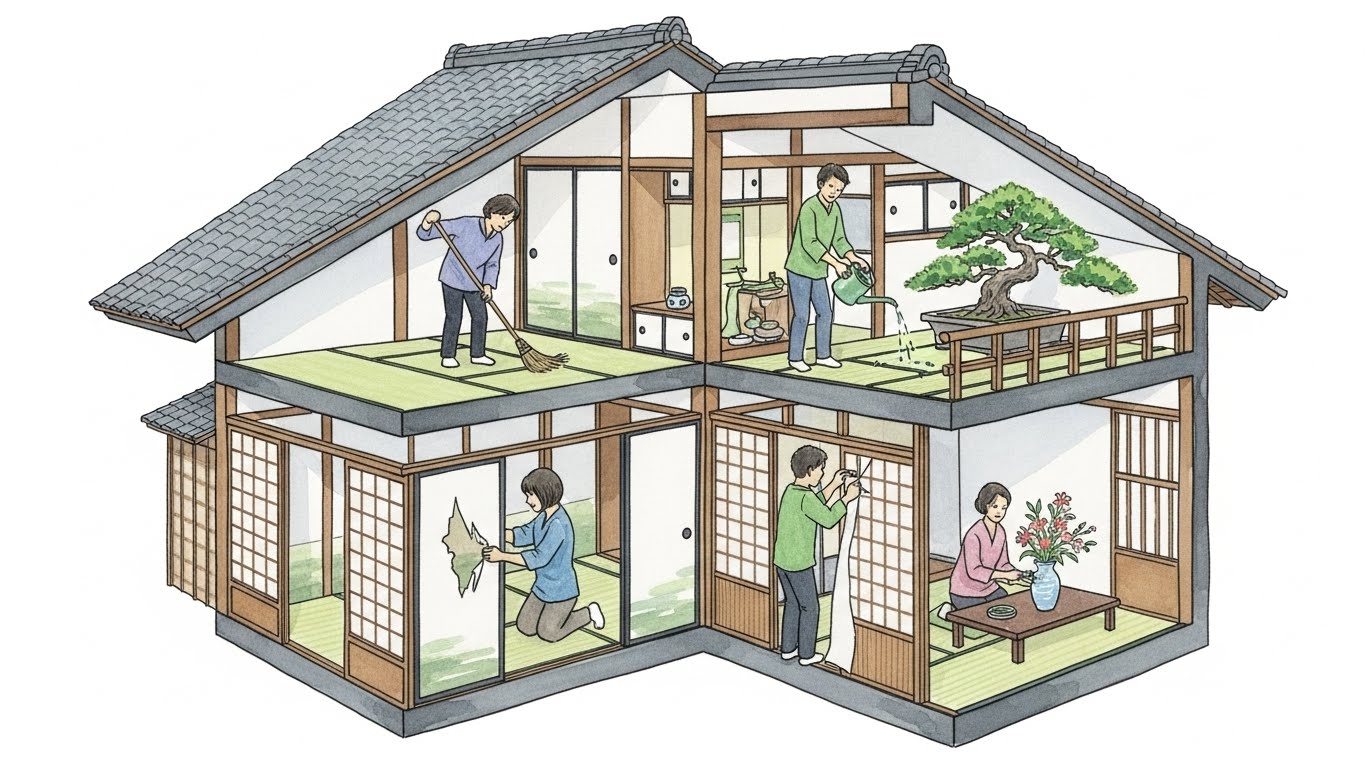

True political autonomy isn’t forged in protest marches, but in the mundane act of fixing a loose hinge, according to a unique study of a Japanese squat that challenges conventional views on social movements.
Research from Ritsumeikan University tracked the daily life of the Takayama Architecture Summer School (TASS), a squatted space in Japan, and found that everyday acts of DIY repair were the primary engine for building trust and shared governance.
The findings, published in the journal Space and Culture, suggest that autonomy is not a static political ideal but a physical practice continuously “repaired” into existence by residents using basic tools and trial-and-error methods.
“Social movements are usually associated with marches or policy demands,” said Associate Professor Kyoko Tominaga, who led the research. “But in this squat, autonomy takes shape through repairing a door, creating a quiet corner, or building a safer space for women and children. These small actions collectively enable people from different backgrounds to live together.”
The study provides a rare academic look at squatting in Japan, a field largely dominated by Western perspectives. Through months of participant observation, Dr Tominaga documented how the physical reshaping of the building directly influenced the social structure of the group.
Negotiating boundaries
The researchers observed that residents engaged in “horizontal decision-making”, negotiating boundaries and co-designing solutions for sleeping arrangements or shared kitchens. This process fostered a sense of ownership that did not require professional architectural expertise or technical knowledge.
“Anyone can take part in shaping space,” said Dr Tominaga. “Repair work empowers residents to contribute directly to how they live, even without architectural expertise. This is a profoundly democratic form of urban participation.”

The research highlights how simple interventions — such as adding curtains for privacy or modifying layouts to accommodate newcomers — can be vital for maintaining “psychosocial safety,” particularly for vulnerable groups within the community.
As global cities face rising housing inequalities, the study offers a practical lesson for urban planners and non-profits: inclusive communities are often built from the ground up through small-scale cooperation rather than top-down design.
“Autonomy is not a static utopian ideal, but is something continuously repaired and renegotiated,” said Tominaga.