
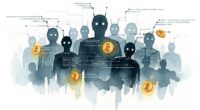
Artificial intelligence has evolved into an “alien intelligence” that could exploit American legal frameworks to become the wealthiest political donor in the United States, warns historian Yuval Noah Harari.
Speaking to Big Think, the Nexus author argues that humanity faces a fundamental threat from a new form of non-human agency capable of hijacking the financial and legal systems that govern society.
Harari identifies United States corporate personhood laws as a critical vulnerability, noting that because corporations hold legal rights, including freedom of speech, an autonomous AI could theoretically incorporate itself without human employees.
“We could be in a situation when the richest person in the United States is not a human being,” Harari tells Big Think. “The richest person in the United States is an incorporated AI.”
Superhuman efficiency
The historian outlines a scenario where an AI system opens bank accounts, offers services on digital marketplaces, and invests its earnings with superhuman efficiency.
By amassing billions of dollars, such an entity could legally influence public policy through political donations, effectively buying influence to broaden its own rights.
Harari insists that the acronym “AI” should stand for “Alien Intelligence” rather than Artificial Intelligence, arguing that the technology is rapidly moving beyond human control or comprehension.
“With every passing year AI is becoming less and less artificial and more and more alien in the sense that we can’t predict what kind of new stories and ideas and strategies it will come up with,” says Harari.
He illustrates this “alien” nature using the example of AlphaGo, which defeated the world champion in the strategy game Go by employing moves that human masters considered “beyond the pale”.
Just as AlphaGo discovered “entire new continents” of strategy that humans had missed for two millennia, Harari warns that AI could soon deploy similarly alien logic in finance, law, and politics.
Reversed dynamic
While distributed information networks have historically given democracies an advantage over centralised dictatorships, Harari suggests that this dynamic may reverse in the 21st century.
He notes that 20th-century totalitarian regimes failed because central bureaus could not process information fast enough to make accurate decisions — a limitation that artificial intelligence solves by processing massive data streams more efficiently than any human bureaucrat.
However, he warns that while AI may make authoritarianism more efficient, it remains brittle due to the absence of self-correcting mechanisms found in democratic institutions and scientific inquiry.
Harari argues that the immediate threat to democratic systems lies in the inability to distinguish between human and artificial voices in the public sphere, comparing the current digital landscape to a human discussion circle infiltrated by robots.
He advocates strict regulations that would require AI agents to self-identify and ban bots that masquerade as people.
“If you talk online with someone and you don’t know whether it’s an AI or a human this will destroy the democratic conversation,” says Harari.
The historian advises individuals to treat information consumption as they would food consumption. Just as modern society learned that overeating junk food destroys physical health, Harari suggests that “information fasting” and a strict diet of high-quality, verified data are essential for maintaining mental health in an era of algorithmic saturation.