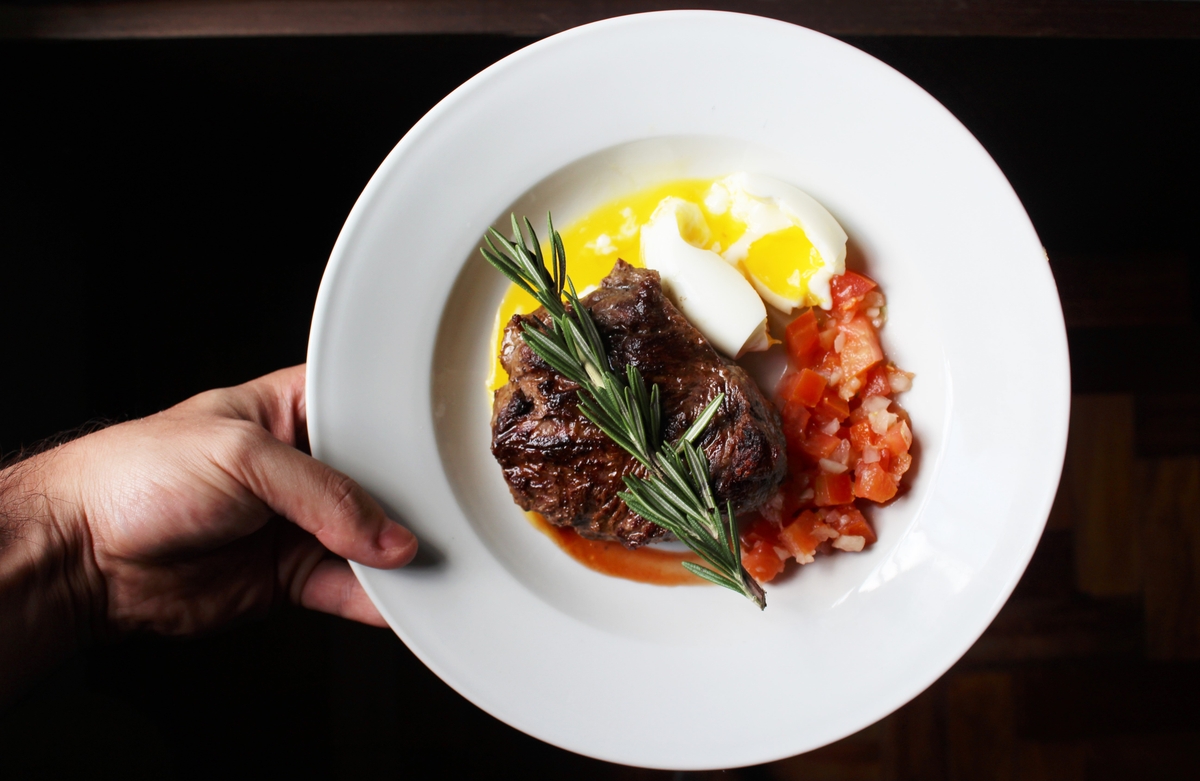

Scientists have brewed up a revolutionary method to grow cultivated meat using the waste products from beer production, potentially solving one of the lab-grown food industry’s biggest hurdles: texture.
In a twist on the sustainable “nose to tail” eating philosophy, researchers at University College London (UCL) propose a “pint to plate” approach. Their new study, published in Frontiers in Nutrition, reveals that leftover yeast from brewing can be transformed into edible “scaffolds” for animal cells, creating a product that mimics the mouthfeel of real meat better than current alternatives.
As cultivated meat moves closer to supermarket shelves, producers face a significant technical challenge: creating affordable, edible structures that enable cells to grow into thick, structured tissues such as steaks or burgers.
“Cultivated meat has the potential to revolutionise food production, but its success depends on overcoming key technical challenges,” explained Professor Richard Day from the UCL Division of Medicine, the study’s senior author.
“While it’s relatively easy to grow animal cells for mass food production you need to be able to grow them on something cheap, edible and that preferably provides a structure that resembles real meat.”
Cost concerns
The researchers turned to bacterial cellulose, a hardy substance produced by microbes. While historically used to make nata de coco (a jelly-like dessert), its potential for mimicking animal tissue has been hampered by cost.
To address this, the UCL team collected spent yeast — a fermentation by-product that is typically discarded — from the Big Smoke Brewing Company in Esher, Surrey. They used this waste to culture Komagataeibacter xylinus, a bacterium known for producing high-quality cellulose.
To ensure the new material could pass the dinner plate test, the team employed a “chewing machine”, a mechanical probe designed to repeatedly compress substances and measure properties like stickiness, hardness and chewiness.
The results were striking. Bacterial cellulose grown from beer waste was not only comparable in quality to that grown in expensive nutrient broths but also offered a superior texture. It displayed lower hardness and chewiness than standard cellulose, making it a closer match to natural animal tissues.
Better “mouthfeel”
Most importantly, when the team seeded animal fibroblasts (cells found in meat connective tissue) onto the beer-derived scaffolds, the cells attached and proliferated.
“One of the biggest hurdles in cultivated meat is replicating the ‘mouthfeel’ and texture of real meat,” said Christian Harrison, the study’s first author and PhD student at UCL.
“Our findings suggest that bacterial cellulose grown on brewing waste not only supports cell growth but also mimics the mechanical properties of meat more closely than other scaffolds.”
The team now plans to expand the technique by incorporating muscle and fat cells and testing waste from different types of beer to optimise the process.
“This opens up exciting possibilities for scalable, sustainable meat alternatives,” Harrison added. “Huge volumes of brewing waste are generated each year that could have a valuable use.”