
A new study warns that the race to return to the Moon could destroy the very scientific treasures researchers hope to find there, as spacecraft exhaust threatens to contaminate pristine lunar ice with methane.
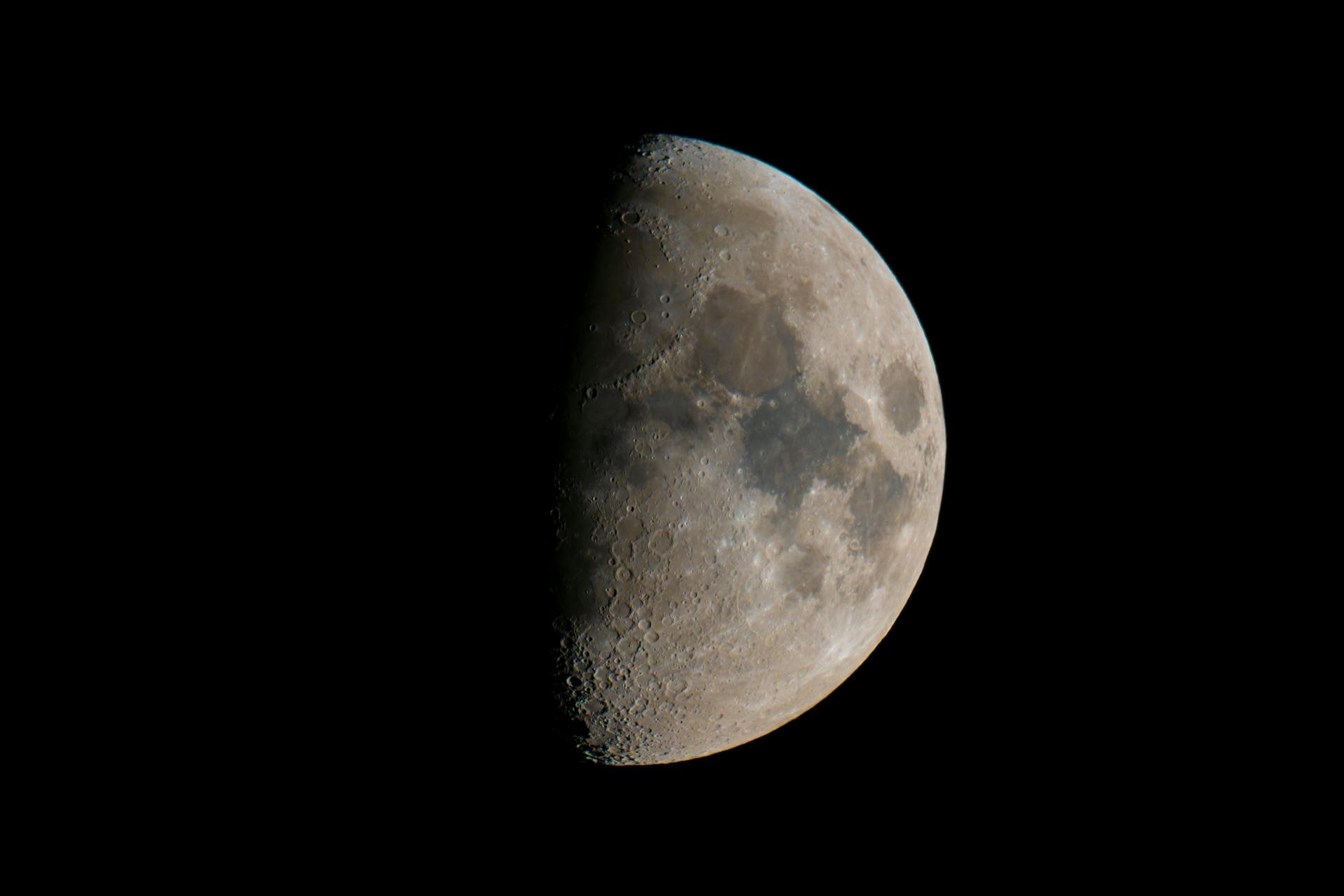
Published in the Journal of Geophysical Research: Planets, the research reveals that more than half of the exhaust methane from a lunar lander could settle in the Moon’s most sensitive areas — permanently shadowed regions (PSRs) — potentially obscuring ancient clues about the origins of life.
“We are trying to protect science and our investment in space,” said Silvio Sinibaldi, planetary protection officer at the European Space Agency (ESA). “Our activity can actually hinder scientific exploration.”
Ballistic pollution
The study, led by physicist Francisca Paiva of Instituto Superior Técnico, used computer modelling to simulate the behaviour of exhaust from the ESA’s Argonaut mission. The results showed that pollution unfolds with startling speed and reach.
Because the Moon lacks an atmosphere to slow them down, methane molecules released during landing act like “bouncy balls”, hopping ballistically across the surface. Energised by sunlight and impeded only by gravity, these molecules can travel from the South Pole to the North Pole in under two lunar days.
“The timeframe was the biggest surprise,” Sinibaldi admitted. “In a week, you could have distribution of molecules from the South to the North Pole.”
The study found that eventually, these wandering molecules are captured by the extreme cold of the lunar poles. Simulations suggest that 42 per cent of the exhaust methane settles at the South Pole and 12 per cent at the North Pole.
This poses a critical problem for astrobiologists. These frozen, dark craters are believed to hold ancient ice containing “prebiotic organic molecules” — ingredients delivered by comets billions of years ago that may have been the building blocks of life on Earth.
While Earth’s active geology has erased its own record of these early ingredients, the Moon was thought to be a perfect freezer for preserving them. However, a layer of modern rocket exhaust could make it impossible to distinguish between ancient cosmic chemistry and contemporary pollution.
No safe landing site
Crucially, the researchers found that shifting landing sites offers little protection.
“Their trajectories are basically ballistic,” Paiva explained. “They just hop around from one point to another… We showed that molecules can travel across the whole moon. In the end, wherever you land, you will have contamination everywhere.”
The authors urge mission teams to include instruments capable of validating these models and to develop planetary protection strategies that account for this rapid global spread.
“I want to bring this discussion to mission teams, because, at the end of the day, it’s not theoretical — it’s a reality that we’re going to go there,” Sinibaldi said.