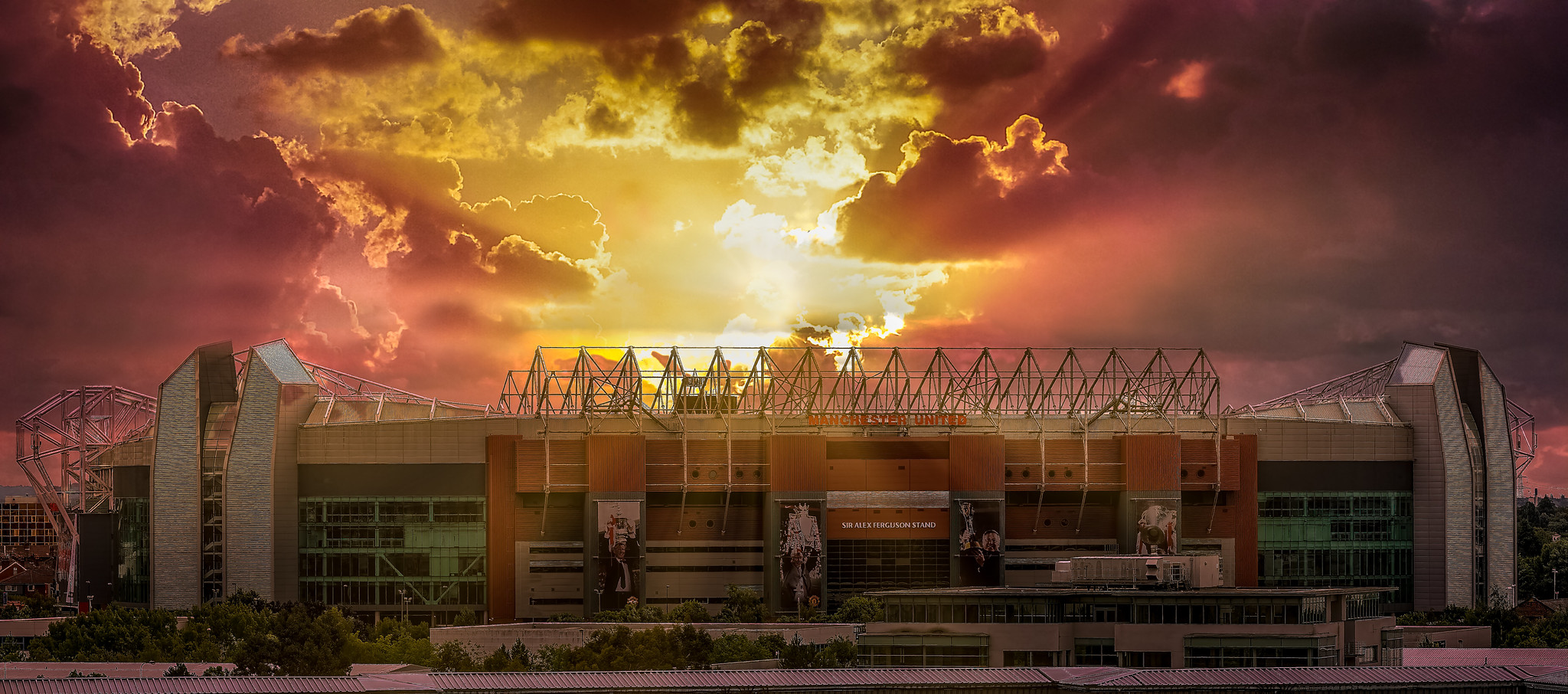

theFreesheet is the official media partner for Manchester Edge & Digital Infrastructure Summit, to be held on April 2nd, 2026.
The North of England is cementing its status as the UK’s critical alternative to the London data belt. But operators must balance this accelerating build-out with the reality that a single failed cooling system can take hospitals, councils and businesses offline for days.
From the data-rich districts around Trafford Park to the emerging digital hubs of Leeds, the North is driving a new wave of digital-led industrial growth. Manchester has firmly established itself as the nation’s primary alternative data centre cluster, hosting 24MW of capacity and offering a vital counterweight to the congested markets of Slough and the M25.
But with this expansion comes a specific, physical threat. As operators rush to lay the foundations of the regional digital economy, they must plan for how much downtime they can tolerate as 40°C-plus heatwaves become more frequent.
A January 2026 analysis, Data Centre Resilience and Climate Risks, warns that while the sector is robust, the frequency of extreme weather events is outpacing historical design assumptions. It projects that severe UK heatwaves could multiply over the coming decades, arguing that cooling strategies must be redesigned around higher ambient temperatures rather than historical averages.
The clustering paradox
There is a reason data centres huddle together. Economic logic dictates they sit where fibre networks overlap, and power connections are robust. This leads to “clustering”, a phenomenon where critical infrastructure concentrates in specific geographic zones.
While operationally efficient, this creates a systemic vulnerability. techUK’s foundational report, Climate Resilience in the Data Centre Sector (2024), notes that a single localised event — such as severe flooding — can threaten multiple facilities simultaneously if they share the same physical footprint.
For Greater Manchester, now the UK’s second-largest cluster, the challenge is distinct. Operators are tethered to areas with optimal connectivity, making “de-clustering” difficult. Without careful planning, the North’s regional data infrastructure risks replicating a single-point-of-failure dynamic at the regional scale, leaving it susceptible to the kind of grid-level power disruptions and floods seen in 2015.
Heat: The silent adversary
While flooding offers visible drama, heat is the more insidious threat. The 2026 analysis notes that heatwaves are no longer anomalies; they are a “High” level operational risk exacerbated by rising water stress.
The July 2022 stress test, when UK temperatures reached 40°C, exposed the fragility of legacy infrastructure. The techUK report details the critical incident at Guy’s and St Thomas’ NHS Foundation Trust in London during that period. Both of the Trust’s data centres failed during that July week as cooling systems collapsed under the ambient load, leading to a total outage of electronic health records and a £1.4 million recovery bill.
This incident serves as a stark warning for the North’s public sector. While hyperscale commercial facilities largely weathered the heatwave due to modern design features — such as higher ambient tolerance and multiple independent cooling paths — the region’s hospitals and councils often rely on ageing, on-premise server rooms. In many Northern trusts and councils, these rooms are located in older buildings that were never designed for prolonged high temperatures, often lacking robust monitoring or N+1 redundancy.
Engineering resilience
The industry’s response is a move toward rigorous standardisation. The techUK report advocates for the wider adoption of the EN 50600 series and ISO/IEC 22237.
These standards provide a blueprint for resilience, governing everything from power supply availability classes to environmental control. In simple terms, they set the bar for how many things can break before a data centre goes down. For a commercial operator in Leeds, adhering to EN 50600 means designing for redundant power feeds, dual cooling systems sized for extreme heat, and tested failover procedures when the grid fails.
However, the application of these standards remains uneven. A significant gap persists between commercial operators, who view resilience as a competitive product, and enterprise or public-sector owners who have not upgraded facilities to meet modern climate realities. That gap means some of the North’s most vital services are running on infrastructure that would not meet the standards now considered baseline for commercial operators.
Critical status
The urgency of this transition was formalised in September 2024, when the government designated data centres as Critical National Infrastructure (CNI). This move explicitly aligned the sector with energy and water supplies, signalling that a failure in the digital backbone is now viewed as a failure of an essential state function.
In practice, this designation shifts the landscape from voluntary best practice to the ability to prove, on demand, that critical services can remain online. It forces operators to show exactly how they will keep services running through longer heatwaves, floods and power disruptions.
Local CIOs and operators are already quietly rewriting disaster-recovery playbooks to account for this new normal. The data centre of the future in the North will look different as a result. It will likely be a campus designed for 45°C ambient days, co-located near low-carbon energy sources or waste-heat networks, and utilising closed-loop cooling to minimise water usage.
As the region continues its digital expansion, the focus is shifting from simple capacity to survival. The infrastructure being built today must be ready not just for tomorrow’s data demand, but for the mid-century’s more volatile weather.
- These challenges — from retrofitting legacy cooling systems for 40°C heat to meeting the strict new obligations of Critical National Infrastructure status — will be just some of the many topics discussed by the industry’s most influential business executives at the upcoming Manchester Edge & Digital Infrastructure Summit, to be held Thursday, April 2nd, 09:30 – 17:00 at No.1 Circle Square, Manchester. Click here to register.