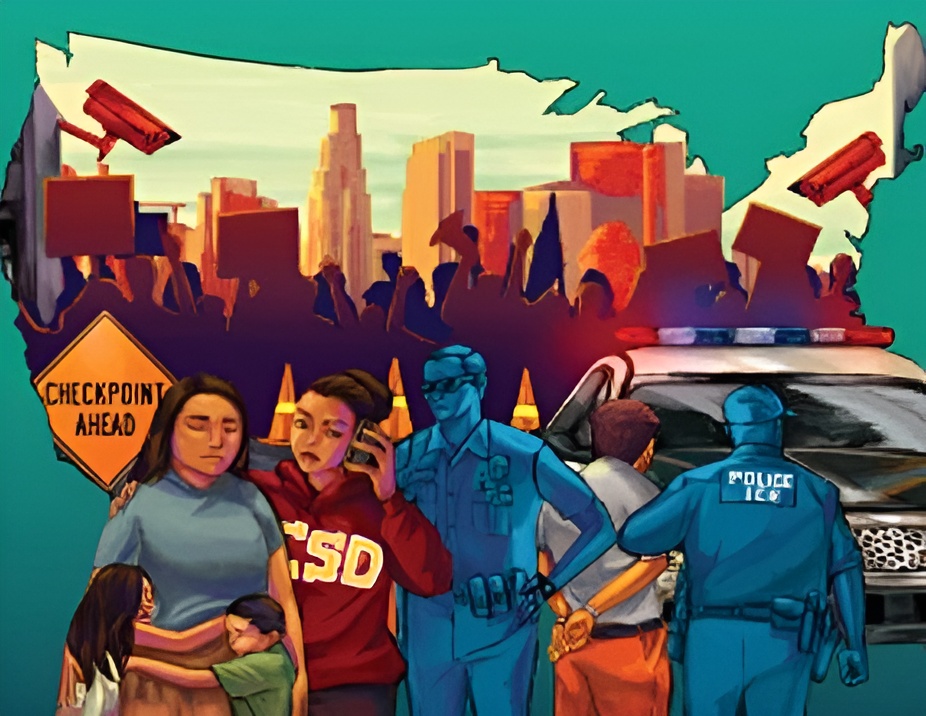
As immigration enforcement reaches deep into everyday American life, once-safe business spaces — from local grocery stores to daily worksites — have been transformed into zones of surveillance and fear. But a new book is issuing an urgent, hopeful call to action for neighbours and community leaders to step up and protect vulnerable families.
Published this month by the University of California Press, Sanctuary Making: Immigrant Families Reshaping Geographies of Deportability details the hidden psychological toll of modern deportations. Author Carolina Valdivia, an assistant professor of criminology, law and society at UC Irvine, dismantles the narrative that enforcement occurs only at the physical border.
Instead, Valdivia documents how the mundane spaces of daily commerce and life have been weaponised. Grocery stores, hospitals, roads, and private worksites are now “hot spots” of surveillance. The result is what Valdivia terms a “geography of deportability,” a physical and psychological landscape where undocumented and mixed-status families never feel entirely safe to simply shop or go to work.
How communities can build ‘sanctuary’
Rather than simply documenting this trauma, Valdivia provides a blueprint for how ordinary citizens can actively shield their neighbours and maintain a welcoming environment for immigrants. She points to “sanctuary making at the community level” as the vital counter-force to this fear.
This involves rapid response networks launched by immigrant rights organisers, neighbours volunteering as legal observers, and everyday citizens distributing real-time information about enforcement actions at local businesses so families can navigate their daily errands safely.
Educators and school counsellors also have a powerful role to play. By hosting “Know Your Rights” workshops and explicitly telling students that their classrooms are safe spaces, teachers can help lift the crushing isolation many young adults feel.
“At the core of these efforts is the need to communicate to young adults that they — as an educator or counsellor — are trustworthy,” Valdivia said. “Sanctuary making often begins with letting students know they are safe.”
The invisible burden on young adults
The book opens with a chilling three-word sentence: “They took Dad.” From there, it chronicles the extraordinary lengths families must go to in order to survive. Drawing on interviews with more than 100 members of immigrant families, Valdivia highlights the massive burden placed on young adults when their parents are targeted.
These young people, many of whom are DACA recipients, are frequently forced to become the invisible backbone of their families’ coping strategies. Valdivia found that this heavy “emotional and material labour” includes:
- Acting as safety coordinators: Arranging secure transportation for parents to safely navigate between home, grocery stores, and worksites.
- Brokering legal communication: Navigating complex legal systems and serving as the primary point of contact with immigration attorneys.
- Sacrificing education: Altering major life plans, such as staying close to home for college — or dropping out entirely — to care for younger siblings if a parent is deported.
- Suffering in isolation: Carrying severe mental health burdens while being too afraid to disclose their family’s immigration status to close friends.
The book highlights the story of Maribel, a 21-year-old whose family was reported to authorities by their own neighbours. After officers arrived at her home in unmarked vehicles, warning that they would return, Maribel had to take over her mother’s safety logistics. The trauma lingered long after; every time a black SUV pulled into a parking lot, Maribel would freeze.
Stories like Maribel’s underscore why community intervention is so critical to ensuring that neighbourhoods and local businesses remain safe havens. “This work requires significant time and effort,” Valdivia noted, “but it takes a community to foster a sense of solidarity, safety, and belonging.”