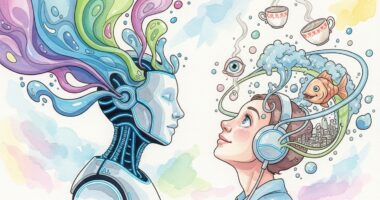

As AI and automation reshape every major industry, business leaders must move beyond isolated technology initiatives. A new five-pillar framework shows how organisations can seamlessly integrate intelligent machines while amplifying human skills and culture, writes Neeti Mehta Shukla.
The future of work is no longer theoretical. Automation, AI and digital platforms are reshaping how work is done, while demographic shifts, talent shortages and evolving employee expectations are redefining what people need from work itself.
The 2025 World Economic Forum Future of Jobs Report states that while 92 million jobs might be eliminated by 2030, 170 million new roles will be created because of AI, resulting in a net gain of 78 million. The challenge for organisations is not whether workforce transformation will occur, but how intentionally, inclusively and sustainably it is designed.
Across World Economic Forum discussions, a consistent insight has emerged: Workforce transformation cannot be treated as a standalone initiative or a technology upgrade. It requires a systemic, industry-aware approach – one that aligns vision, skills, technology, processes and culture over time.
Workforce transformation also leads to measurable outcomes for organisations across sectors. Deloitte’s 2025 Human Capital Trends reported that organisations investing in workforce development were 1.8 times more likely to report better financial results. While different sectors face different pressures, many organisations continue to ask the same question: What does a future-ready workforce actually look like?
The framework that follows is intended as a practical starting point, not a prescriptive model. It does not assume deep expertise across all industries; rather, it is designed to be validated and strengthened through collaboration with industry leaders, practitioners and council members. At its core is a simple principle: Technology should enhance human capability, not replace human purpose.
To keep the approach adaptable, the framework is organised around five foundational pillars – Vision, Skills, Technology, Process and Culture – applied across industries to illustrate the art of the possible.
1. Define the industry vision for workforce transformation
Then define your organisation’s vision.
Purpose: Clarify the forces reshaping work and define what “future-ready” means by sector.
- Manufacturing: Smart factories combining automation, AI and human expertise to improve productivity and quality.
- Healthcare: Digitally enabled care teams using AI for diagnostics, patient management and telehealth.
- Financial services: Advisors and analysts augmented with AI-driven insights and automated risk controls.
- Public sector: Adaptive, citizen-centric service delivery powered by digital tools and analytics.
- Retail: Omnichannel workforce integrating in-store associates and digital agents.
- Technology/IT services: Shift from coding-heavy work to AI-orchestrated digital ecosystems.
2. Map workforce skills and capability needs
Purpose: Identify future-critical capabilities and create clear skill pathways.
- Digital & technical: AI literacy, data analytics, automation design, cybersecurity, cloud operations.
- Human & adaptive: Creativity, empathy, communication, resilience, leadership.
- Operational excellence: Process re-engineering, agile delivery, compliance automation.
- Domain-specific: Industry-specific regulatory, operational or clinical expertise.
Key actions:
- Build role-based skill maps comparing current and future demand.
- Introduce modular learning and micro-credentials.
- Combine AI tools with human learning loops and performance insights.
3. Integrate technology as an enabler
Purpose: Use technology to augment – not replace – human capability. (One-, two-, five-, and 10-year horizons.)
- Manufacturing: Robotics, predictive maintenance, AI quality control.
- Healthcare: AI-assisted diagnostics, data analytics, administrative automation.
- Financial services: Intelligent automation for onboarding, fraud and compliance.
- Public sector: Chatbots, workflow automation, decision analytics.
- Retail: Demand forecasting, inventory optimisation, digital assistants.
- Technology: AI-driven development, autonomous workflows, agentic systems.
Principle: Adopt an AI + human-in-the-loop model – automation for execution, humans for judgment, creativity and relationships.
4. Redesign work processes and structures
Purpose: Re-engineer work to improve productivity, engagement and resilience.
Key actions:
- Use digital twins of work to simulate and optimise workflows.
- Deploy intelligent automation and AI agents across repetitive processes.
- Redefine roles to balance machine execution and human oversight.
- Establish cross-functional innovation pods (HR, technology, operations).
5. Build a culture of continuous learning and inclusion
Purpose: Ensure workforce enhancement is sustainable and inclusive.
- Treat learning as a performance outcome.
- Recognise intrapreneurship (efforts to innovate from within an organisation) and innovation behaviours.
- Embed responsible AI governance for trust and transparency.
- Use continuous feedback mechanisms to adapt workforce strategies.
Workforce transformation is no longer about choosing between people and technology. It is about designing systems where humans and intelligent machines amplify one another. As industries navigate accelerating technological change, the organisations that succeed will be those that move beyond isolated initiatives and adopt an integrated, long-term view of workforce enhancement.
By aligning vision, skills, technology, processes and culture, leaders can shift from reactive responses to deliberate workforce strategies – ones that build resilience, unlock productivity, and preserve human purpose. This framework is not an endpoint, but a foundation: a shared structure that industries can adapt, refine and evolve as the future of work continues to unfold.
- Neeti Mehta Shukla is a Co-Founder and Chief Impact Officer at Automation Anywhere. This article was originally published by the World Economic Forum.