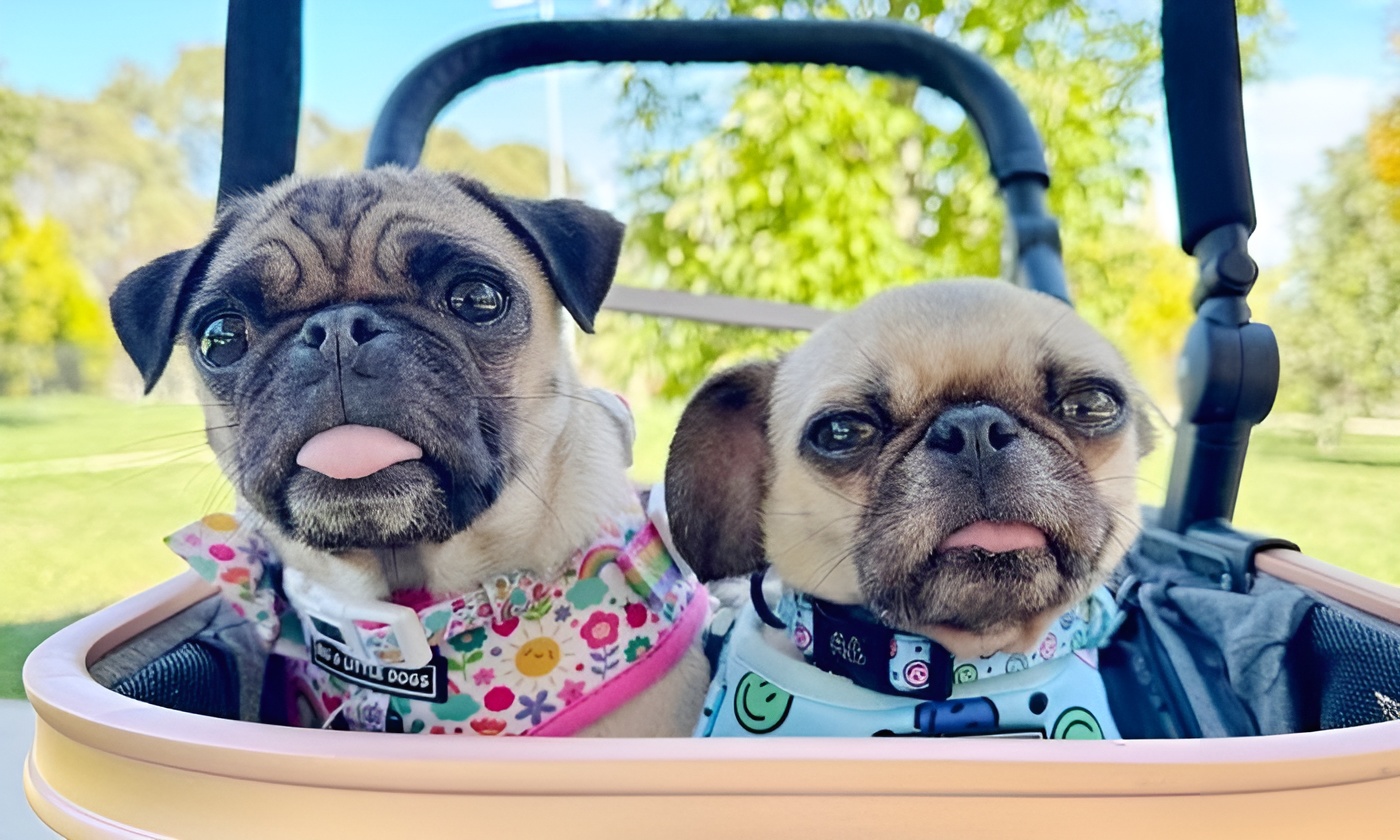

Australian scientists have successfully tested a new injectable therapy that clears blocked airways in flat-faced dog breeds, offering an alternative to invasive and often dangerous surgery.
According to a new pilot study published in The Veterinary Journal, an experimental drug called Snoretox-1 restores upper-airway muscle tone in dogs suffering from brachycephalic obstructive airway syndrome (BOAS).
The therapy, developed by biotechnology company Snoretox in collaboration with RMIT University, could improve the lives of millions of Pugs and French and British Bulldogs.
The deadly cost of selective breeding
BOAS is a highly distressing condition that restricts airflow, severely impacting a dog’s ability to breathe, eat, exercise, and sleep.
“Decades of selective breeding for the popular flat-faced appearance have unfortunately led to serious breathing problems,” explained Tony Sasse, Snoretox Managing Director and RMIT Adjunct Professor. “In severe cases, the condition has been shown to shorten a dog’s life by up to four years.”
Professor Peter Smooker, a biotechnologist at the RMIT School of Science, noted that because breeders rapidly shortened the snouts of these dogs, the soft tissue inside the upper airway simply hasn’t had time to adapt. This leaves excess tissue crowded into a much smaller skull, obstructing the airflow.
Currently, the primary treatment for BOAS is surgery to remove excessive throat tissue and physically widen the nostrils. However, the outcomes are notoriously inconsistent.
“Research shows that up to 60 per cent of affected dogs still experience breathing problems after surgery, and seven per cent do not survive the procedure,” Sasse warned.
Bypassing immunity with a decoy
To provide a safer alternative, researchers spent 15 years developing Snoretox-1.
The therapy uses a highly modified, tetanus-derived neuromodulatory protein. Because many animals (and humans) already possess anti-tetanus antibodies from previous vaccinations, the drug also includes a functionally inactive “immunogenic decoy” molecule. This decoy effectively distracts the immune system, allowing the therapeutic toxin to successfully target and stimulate the weak muscles.
During the pilot study, researchers injected Snoretox-1 directly into the geniohyoid muscle (located in the floor of the mouth) of six British Bulldogs with severe BOAS.
Prior to the injection, the dogs struggled to complete a basic three-minute walk. Following the therapy, all six dogs displayed highly visible improvements, completing the brisk walks with noticeably reduced breathing noise and effort. According to the study, the positive effects of the single injection lasted between 20 and 52 weeks.
Crucially, the therapy also worked on dogs that had previously undergone unsuccessful BOAS surgery.
Human applications on the horizon
While the team is currently pursuing wider regulatory approval for veterinary use, they believe the underlying technology has massive implications for human health.
Professor Russell Conduit, from RMIT’s School of Health and Biomedical Sciences, stated that the ability to safely and specifically target weak muscle tone could revolutionise treatments for conditions like obstructive sleep apnoea, incontinence, and pelvic floor disorders.
“This is exciting evidence to support human drug trials for conditions involving poor muscle tone,” Conduit said.