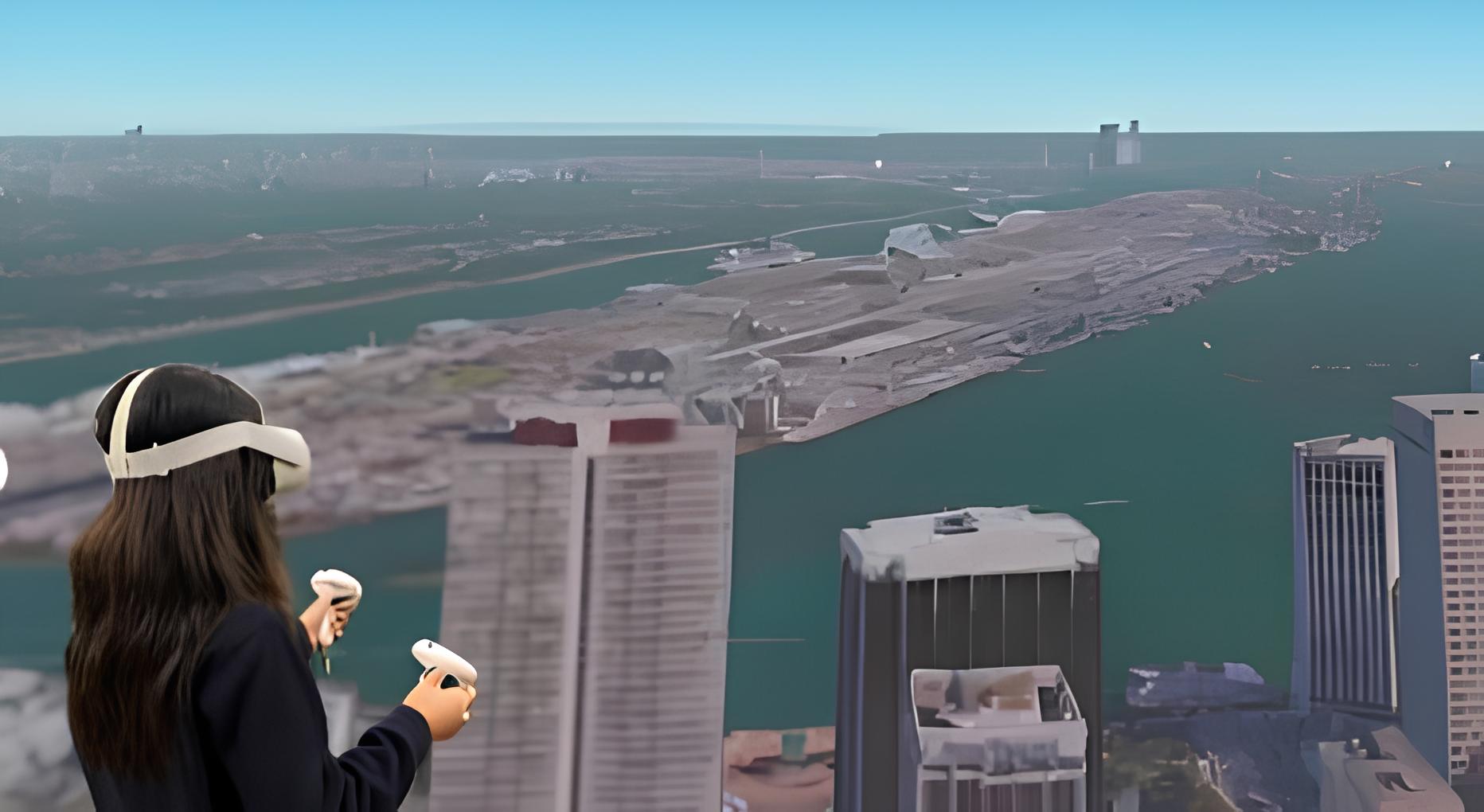

Immersive virtual reality can make distant impacts of climate change feel immediate and personally relevant, according to a new Stanford University-led study.
The findings, published in Scientific Reports, show that VR experiences significantly reduce indifference to climate-driven damage in faraway places more than static images do. The approach fosters feelings that are more likely to lead to constructive actions, such as supporting pro-environment organisations and policies.
The research involved 163 Stanford students who were randomly assigned to experience one of nine U.S. locations, such as Miami or New York City, through either VR or static images. Participants listened to a news story about climate change-driven flooding in that location while virtually flying through a realistic 3D version of it.
Participants who viewed distant locations in VR were less dismissive and more frustrated by the climate story, a response researchers linked to motivation rather than hopelessness. VR users also reported stronger feelings of attachment and concern for the places they visited.
Emotions motivate engagement
“Virtual reality can make faraway climate impacts feel immediate and personally relevant,” said study lead author Monique Santoso, a PhD student in communication at the Stanford School of Humanities and Sciences. “By helping people form emotional attachments to distant places, VR fosters constructive emotions that motivate engagement rather than paralysing fear.”
The study suggests that simple exploration and attachment-building can boost concern without the negative emotional overload often used in climate communication. The researchers used inexpensive consumer VR software that allows users to fly through 3D maps, such as Google Earth VR and Fly.
“The last decade of VR climate change research relied on experiential narratives about how the future will be dire,” said study senior author Jeremy Bailenson, director of Stanford’s Virtual Human Interaction Lab. “These simulations often took years and hundreds of thousands of dollars to build. This study shows one doesn’t need to tell a difficult story—simply playing a fun VR game that transports you to a faraway place is enough to make you care.”