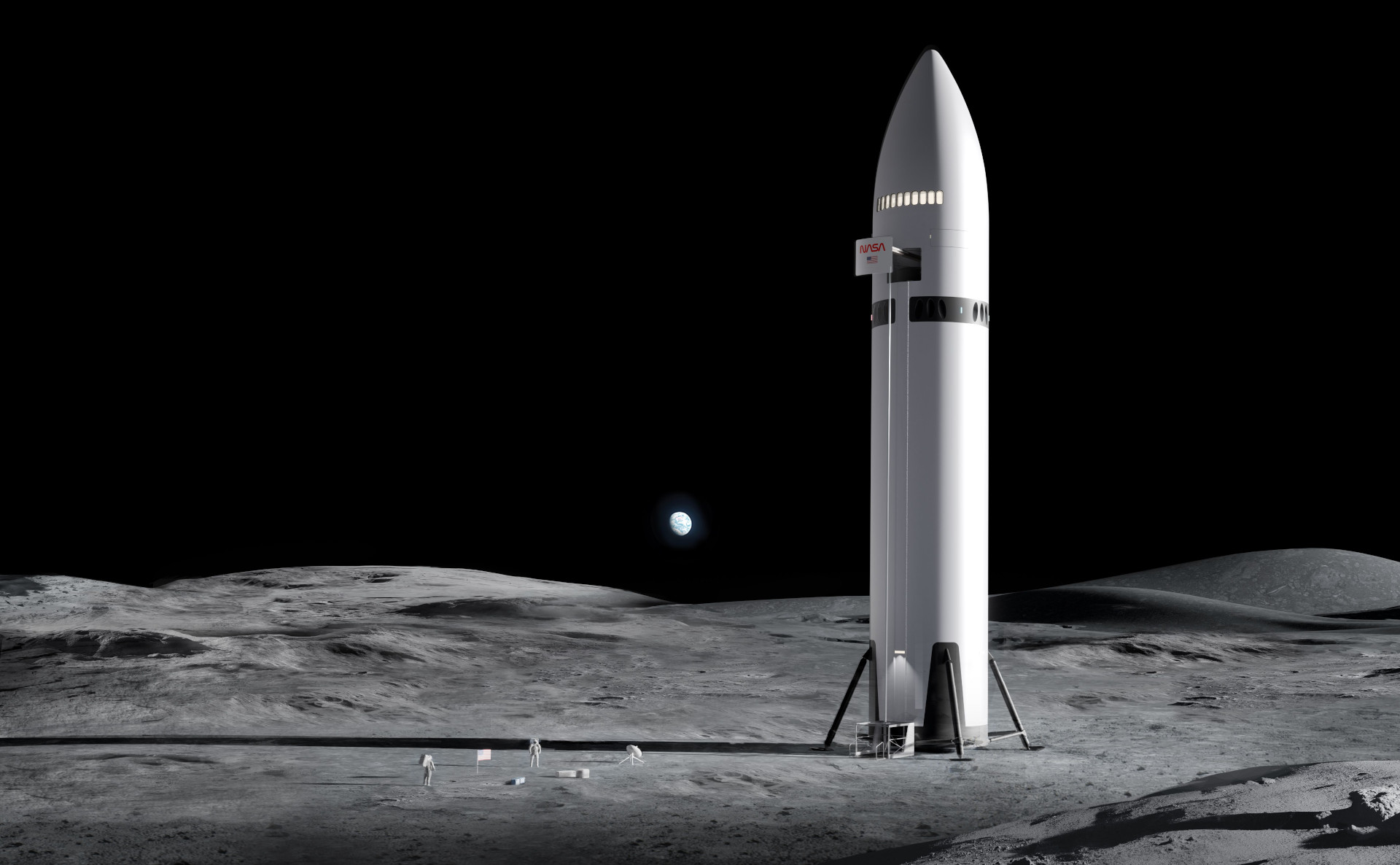

SpaceX has detailed progress on Starship, the vehicle selected to land astronauts on the lunar surface for the first time since the Apollo missions, with key flight tests planned for 2026 to demonstrate the capabilities needed for NASA’s Artemis programme.
The company has completed 49 milestones tied to developing subsystems and infrastructure for the Human Landing System, achieving the vast majority on time or ahead of schedule under a fixed-price contract. SpaceX self-funds over 90 per cent of system costs, including production facilities, test sites and launch infrastructure.
“SpaceX is working under a fixed-price contract with NASA, ensuring that the company is only paid after the successful completion of progress milestones, and American taxpayers are not on the hook for increased SpaceX costs,” the company said.
Starship offers a pressurised habitable volume exceeding 600 cubic metres—roughly two-thirds that of the entire International Space Station. Each of its two airlocks provides approximately 13 cubic metres of space, more than double the Apollo lander’s capacity. Cargo variants can land up to 100 metric tons directly on the surface, including rovers, nuclear reactors and lunar habitats.
First-of-its-kind operation
The flight test campaign has produced multiple successful ascents of the world’s most powerful rocket, as well as the launch, return, catch, and reuse of that rocket to unlock a high launch rate cadence. SpaceX has transferred approximately five metric tons of cryogenic propellant between tanks while in space — a first-of-its-kind operation that provides data for future full-scale propellant transfers.
“Starship will bring the United States back to the Moon before any other nation, and it will enable sustainable lunar operations by being fully and rapidly reusable, cost-effective, and capable of high-frequency lunar missions with more than 100 tons of cargo capacity,” SpaceX said.
The company has produced more than three dozen Starships and 600 Raptor rocket engines, accumulating over 226,000 seconds of run time on Raptor 2 engines and more than 40,000 seconds on next-generation Raptor 3 engines. There have been 11 Starship-only flight tests and 11 integrated flight tests of Starship and Super Heavy.
Completed milestones include lunar environmental control and life support demonstrations using a full-scale cabin module, docking adapter qualification for linking Starship and Orion in space, landing leg drop tests onto simulated lunar regolith, and elevator and airlock demonstrations conducted with Axiom using flight-representative pressurised suits.
The next major flight milestones will be a long-duration flight test and in-space propellant transfer demonstration, both targeted for 2026. On-orbit refilling enables Starship to carry up to 100 tons directly to the lunar surface.
The tests will begin with a Starship launched from Starbase, spending an extended time in orbit to gather data on vehicle propulsion and thermal behaviour. A second Starship will then launch to rendezvous with the first to demonstrate ship-to-ship propellant transfer in Earth orbit.
NASA selected Starship in 2021 through fair and open competition, determining that SpaceX’s bid had the highest technical and management ratings, whilst being the lowest cost by a wide margin. A second selection followed for Artemis IV to lay the groundwork, ensuring humanity’s return to the Moon is permanent.