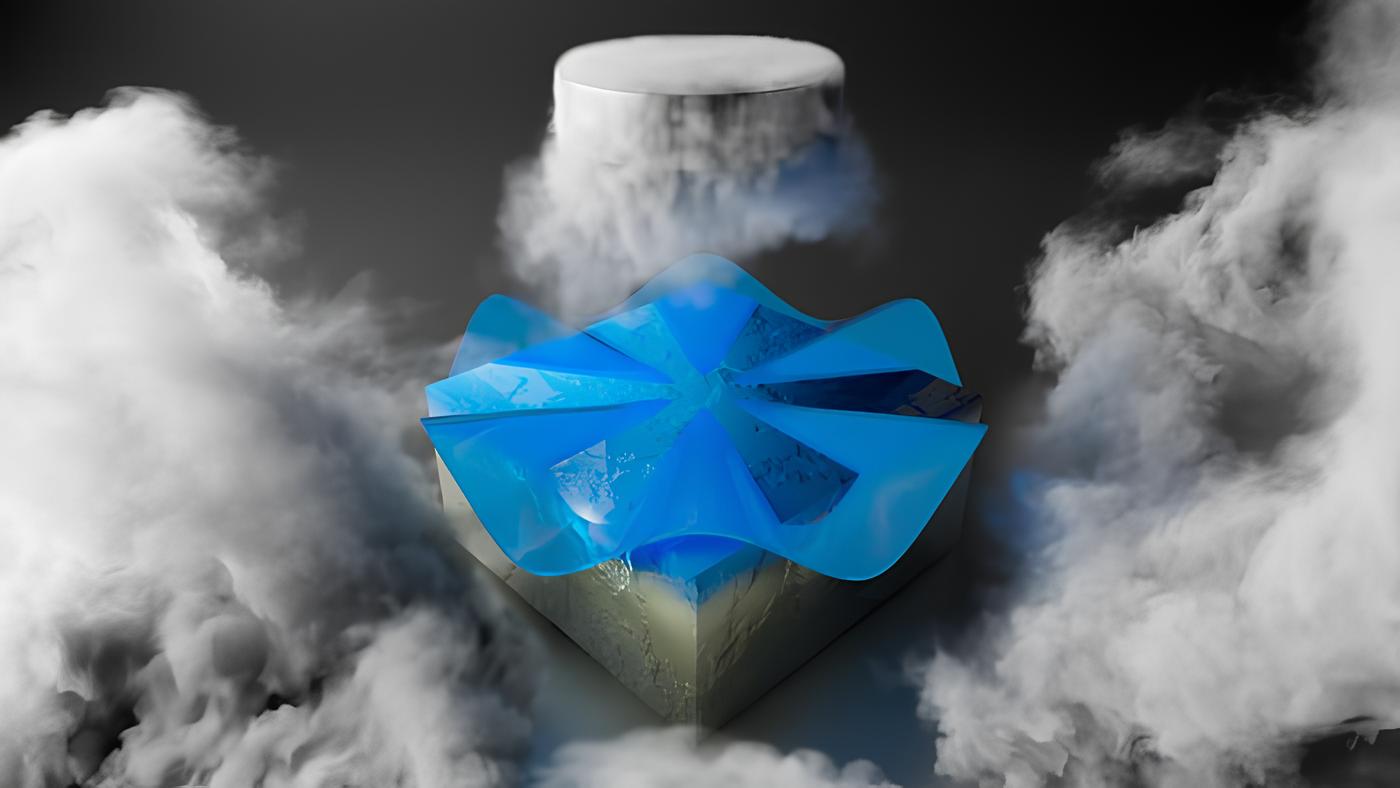

Researchers have identified a material that behaves as a “natural superconductor sandwich”, exhibiting unprecedented electron behaviour that could provide the foundation for fault-tolerant quantum computing.
A new study by the Leibniz Institute for Solid State and Materials Research (IFW Dresden) and the Cluster of Excellence ct.qmat demonstrates that platinum-bismuth-two (PtBi_2) hosts superconducting surfaces while maintaining a metallic interior.
While standard superconductors allow electrons to pair up regardless of their direction, high-resolution measurements revealed that electrons on the surface of PtBi_2 refuse to pair along six specific symmetrical directions. This creates a unique state of matter where the top and bottom layers conduct electricity without resistance, but the inside behaves like a normal metal.
“We have never seen this before. Not only is PtBi_2 a topological superconductor, but the electron pairing that drives this superconductivity is different from all other superconductors we know of,” said Dr Sergey Borisenko, head of the lab at IFW Dresden. “We don’t yet understand how this pairing comes about.”
Fault-tolerant qubits
The unique properties of the material create specific conditions at the edges of the superconducting surfaces that trap Majorana particles. These elusive particles act as “split electrons” and are considered a holy grail for quantum computing because their separation protects them from environmental noise and errors.
“Our computations demonstrate that the topological superconductivity in PtBi_2 automatically creates Majorana particles that are trapped along the edges of the material. In practice, we could artificially make step edges in the crystal, to create as many Majoranas as we want,” said Professor Jeroen van den Brink, Director of the IFW Institute for Theoretical Solid State Physics.
The research team suggests that by thinning the material or applying magnetic fields, these particles could be controlled and manipulated, potentially turning the metallic interior into an insulator to prevent interference with quantum calculations.