Artificial intelligence systems are making simple, persistent mistakes because their fundamental architecture is incapable of logical thought, regardless of how much training data they consume.
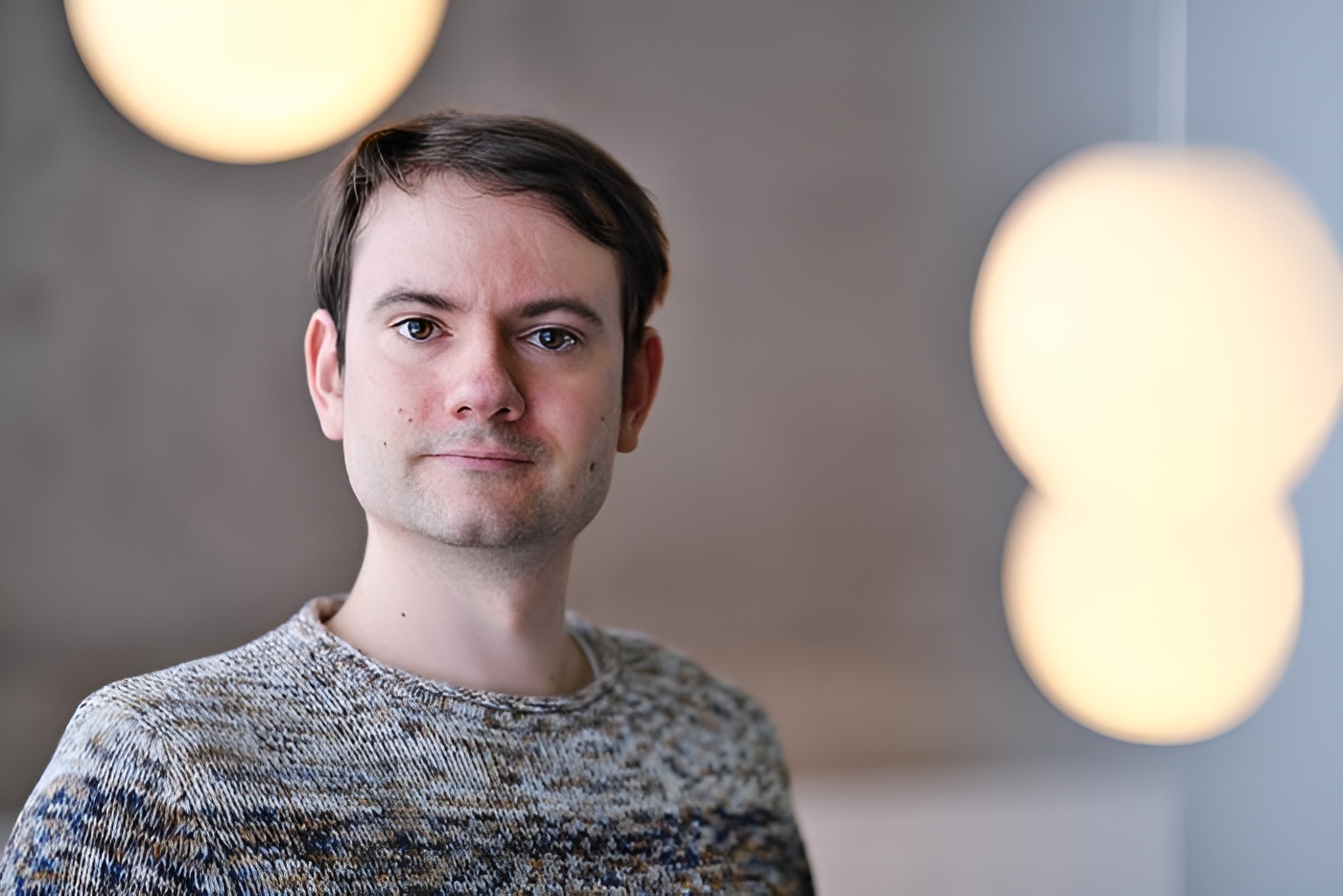
Professor Michael Hahn, a computational linguist at Saarland University, has secured €1.4 million in funding to prove that the current design of large language models (LLMs) needs to change entirely. His team has already demonstrated mathematically that transformer architecture — the framework used by systems like ChatGPT — makes systematic errors that cannot be eliminated by larger datasets or better prompts.
Current models rely on “transformer architecture”, which prioritises data relevant to a question while ignoring less important details.
“In doing so, these neural networks mimic another human trait, namely associative thinking, which is our ability to link ideas and memories,” said Professor Hahn.
However, this reliance on pattern matching rather than reasoning leads to critical failures when conditions change or inputs become complex.
Incorrect associations
“Serious errors can occur when the AI forms incorrect associations. These mistakes are compounded by the fact that current neural networks typically operate with a fixed number of layers in which the mathematical operations are carried out – thus limiting the network’s flexibility,” said Hahn.
The research highlights three specific performance ceilings: an inability to handle changing conditions, a lack of logical reasoning, and failure to process nested inputs. In medical scenarios, these limitations could lead to dangerous misinterpretations of patient data sequences.
“Medical AI systems generate connections between different types of data, such as diagnoses, medications and test results. If the AI does not assign the chronological sequence correctly and misinterprets the sequence of symptoms, diagnoses, test results and medication, there are potentially dangerous consequences for patients,” said Hahn.
The German Research Foundation’s Emmy Noether Programme awarded the funding to establish a research group focused on understanding and overcoming these architectural limitations.