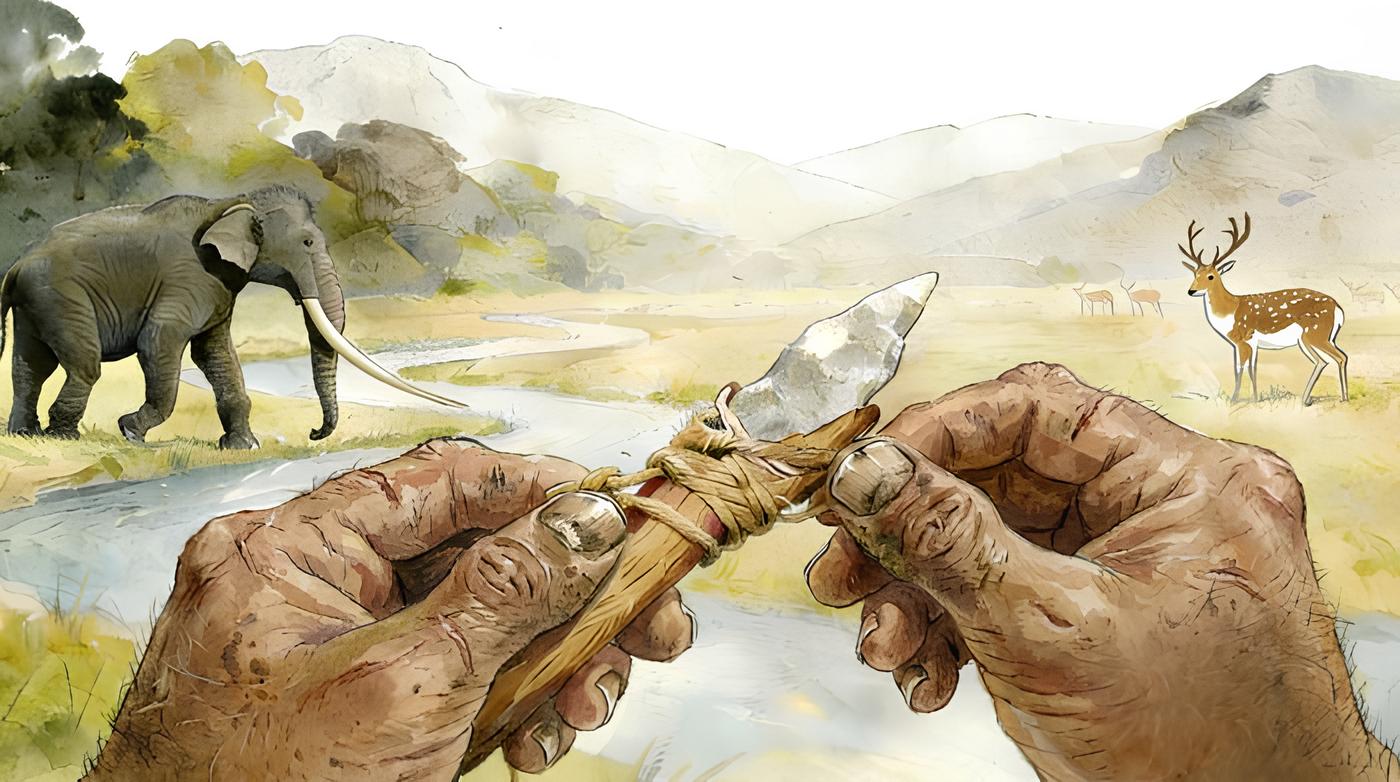

Excavations in central China have unearthed evidence of advanced stone tool technologies dating back 160,000 years, fundamentally reshaping assumptions about early hominin behaviour in East Asia.
An international team led by the Chinese Academy of Sciences discovered that ancient populations at the Xigou site possessed technical skills comparable to those of their contemporaries in Africa and Europe. The findings, published in Nature Communications, contradict the long-held view that East Asian hominins relied on simple, conservative tool traditions while Western populations advanced.
“Researchers have argued for decades that while hominins in Africa and western Europe demonstrated significant technological advances, those in East Asia relied on simpler and more conservative stone-tool traditions,” says Dr Shixia Yang, expedition leader at the Institute of Vertebrate Paleontology and Paleoanthropology (IVPP).
The first composite tools
The excavations in the Danjiangkou Reservoir Region revealed a rich layer of artefacts spanning 90,000 years. Among the most significant finds were “hafted” stone tools — implements combined with handles or shafts to create composite devices.
This represents the earliest known evidence of composite tools in East Asia, a development that implies complex planning, skilled craftsmanship, and a deep understanding of mechanics.
“Their presence indicates the Xigou hominins possessed a high degree of behavioural flexibility and ingenuity,” says lead author Dr Jian-Ping Yue of the IVPP.
Adapting to flux
The discovery aligns with growing evidence of hominin diversity in the region during this period, including large-brained species such as Homo longi and Homo juluensis.
Professor Michael Petraglia, Director of Griffith University’s Australian Research Centre for Human Evolution, notes that the inhabitants employed sophisticated methods to produce small flakes and tools for diverse activities, likely driven by the need to survive in changing climates.
“The technological strategies evident in the stone tools likely played a crucial role in helping hominin populations adapt to the fluctuating environments that characterised the 90,000-year-period in Eastern Asia,” Petraglia says.