Engineers have unleashed a new breed of artificial intelligence-designed robots that can run across rugged terrain, perform acrobatics, and survive being chopped to pieces.
By combining physical modularity with AI-driven evolution, researchers say these machines represent a future where robots behave less like fragile tools and more like resilient, living organisms.
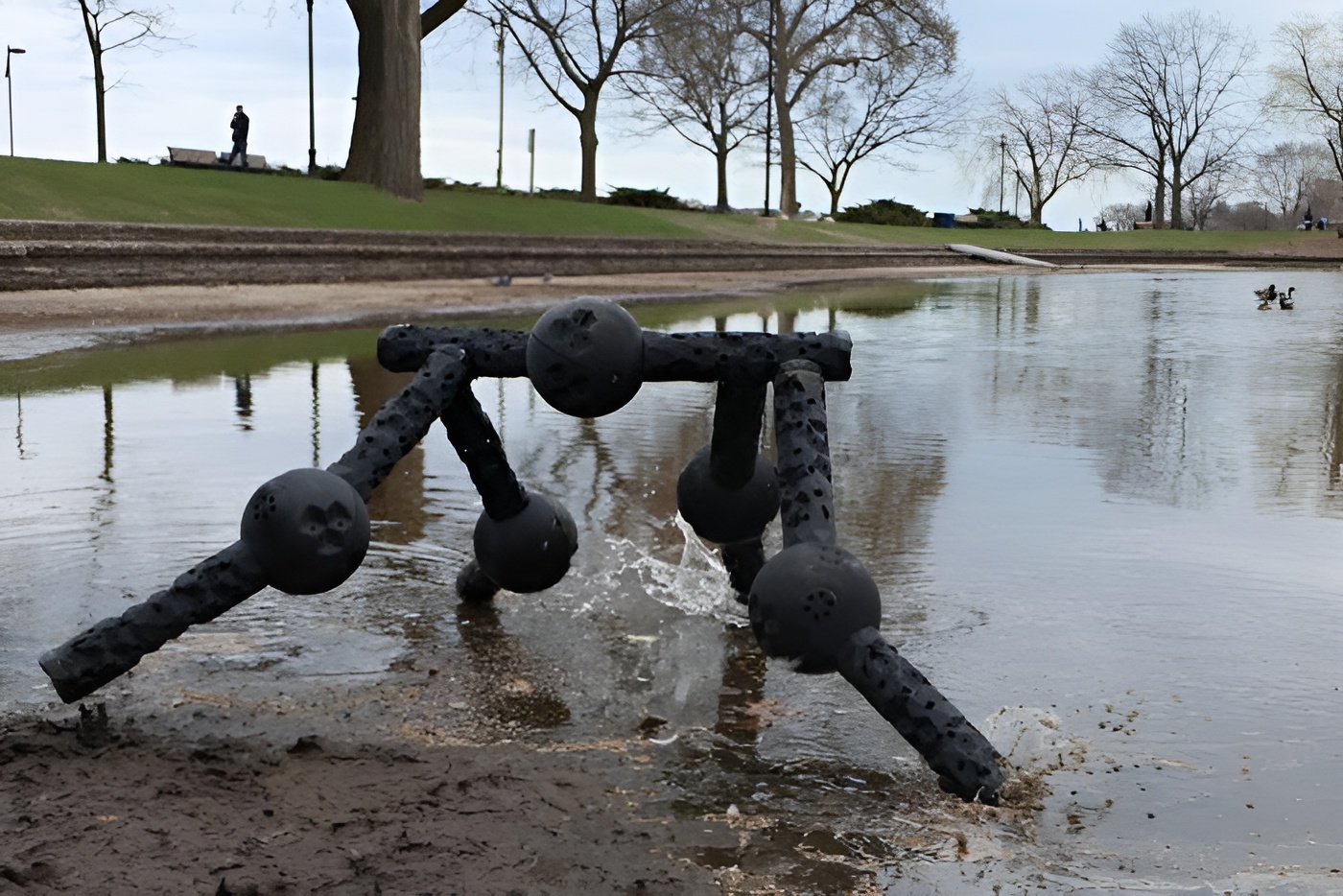
Known as “legged metamachines,” these unique creations are built from autonomous, Lego-like building blocks that snap together into an endless array of configurations. Each individual module — which looks like a pair of sticks joined by a central sphere — is a complete robot equipped with its own motor, battery, and computer.
While a single module can roll, turn, and jump on its own, their true athletic agility and indestructibility only emerge when they combine into complex structures.
Darwinian design
To figure out the best way to assemble these modules, researchers at Northwestern University turned to an AI algorithm that mimics natural selection. Rather than designing a standard robotic dog or humanoid, the algorithm was simply given the building blocks and the goal of efficient, versatile movement.
The AI simulated a Darwinian process of mutation and selection, discarding weak designs and breeding strange new “species” of machines that no human engineer would have conceived. Depending on the specific configuration, the modular components act as legs, spines, or tails, allowing the combined robots to undulate like seals, bound like lizards, or spring like kangaroos.
“We simulated the Darwinian process of mutation and selection within a virtual, physical environment,” explained Sam Kriegman, the study’s lead researcher and an assistant professor at Northwestern’s McCormick School of Engineering. “This is survival of the fittest — accelerated by computers and made real by athletic modular building blocks.”
Refusing to die
In outdoor tests, the resulting three-, four-, and five-legged metamachines proved highly resilient. They successfully traversed gravel, grass, tree roots, sand, mud, and uneven bricks without any complicated setup or retraining.
Most remarkably, unlike traditional rigid robots that become useless dead weight if a single part breaks, these metamachines can recover from catastrophic damage.
“These are the first robots to set foot outdoors after evolving inside of a computer,” Kriegman said. “They are rapidly assembled and then quite literally hit the ground running. They can move freely in the wild and easily recover from major injuries that would be fatal to every other wild robot.
“If flipped upside down, they instinctively bring themselves upright and continue their journey. They can survive being chopped in half or cut up into many pieces. When separated, every module within the metamachine can become an individual agent.”
Even if a leg breaks off completely, the main body remains resilient; the remaining modules simply adapt to the loss and keep moving. Incredibly, the severed limb can even roll itself home to rejoin the team.
The findings were published in the Proceedings of the National Academy of Sciences.