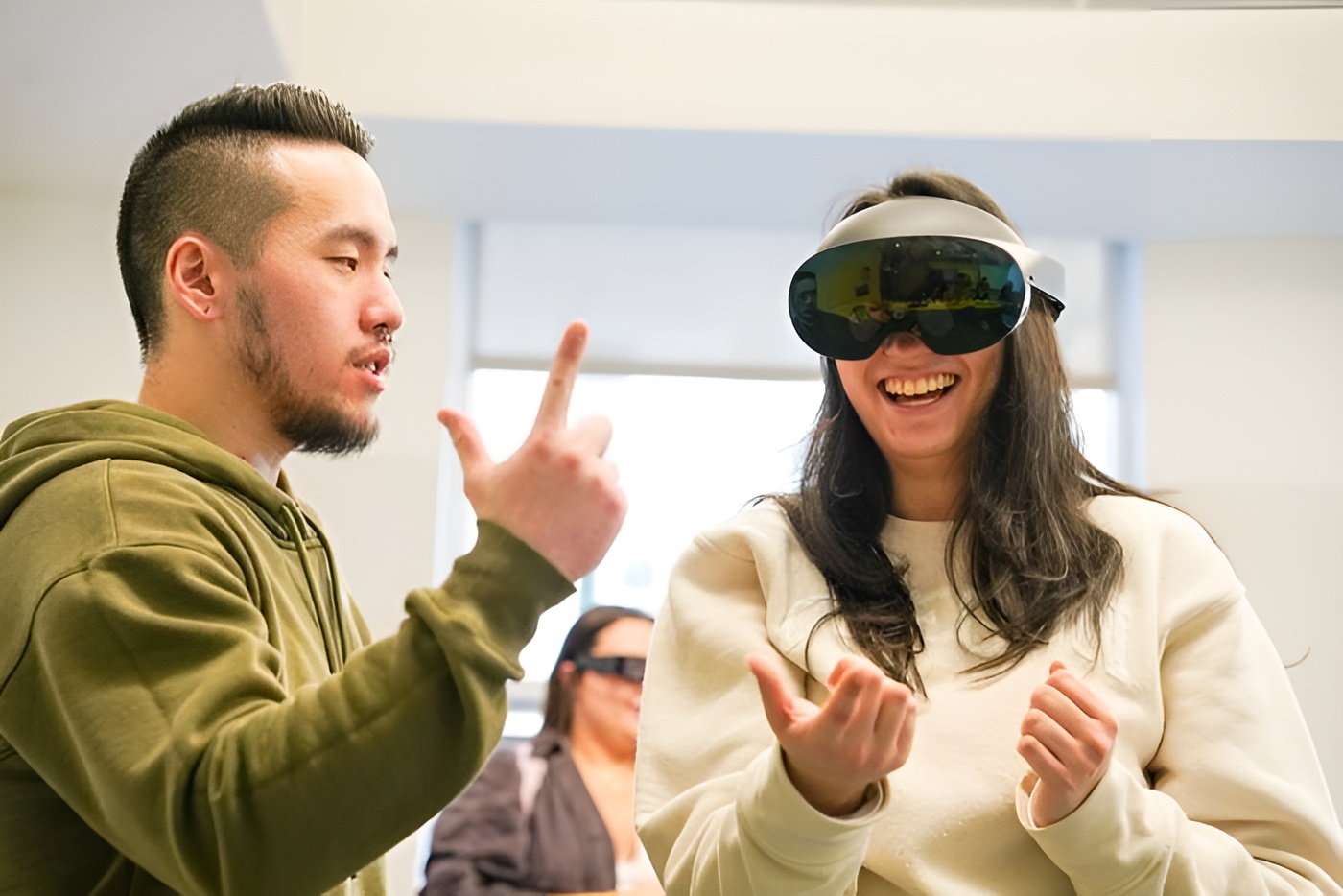

We often think of video games as an isolating escape, but a new study suggests that putting on a headset might actually make us better, more helpful people in the real world. According to researchers at the University of Oregon, playing a narrative-driven virtual reality (VR) game can actively increase a person’s altruism, motivating them to help others even if they don’t directly feel their pain.
Published in the journal Frontiers in Virtual Reality, the study explored the psychological mechanisms that foster engagement and behavioural change in immersive environments.
UO communication and media studies expert Samantha Lorenzo initiated the research. Lorenzo said: “I had an idea that VR might be an effective tool to influence people’s ability to want to help others and better understand other people’s perspectives.”
‘Empathy in Action’
Teaming up with Danny Pimentel, co-director of the Oregon Reality Lab, and a trio of graduate students, Lorenzo developed a custom VR game called Empathy in Action.
In the game, players enter a neighbourhood and encounter Alden, a young boy deeply distraught over his lost dog, Buddy. Players are tasked with both physical and emotional challenges, including searching for clues and deciding whether and how to comfort the child. The team deliberately chose a realistic, believable storyline to gauge how people would naturally react to an everyday tragedy.
Before and after the gameplay, the researchers tested the participants to see if the game shifted their motivation to help and their ability to understand emotions. The results revealed a surprising psychological paradox.
While the players’ sense of altruism — their desire to help — definitely went up, their empathy levels were much more complicated:
- Cognitive empathy increased: Players showed a significantly higher ability to recognise and understand the young boy’s feelings.
- Affective empathy declined: Surprisingly, the players’ ability to feel the boy’s sadness decreased.
Essentially, the data suggests that people can be strongly motivated to help someone in need because they know the situation is sad, even if they don’t directly absorb that sadness themselves.
Lorenzo explained the phenomenon clearly: “People knew that this was a sad situation and that’s why they wanted to help.”
Gaming for social good
Participants in the study suggested that this type of immersive, digital intervention could be highly effective in classrooms, therapeutic and rehabilitative settings, and conflict-resolution trainings. Lorenzo also hopes to build on this exploratory research to see if narrative-driven VR could help people understand and cope with severe medical challenges.
Lorenzo concluded: “This gaming technology is new and exciting, and there’s a lot of potential for researchers to keep exploring how immersive media can be leveraged for social good.”