
Deep beneath the Turkana Rift in Eastern Africa, the Earth’s crust is rapidly thinning, signalling the eventual geographic breakup of the African continent.
However, according to a new study published in Nature Communications, this violent geological tearing is also rewriting our understanding of human history, offering a startling new explanation for why the region contains the world’s greatest record of early hominin fossils.
The research, led by scientists at the Columbia Climate School’s Lamont-Doherty Earth Observatory, provides the first direct evidence of active continental “necking” — a critical threshold where the Earth’s crust begins to fatally stretch and weaken.
The saltwater taffy effect
The Turkana Rift is a 500-kilometre-wide region spanning Kenya and Ethiopia, situated where the African tectonic plate is actively pulling away from the Arabian and Somali plates at a rate of roughly 4.7 millimetres per year.
Using high-quality seismic measurements to bounce acoustic waves deep into the subsurface, the researchers discovered that the crust along the rift’s axis has thinned to just 13 kilometres. This is drastically thinner than the 35-kilometre-thick crust found further away from the rift centre.
Lead author Christian Rowan likened this phenomenon to pulling a piece of saltwater taffy: as the ends are pulled apart, the “neck” in the middle stretches, thins, and eventually breaks.
“We found that rifting in this zone is more advanced, and the crust is thinner, than anyone had recognized,” Rowan explained. “The thinner the crust gets, the weaker it becomes, which helps promote continued rifting.”
Geophysicist and study co-author Anne Bécel confirmed that the region has reached a “critical threshold” of crustal breakdown. Within a few million years, this thinning will give way to “oceanisation” — the crust will completely rupture, allowing magma to surge up and the Indian Ocean to flood in, creating an entirely new seafloor.
Reevaluating the ‘Garden of Eden’
Beyond predicting the future map of the world, this geological discovery offers a radical new perspective on humanity’s past.
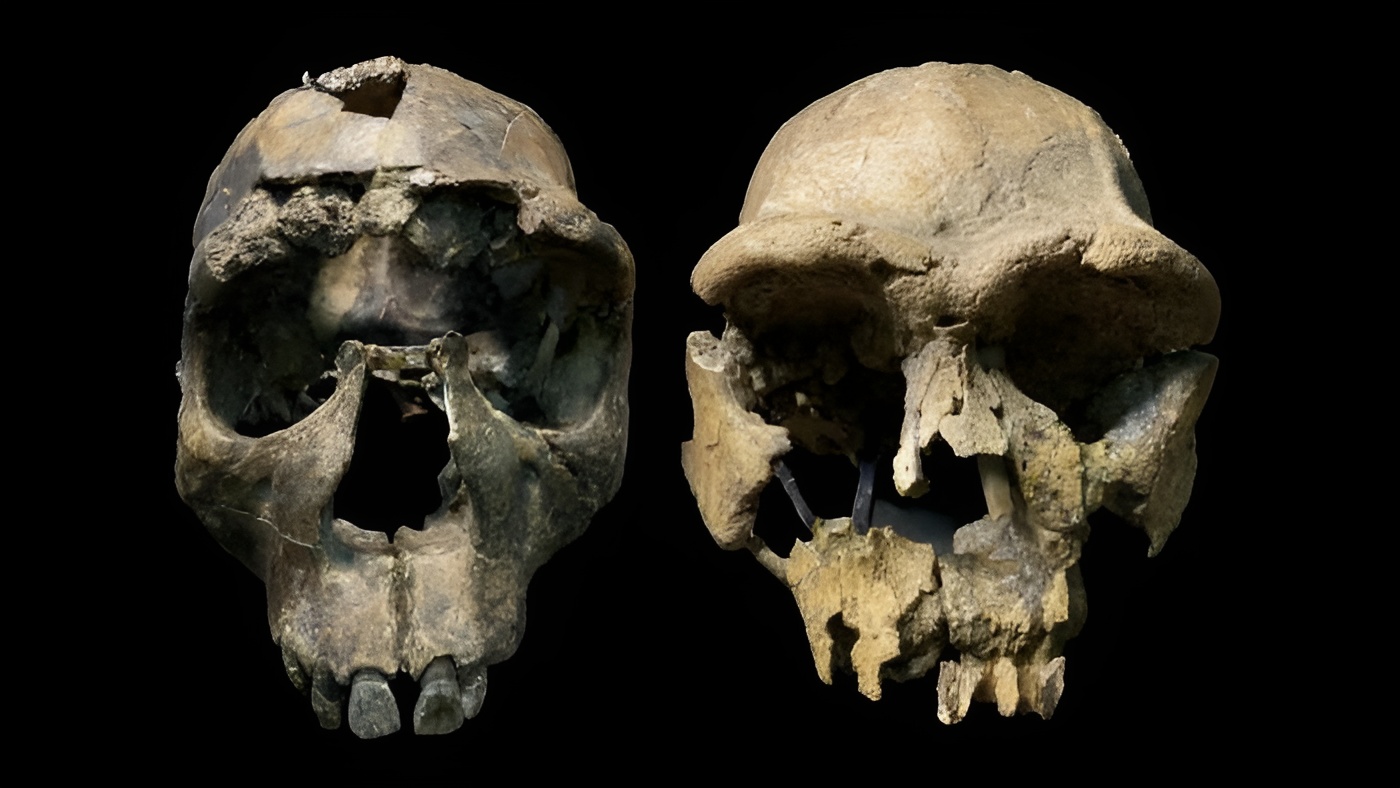
The Turkana Rift has yielded more than 1,200 hominin fossils spanning the last 4 million years, representing roughly one-third of all such fossils ever found in Africa. For decades, palaeoanthropologists have viewed this staggering concentration of remains as proof that the region was a unique “Garden of Eden” where human ancestors rapidly evolved and diversified.
Rowan and his colleagues argue that the sheer volume of fossils is actually an illusion created by the tectonic necking.
Roughly 4 million years ago, the severe thinning of the crust caused the Turkana Rift to rapidly subside (sink). This deep basin quickly filled with fine-grained sediments, creating the absolute perfect geological conditions for preserving bone.
“The conditions were right to preserve a continuous fossil record,” Rowan said.
The Turkana Rift may not have been a uniquely special hub for hominin evolution; it was simply the only place equipped with the perfect geological machinery to preserve a 4-million-year record of whoever happened to be walking across it.