
An international team of scientists has produced a form of germanium that is superconducting, a breakthrough that could enhance the speed and energy efficiency of computer chips and solar cells.
Researchers, including physicists from New York University and the University of Queensland, published their findings in the journal Nature Nanotechnology. They created a germanium film that conducts electricity with zero resistance, allowing current to flow indefinitely without energy loss.
“Establishing superconductivity in germanium, which is already widely used in computer chips and fibre optics, can potentially revolutionise scores of consumer products and industrial technologies,” says New York University physicist Javad Shabani, one of the paper’s authors.
“Workhorse material” for semiconductors
Peter Jacobson, a physicist at the University of Queensland and co-author, explained that these materials could form the basis for future quantum circuits and low-power electronics. He noted that, since germanium is already a “workhorse material” for semiconductor technologies, demonstrating its superconductivity opens the path to “scalable, foundry-ready quantum devices.”
Achieving superconductivity in semiconductors like germanium has historically been challenging.
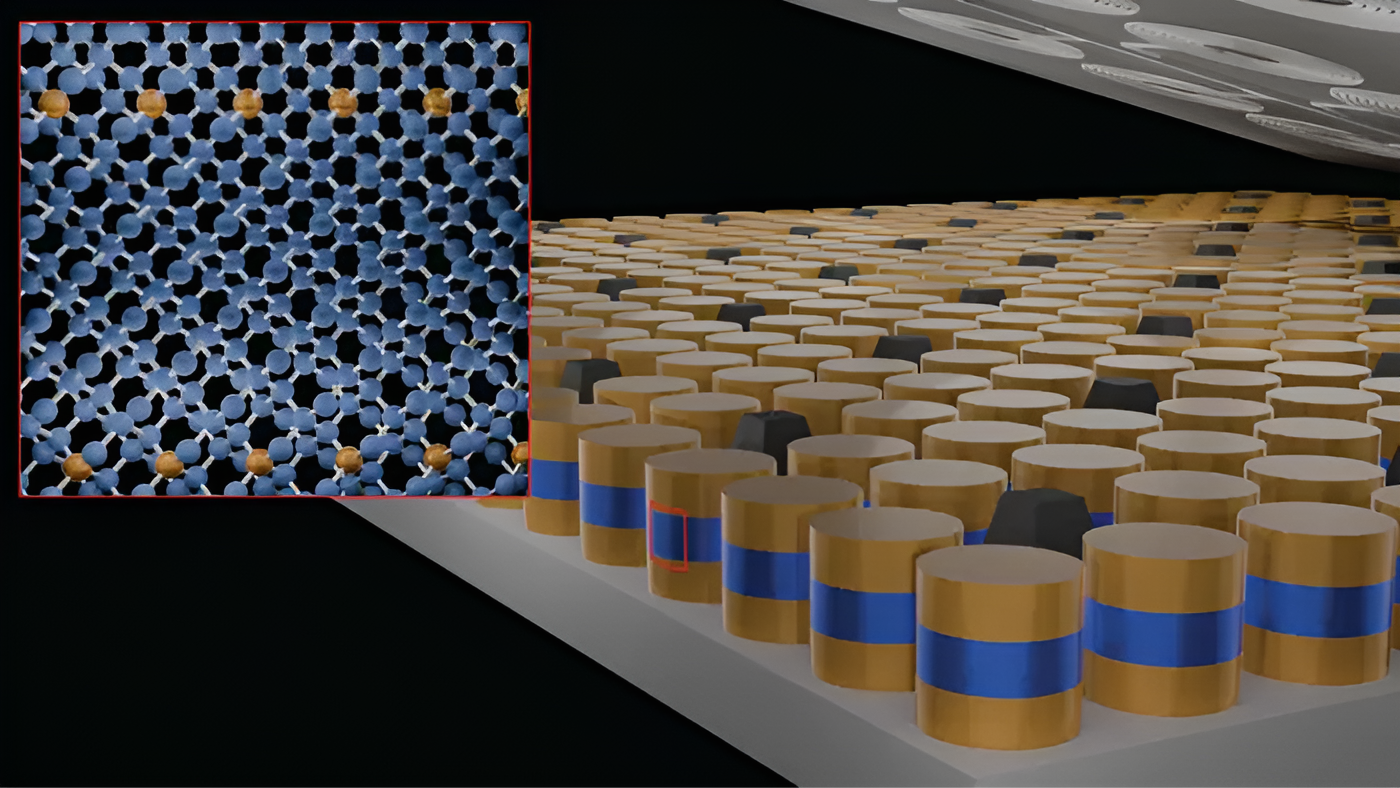
The scientists used a technique called molecular beam epitaxy to grow thin crystal layers, heavily infusing germanium films with gallium. This process forces gallium atoms to replace germanium atoms in the crystal at levels above normal. While high levels of gallium typically make the material unstable, the new technique keeps a stable structure. This structure becomes superconducting at 3.5 Kelvin, or approximately -453 degrees Fahrenheit.
“This works because group IV elements don’t naturally superconduct under normal conditions, but modifying their crystal structure enables the formation of electron pairings that allow superconductivity,” observes Shabani.