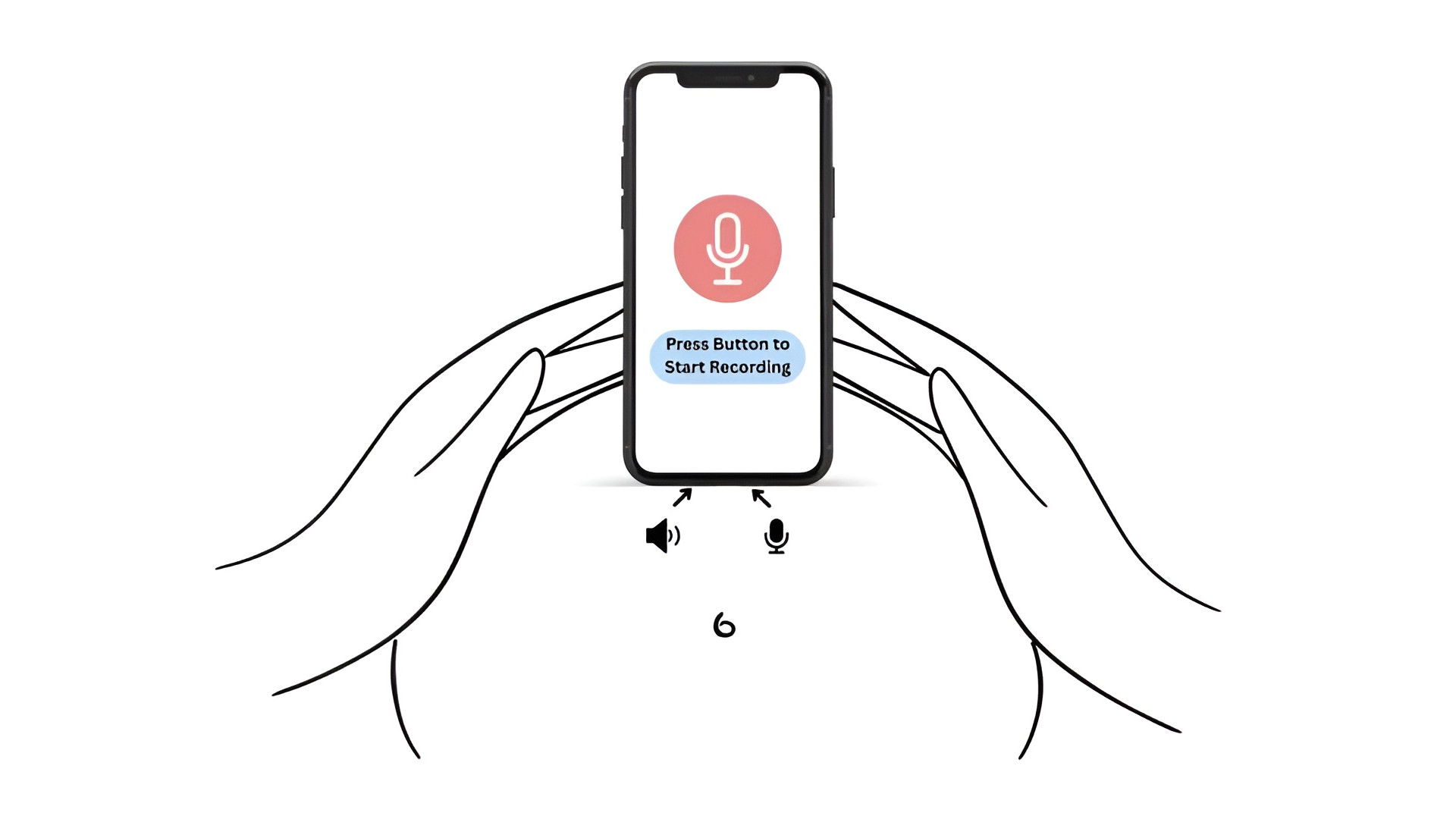

Expectant mothers may soon be able to monitor their baby’s heartbeat from home using nothing more than a standard smartphone, potentially offering a lifeline for pregnancies in low-resource areas.
A team of researchers at the University of Washington has developed DopFone, a new system that transforms an off-the-shelf smartphone into a highly accurate fetal heart monitor. Unlike traditional clinical Doppler ultrasounds — which require expensive equipment and skilled technicians — DopFone relies solely on the phone’s existing speaker and microphone.
The findings were published in the Proceedings of the ACM on Interactive, Mobile, Wearable and Ubiquitous Technologies.
“Eventually DopFone could let people test fetal heart rate regularly, rather than relying on the intermittent tests at a doctor’s office, or not getting tested at all,” said lead author Poojita Garg, a doctoral student at the UW Paul G. Allen School of Computer Science & Engineering. “Patients might then send this data to doctors so that they can better judge patients’ health when they’re not in a clinic.”
How the technology works
To use the app, a patient simply places their smartphone microphone against their abdomen for one minute.
The phone emits a subaudible 18-kilohertz tone. The researchers selected this specific low frequency because it travels well through human tissue while remaining within the recording capabilities of standard smartphone microphones. As sound waves reflect off the abdomen, the physical movement of the fetus’s beating heart creates subtle shifts in the echoes.
A built-in machine learning model then analyses this audio data, combined with the patient’s demographic information, to estimate the fetal heart rate.
Clinical trial results
During a clinical test conducted in UW Medicine’s maternal-fetal medicine division, the team tested the DopFone app on 23 pregnant patients who were between 19 and 39 weeks of pregnancy.
The results were promising:
- High accuracy: On average, the smartphone app’s readings were within 2.1 beats per minute (bpm) of a medical-grade Doppler ultrasound. This easily clears the accepted clinical standard, which allows for an error margin of up to 8 bpm.
- BMI variations: While the app’s accuracy decreased slightly for patients with higher body mass indices, the readings remained well within normal clinical limits.
The researchers noted that the app was not tested in patients with irregular fetal heartbeats, as such cases are typically medical emergencies.
Bridging the healthcare gap
The UW team plans to gather more data outside a laboratory setting to further train their machine learning model, with the ultimate goal of releasing DopFone as a publicly available app.
For Garg, the mission is fundamentally about equity. “This women’s health space is often overlooked,” she said. “So I want to focus on accessible alternatives that can be available to people in low-resource areas, whether that’s here in the U.S. or in other countries. Because health belongs to everyone.”