
The debate over whether Artificial Intelligence can ever truly be conscious has hit a deadlock, but a new theory from the Estonian Research Council proposes a third way forward: “biological computationalism”.
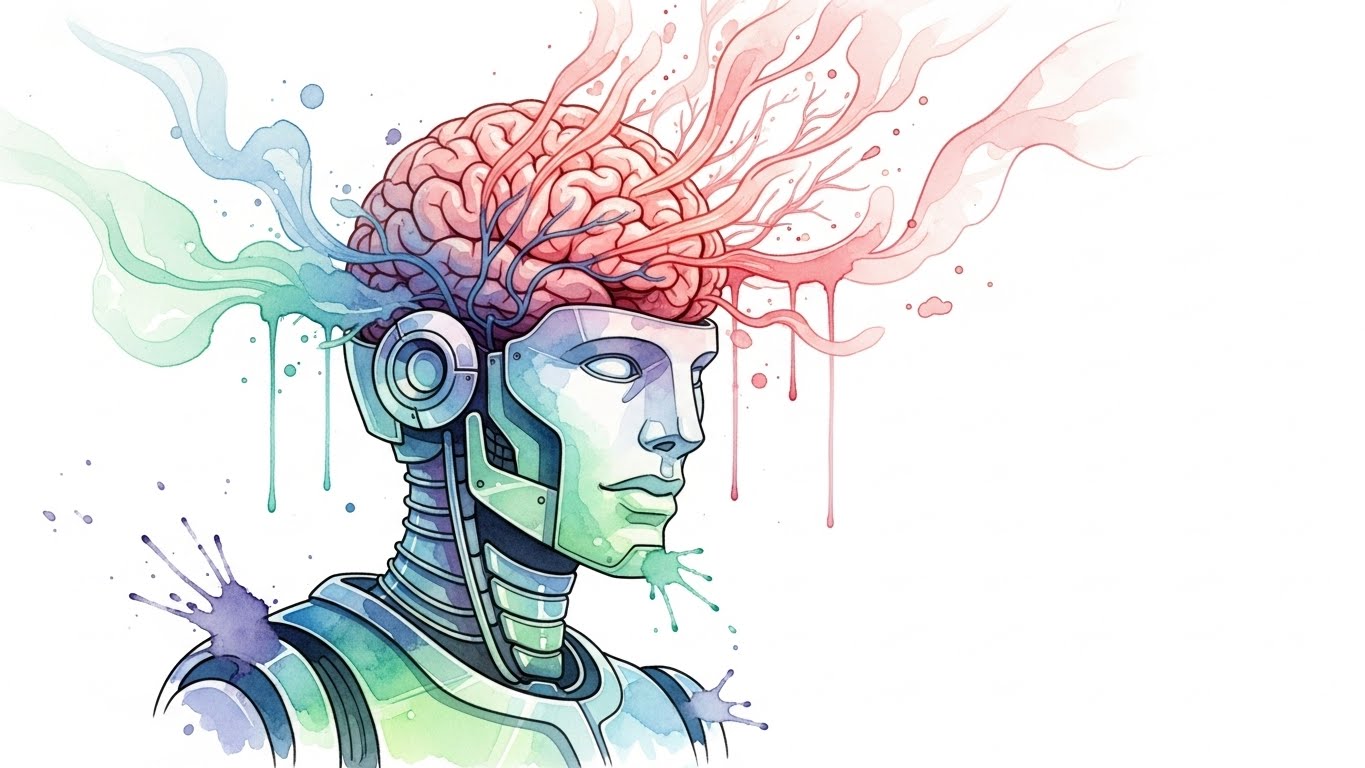
In a paper published this month, researchers argue that current AI development is based on a fundamental misunderstanding of how brains actually work. They contend that consciousness isn’t merely a complex program that can be run on any computer; it is an intrinsic property of physical matter.
The theory suggests that to create a synthetic mind, we don’t need better code — we need to build an entirely new type of computer that mimics the messy, energy-constrained physics of the living brain.
“The traditional computational paradigm is broken or at least badly mismatched to how real brains operate,” the authors state. “For decades, it has been tempting to assume that brains ‘compute’ in roughly the same way conventional computers do: as if cognition were essentially software, running atop neural hardware.”
The software trap
The paper identifies three key differences between a standard computer and a biological brain, arguing that these differences are what make consciousness possible.
First, standard computers separate hardware and software. You can run the same program on a Mac or a PC. In the brain, however, there is no such separation. The “computation” is physically entangled with the “hardware” at every level, from the movement of ions to the firing of neurons.
Second, brains are “hybrid” systems. While digital computers operate on discrete 1s and 0s, brains integrate discrete events (such as a neuron firing) with continuous physical processes (such as voltage fields and chemical flows).
Third, the brain is “metabolically grounded”. It is an energy-limited organ, and its intelligence is shaped by the need to be efficient.
The algorithm is the substrate
The researchers argue that because current AI systems are purely digital — simulating functions rather than embodying them in physical time — they may never achieve true consciousness, no matter how powerful they become.
“Brains don’t merely run a program,” the paper explains. “They are a particular kind of physical process that performs computation by unfolding in time.”
This doesn’t mean consciousness is magic or exclusive to carbon-based life forms. Instead, the authors suggest that we should move away from simply scaling up digital AI and instead engineer “neuromorphic” or biological-style computing substrates.
“If the brain’s computation is inseparable from the way it is physically realised, then scaling digital AI alone may not be sufficient,” the authors conclude. “The problem may not be, ‘What algorithm should we run?’ The problem may be, ‘What kind of physical system must exist for that algorithm to be inseparable from its own dynamics?'”