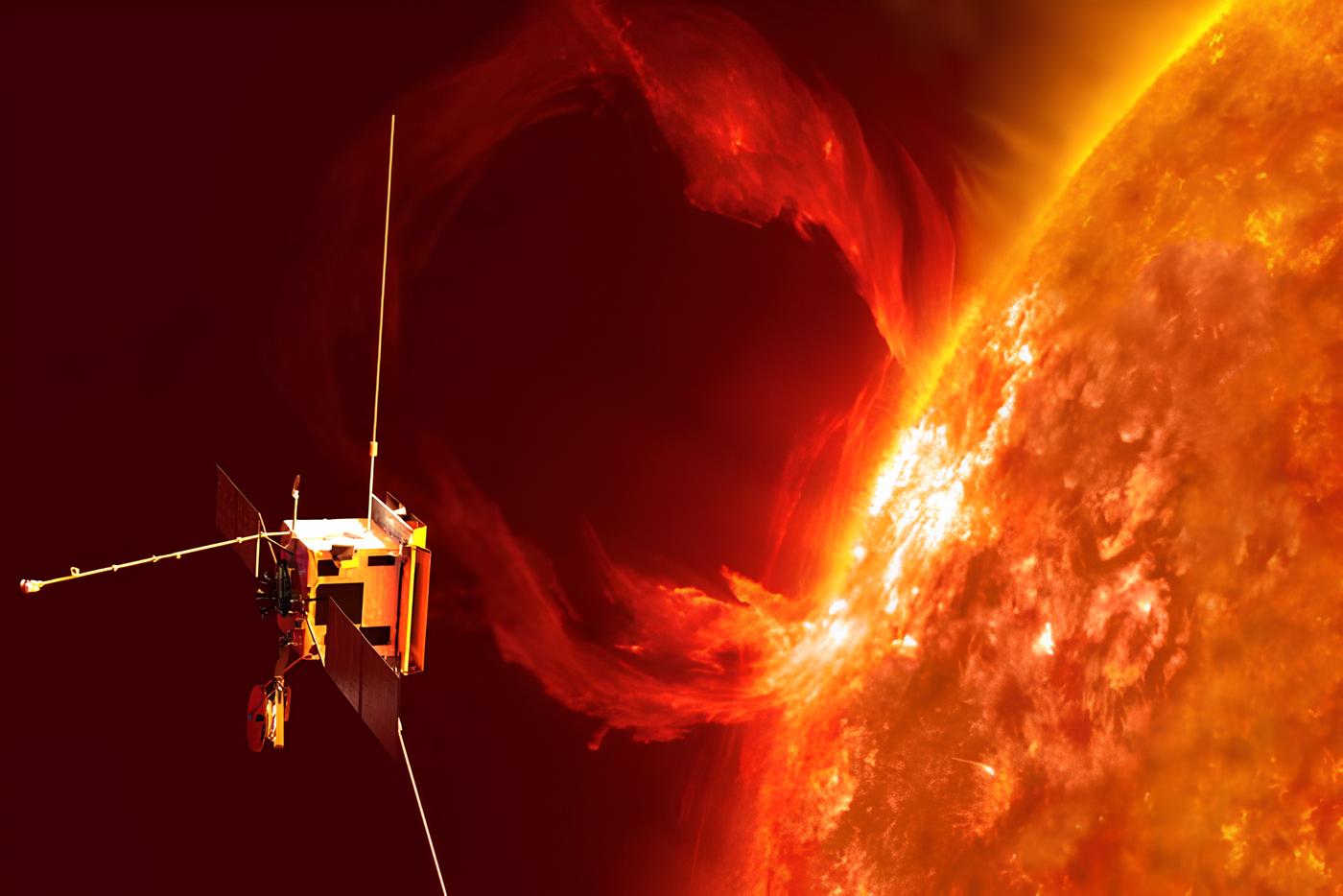

A record-breaking solar observation has highlighted the fragility of modern industry, revealing how solar storms are disrupting everything from railway safety systems to digital agriculture.
An international team led by ETH Zurich tracked a “superactive” solar region for 94 days, providing unprecedented insight into the magnetic chaos that triggered the strongest geomagnetic storms on Earth since 2003. While the storms created spectacular auroras, researchers warn that the industrial impact was severe and potentially dangerous.
“Even signals on railway lines can be affected and switch from red to green or vice versa,” said Louise Harra, professor at ETH Zurich and director of the Davos Physical Meteorological Observatory. “That’s really scary.”
High-tech losses
The region, known as NOAA 13664, caused significant economic damage when it rotated towards Earth in May 2024. The study highlights that “modern digital agriculture was particularly affected”, with disruptions to satellite, drone and sensor signals causing crop failures.
“Signals from satellites, drones and sensors were disrupted, causing farmers to lose working days and leading to crop failures with considerable economic losses,” Harra noted.
The threat extends to orbit, where solar storms can degrade satellite performance or cause them to crash. The researchers cited a February 2022 incident in which SpaceX lost 38 of 49 Starlink satellites shortly after launch due to solar activity.
Unblinking eye
To understand these threats, researchers combined data from ESA’s Solar Orbiter and NASA’s Solar Dynamics Observatory. This allowed them to monitor the region for three full solar rotations — a milestone in solar physics that bypassed the usual two-week observation limit imposed by the sun’s rotation.
“It’s a good reminder that the sun is the only star that influences our activities,” said Ioannis Kontogiannis, solar physicist at ETH Zurich. “We live with this star, so it’s really important we observe it and try to understand how it works and how it affects our environment.”
The findings will support the development of ESA’s upcoming “Vigil” mission, planned for 2031, which aims to improve space weather forecasting to protect critical infrastructure.