A major attempt to explain near-death experiences as simple brain chemistry has been dismantled by top experts, who argue the theory ignores the “perplexing” reality of what happens when we die.
The ambitious international effort to create a scientific framework for near-death experiences (NDEs) failed to solve the mystery, according to a new analysis from the University of Virginia (UVA).
In a paper published in Psychology of Consciousness: Theory, Research and Practice, UVA researchers argue that the new model – known as NEPTUNE – cannot account for the life-changing, multi-sensory phenomena reported by those who have brushed with death.
The NEPTUNE model (Neurophysiological Evolutionary Psychological Theory Understanding Near-Death Experience) attempts to explain NDEs through neurophysiological mechanisms, suggesting that the “hallucinations” people experience are caused by changes in blood gases, endorphins, or electrical activity in the brain.
However, UVA experts Bruce Greyson, MD, and Marieta Pehlivanova, PhD, argue that this explanation falls apart under scrutiny.
Hallucinations vs. reality
The researchers point out that standard neurological hallucinations typically affect only a single sense, such as hearing or sight.
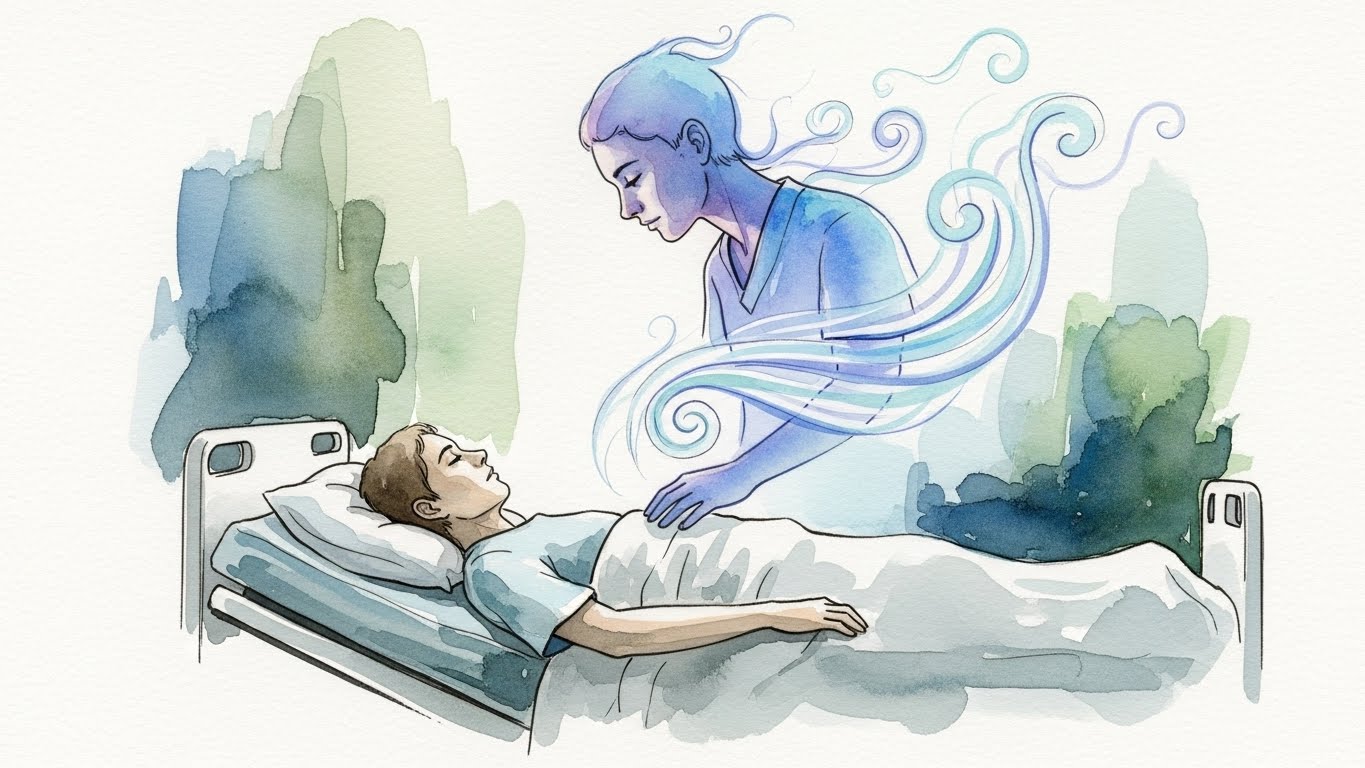
Real NDEs, by contrast, are “robust” experiences where people recall exactly what they saw, heard, smelled, and touched while “dead” – often involving encounters with deceased loved ones.
Crucially, while hallucinations are quickly forgotten, NDEs are often “burned into their brains for decades”.
The UVA team also rejected the NEPTUNE explanation for out-of-body experiences (OBEs), in which patients report floating above their physical forms and looking down on themselves.
The NEPTUNE scientists attributed this sensation to the activation of a specific brain region called the temporoparietal junction (TPJ).
Disembodied feelings
Greyson and Pehlivanova note that while stimulating the TPJ can make people feel “disembodied,” it does not reproduce the NDE experience. During TPJ stimulation, people do not actually see their own bodies from an outside perspective, nor do they feel they can move about independently.
“There is no evidence that electrical brain stimulation has ever produced accurate perception of anything not visible to the physical eyes, or that persists when eyes are closed, or that is from an out-of-body perspective – all features observed in spontaneous OBEs,” the researchers wrote.
While the UVA team praised the NEPTUNE creators for doing a “monumental job” in summarising the field’s arguments, they concluded that the model “selectively ignored scientific evidence” that contradicted its claims.
“The NEPTUNE model was a pioneering attempt to explain NDEs, but it… failed to address some of the most important and defining parts of NDEs,” said Greyson.
He added that while physiological triggers are worth exploring, science is currently just at the “beginning stage” of understanding the boundary between life and death.