
A new wearable device capable of reconstructing full sentences from silently mouthed words could allow stroke survivors to communicate fluently without the need for brain implants, according to researchers at the University of Cambridge.
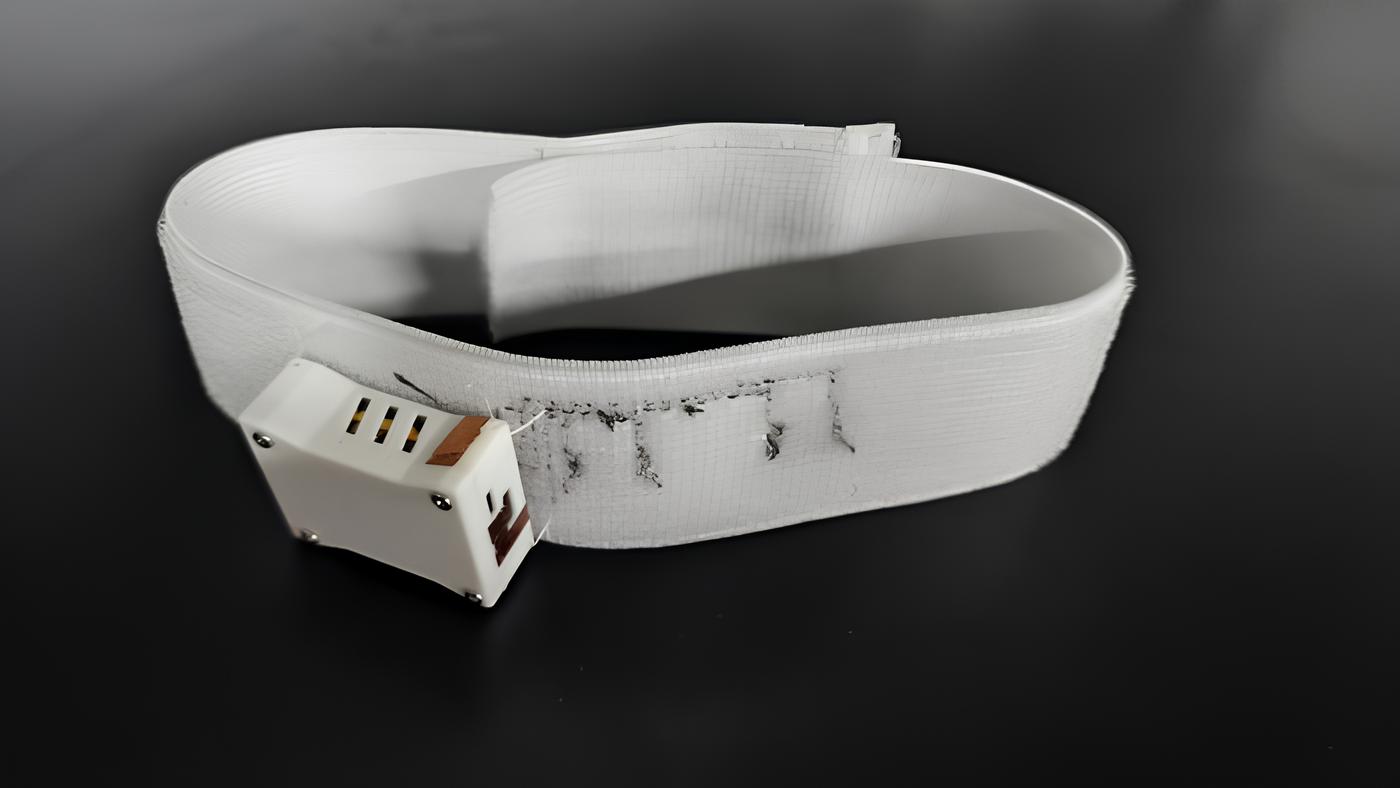
The device, named Revoice, uses a combination of ultra-sensitive sensors and artificial intelligence to decode speech signals and emotional cues in real time.
In a trial involving five patients with dysarthria — a common post-stroke condition causing muscle weakness in the face and mouth — the system achieved a word error rate of just 4.2 per cent and a sentence error rate of 2.9 per cent.
Assistive technologies
The findings, published in the journal Nature Communications, suggest a non-invasive alternative to existing assistive technologies, which often rely on slow letter-by-letter input or surgical brain-computer interfaces.
“When people have dysarthria following a stroke, it can be extremely frustrating for them, because they know exactly what they want to say, but physically struggle to say it, because the signals between their brain and their throat have been scrambled by the stroke,” said Professor Luigi Occhipinti, Department of Engineering, University of Cambridge.
The soft, washable device is worn like a choker. It captures tiny vibrations from throat muscles and monitors the wearer’s heart rate.
These signals are processed by two separate AI agents: one reconstructs intended words from mouthed movements, while the other interprets the user’s emotional state and environmental context, such as the time of day.
This allows the system to expand short, disjointed phrases into complete, expressive sentences.
Expanding phrases
In one trial example, the device expanded the phrase “We go hospital” into: “Even though it’s getting a bit late, I’m still feeling uncomfortable. Can we go to the hospital now?”
The system inferred the user’s frustration from an elevated heart rate and recognised the time of day to construct the full sentence.
“As many patients do recover most or all of their speech eventually, there is not a need for invasive brain implants, but there is a strong need for speech solutions that are more intuitive and portable,” Occhipinti added.
The researchers are planning a clinical study in Cambridge for native English speakers and hope to launch the system later this year.