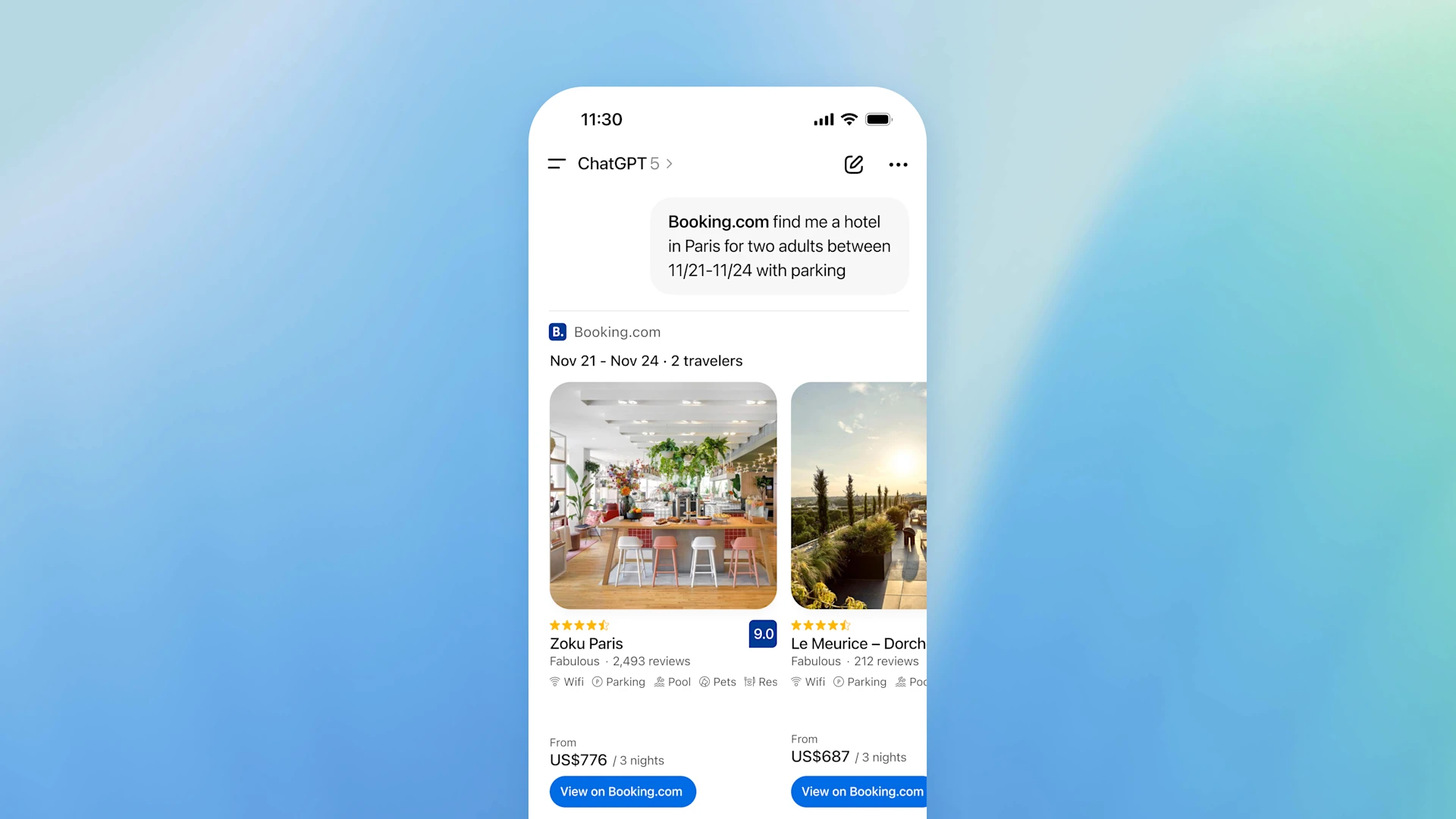

OpenAI has unveiled plans to transform ChatGPT into a platform operating system by embedding third-party applications directly within the chat interface, marking a significant strategic shift beyond simple chatbot functionality.
The company demonstrated new Apps software development kit capabilities at its annual Developer Day in San Francisco, showing Spotify, Canva and Zillow applications running entirely inside ChatGPT and responding to natural language commands, reports Wired.
CEO Sam Altman showcased the platform’s potential through live demonstrations, including creating business posters via Canva, generating pitch decks, and browsing property listings through an interactive Zillow map – all within ChatGPT’s chat window.
“Soon we’ll offer an agentic commerce protocol, with instant checkout from right within ChatGPT,” Altman announced, indicating plans for users to complete purchases without leaving the platform.
The move represents OpenAI’s attempt to keep users within its ecosystem rather than directing them to external websites or mobile applications, combining web and mobile experiences into what the company envisions as a chat-driven operating system.
Nick Turley, OpenAI’s head of product for ChatGPT, revealed the company’s broader ambitions during a post-keynote briefing.
“We never meant to build a chatbot; we meant to build a super assistant, and we got a little sidetracked,” Turley said, suggesting the new Apps SDK represents a return to original objectives.
The announcement follows mixed results from OpenAI’s previous platform efforts. The GPT Store launched in January 2024 with over 3 million custom GPTs created by developers, but these offerings ultimately failed to gain significant traction.
OpenAI also announced that Codex, its code-writing model, would transition from research preview to general availability, alongside new developer tools including AgentKit for building AI agents and enhanced analytics capabilities.
The platform push comes as OpenAI faces intensifying competition from Google, Anthropic and Amazon for developer adoption, whilst rival companies like Meta release capable open-source alternatives.