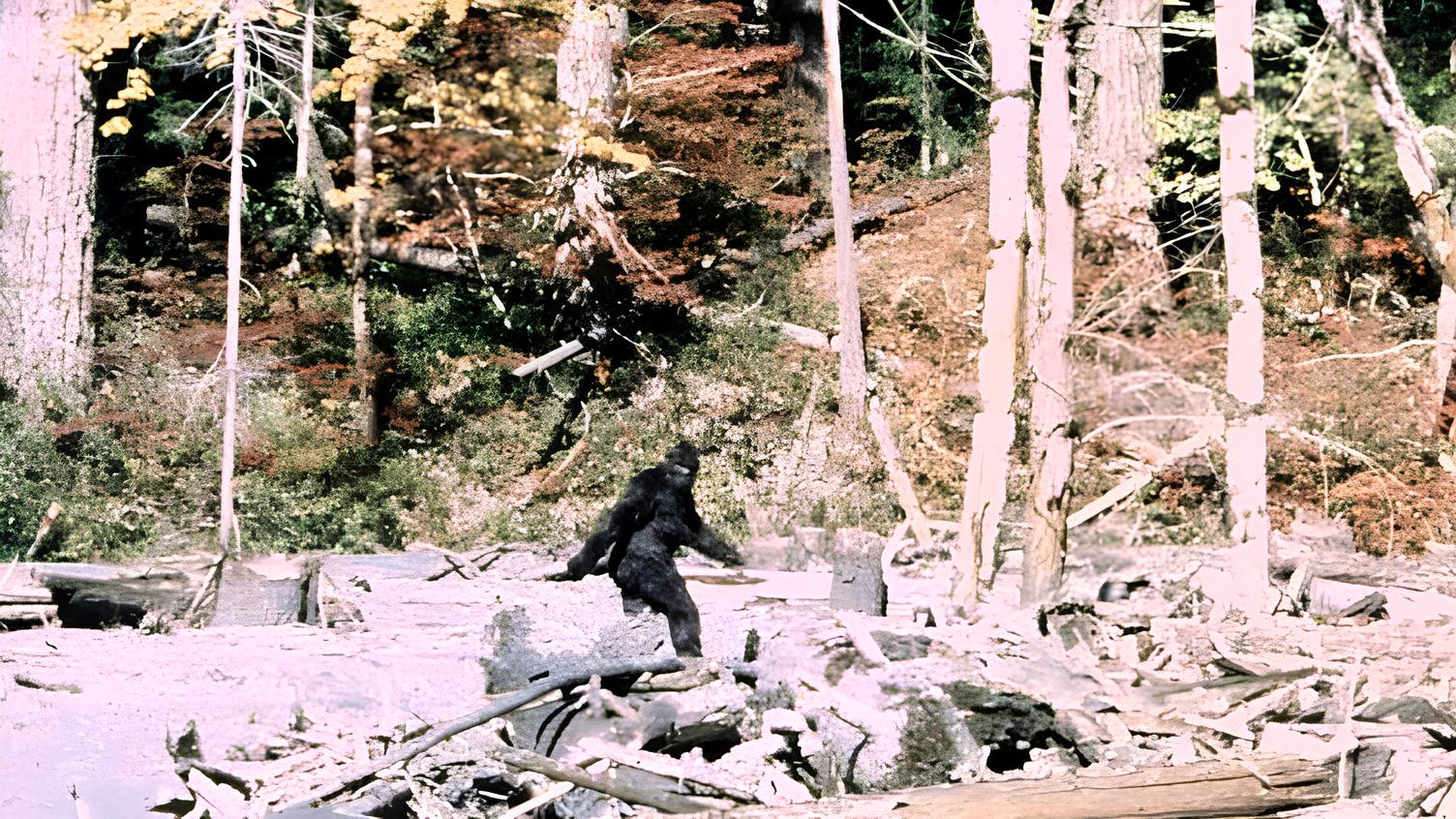

People hunting for Bigfoot are employing sophisticated surveillance technology and scientific methods to validate evidence of the creature’s existence.
A three-year study by sociologists from Cardiff University and Sheffield University found that the community of “Bigfooters” draws on the esteem of science to add credibility to their claims.
Dr Jamie Lewis of Cardiff University conducted more than 150 interviews with cryptozoologists, including stars of the TV programme Finding Bigfoot. The research reveals that enthusiasts use drones, thermal imaging and parabolic dishes to detect traces of the animal.
“As a sociologist of science, I’m really interested in the ways that ordinary people create knowledge, using scientific rhetoric and technologies in attempts to prove their theories,” said Dr Jamie Lewis, based at Cardiff University’s School of Social Sciences.
“As well as drawing from scientific practices, Bigfooters use a suite of modern technologies such as drones, thermal imaging, and parabolic dishes in their investigations.”
‘Apers’ and biological reality
While a minority of the community believes Bigfoot is supernatural, the overwhelming majority — known as “the Apers” — believe the subject is a biological creature that simply needs formal discovery.
“Sceptics might believe that Bigfooters are rejecting science by chasing an animal whose existence has never been proved. But what my interviews showed were the ways in which Bigfooters draw on their idea of scientific practices to piece together fragments of what they believe is tangible evidence,” said Lewis.
The findings, published in the book Bigfooters and Scientific Inquiry, suggest these activities are an attempt to replicate scientific rigour rather than ignore it.
Co-author Dr Andrew Bartlett of Sheffield University noted that the researchers adopted a stance of “methodological credulity” to understand the rationality behind the search.
“In taking the time and care to understand their knowledge world and their rationality, we can see just how much their activities are not ‘anti-science’ but an attempt to be scientific as they see it,” said Bartlett.