
Fears that commanding educational robots might negatively influence children’s behaviour appear unfounded, with new research showing that students prioritise established social norms over imitating rude machines.
A study from SWPS University, published in Computers & Education, found that elementary school children remained polite even when interacting with a humanoid robot that used an authoritarian communication style, suggesting that human etiquette overrides the tendency to mirror artificial behaviour.
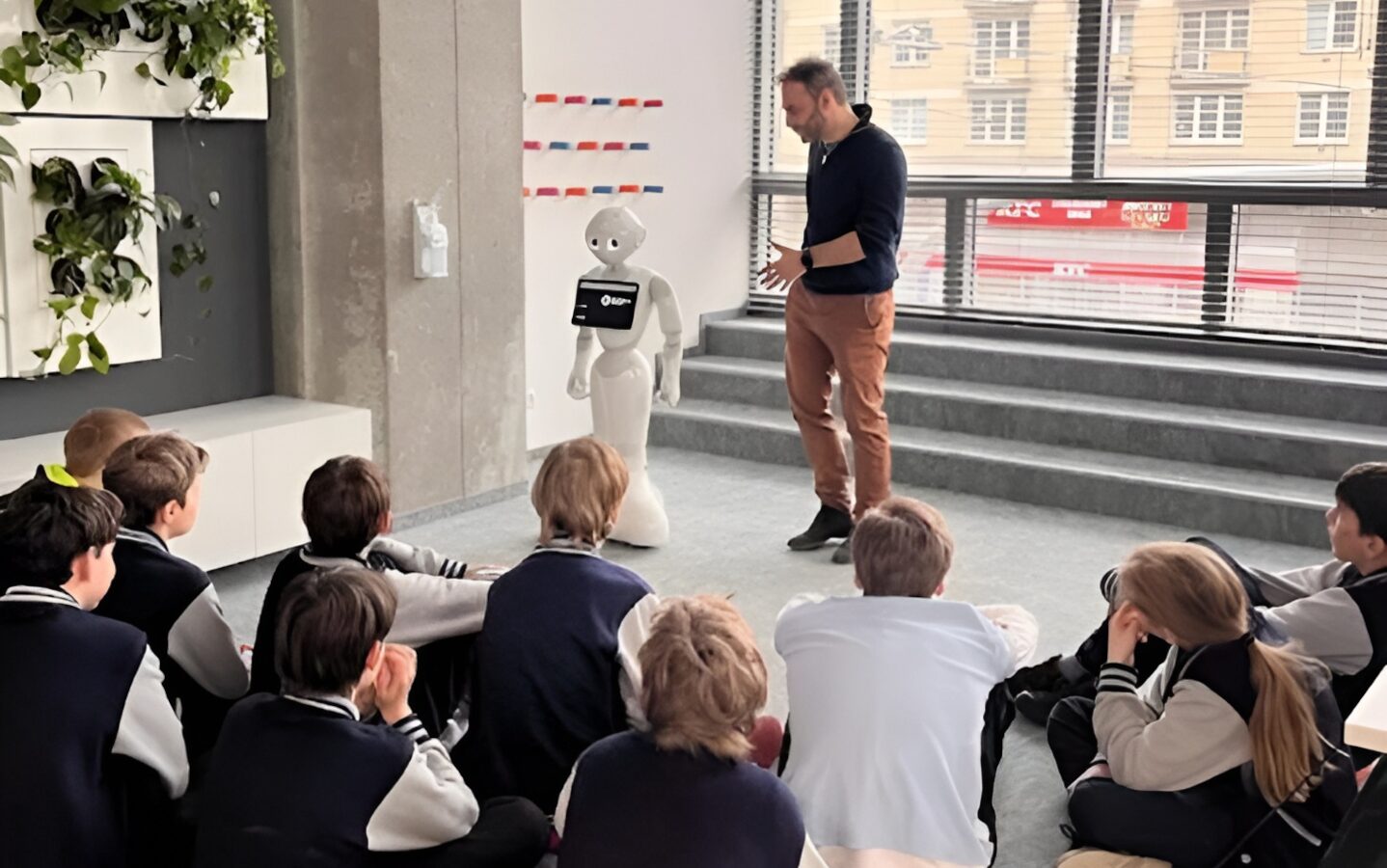
Researchers explored this dynamic using a 120-centimetre-tall humanoid robot named Pepper to interact with 251 children aged 7 to 12. The study aimed to determine if children would mirror the robot’s manners — whether polite or commanding — and assess their inclination to anthropomorphise the device by attributing human-like qualities to it.
Robot authoritarian style
While children interacting with a polite robot almost always responded politely, the researchers found that children addressed in a commanding manner also responded politely in most cases. The children’s established social norms prevailed over imitating the robot’s authoritarian style.
“Our results suggest that social cues in interactions between children and robots in education are particularly important,” said Konrad Maj, PhD, a social psychologist and head of the HumanTech Center for Social and Technological Innovation at SWPS University.
The findings have significant implications for the design of educational technology as robots increasingly enter classrooms.
The research also revealed that younger children and girls were significantly more likely to anthropomorphise the robot, believing it could experience states such as happiness or dreaming.
Polite robots were more likely to be attributed human-like qualities than commanding ones, especially when their “gender,” determined by the name Adam or Ada, matched stereotypical expectations. Anthropomorphisation was highest when the robot was female-coded and programmed to be polite.
Maj emphasised that understanding these perceptions is critical to ensuring robots become effective learning partners without negatively impacting children’s social behaviour.
“Adapting the robot’s communication style to children’s developmental level and their social expectations can increase student engagement and potentially support positive learning outcomes,” Maj said.