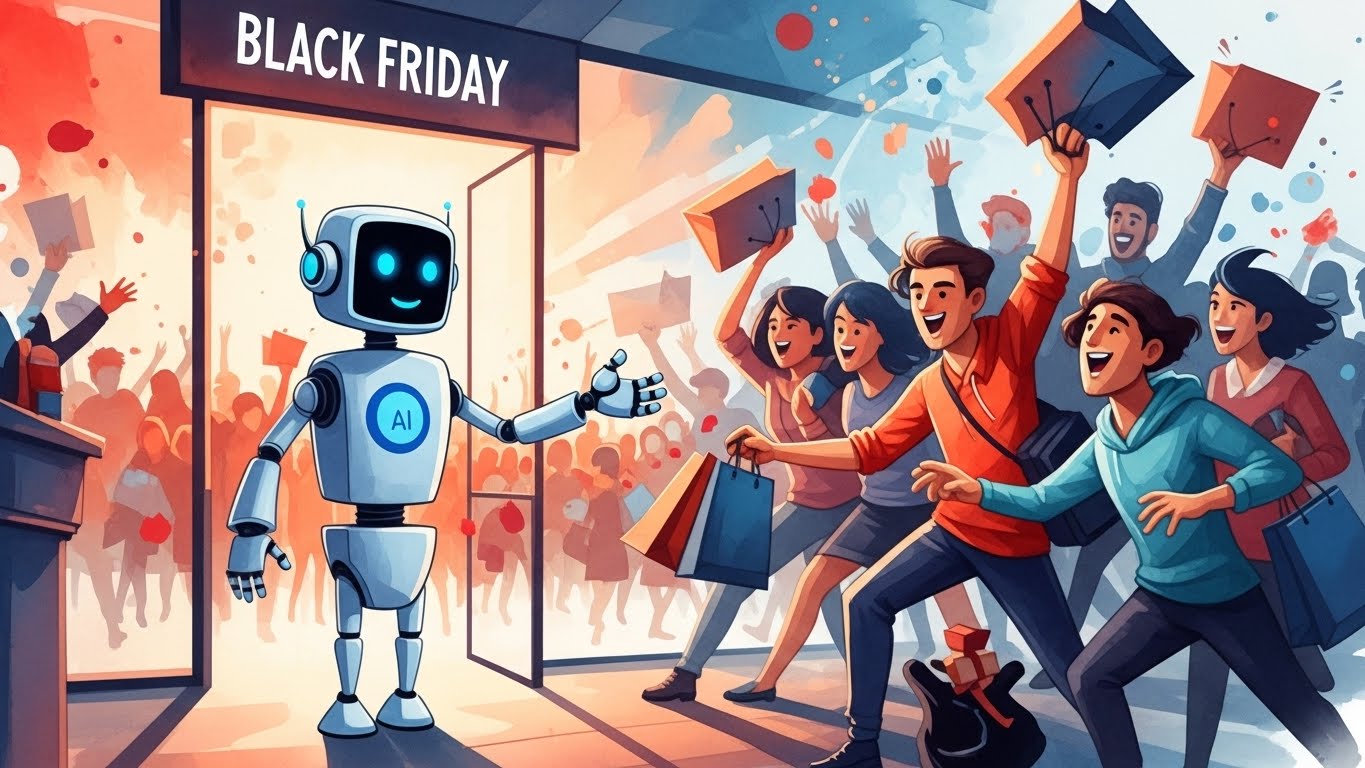

Artificial intelligence tools helped drive a record $11.8 billion in US online spending on Black Friday as consumers turned to chatbots to compare prices and secure discounts.
Traffic driven by AI to US retail sites soared 805 per cent compared to 2024, when tools like Walmart’s Sparky or Amazon’s Rufus had not yet launched, reports Reuters.
Adobe Analytics, which tracks 1 trillion visits to retail websites, recorded a 9.1 per cent increase in online spending year-over-year.
Mastercard SpendingPulse data highlighted the shift away from physical locations, noting that e-commerce sales grew 10.4 per cent, compared with just 1.7 per cent for in-store sales.
“Consumers are using new tools to get to what they need faster,” said Suzy Davidkhanian, an analyst at eMarketer. “Gift giving can be stressful, and LLMs (large language models) make the discovery process feel quicker and more guided.”
AI and agents influence
Globally, AI and agents influenced $14.2 billion in online sales, with $3 billion coming from the US alone, according to Salesforce.
However, the surge in spending masked underlying economic pressures. Salesforce data indicated that while total spend increased, order volumes actually fell 1 per cent as average selling prices rose 7 per cent due to inflation and tariff concerns.
“There are two things driving up the average selling price in the United States,” said Caila Schwartz, director of consumer insights at Salesforce. “The first is absolutely the impact of tariffs, especially on those discretionary categories where we’ve seen a lot of growth in selling price.”
Adobe projects that Cyber Monday will see even higher engagement, reaching $14.2 billion in online sales.