
A 10-month stare-down with a spinning stellar remnant has revealed how the “twinkle” of radio waves travelling through deep space could help scientists distinguish between human-made interference and potential signals from extraterrestrial civilisations.
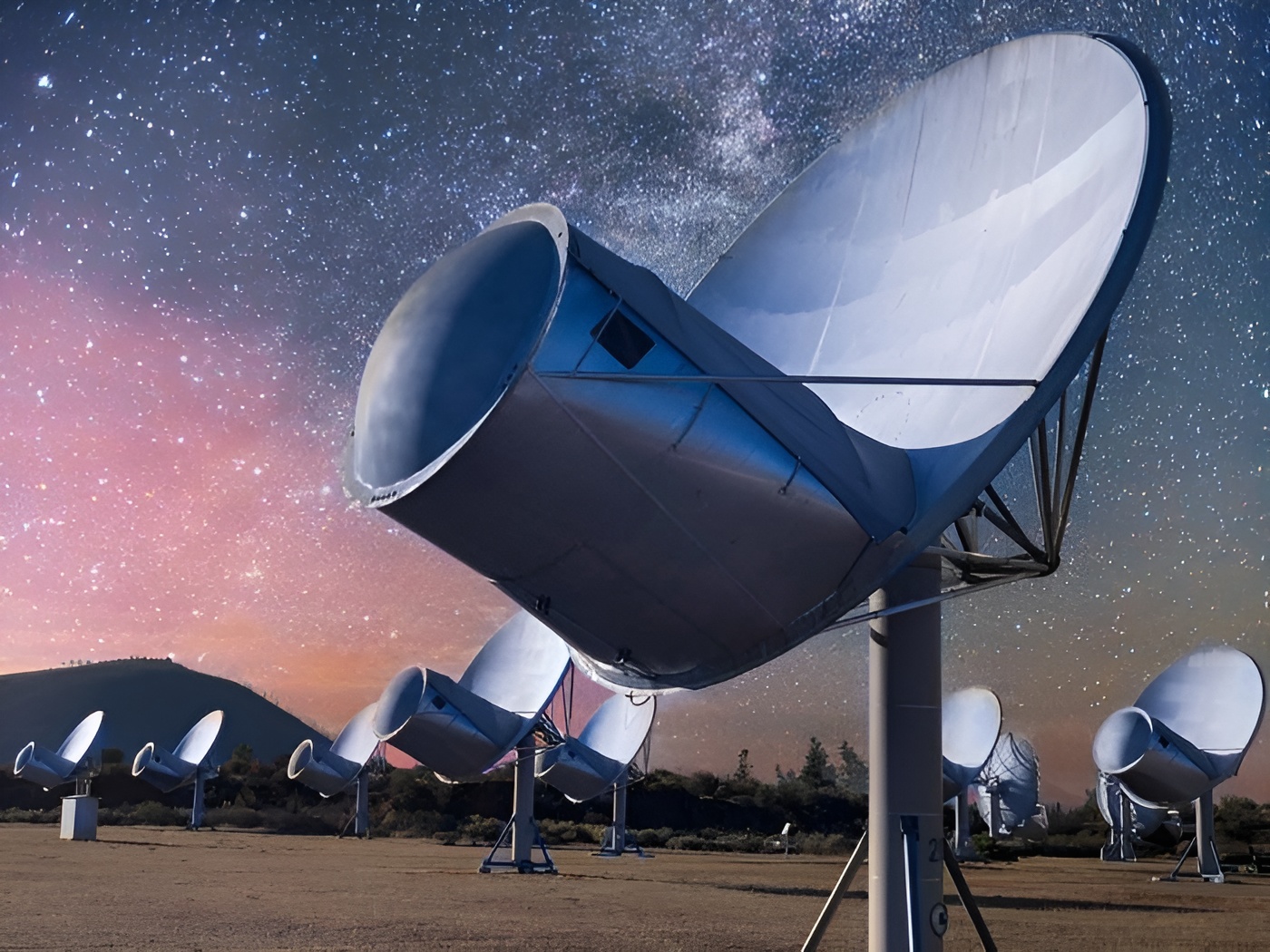
In a study led by the SETI Institute, researchers used the Allen Telescope Array (ATA) to track the pulsar PSR J0332+5434 (also known as B0329+54) for nearly 300 days. The team meticulously mapped how the star’s radio signal distorted, or scintillated, as it passed through clouds of electrons in the interstellar medium between the star and Earth.
“Pulsars are wonderful tools that can teach us much about the universe and our own stellar neighbourhood,” said project leader Grayce Brown, a SETI Institute intern. “Results like these help not just pulsar science, but other fields of astronomy as well, including SETI.”
Pulsars are the extremely dense, spinning remnants of massive stars that emit beams of radio waves like a lighthouse. While these flashes arrive with incredible regularity, the gas in interstellar space acts much like Earth’s atmosphere does to visible starlight, causing the radio waves to scatter and “twinkle”.
Gravitational waves
This scattering produces bright and dim patches across the radio frequency spectrum and can delay a pulse by tens of nanoseconds. Understanding these tiny fluctuations is critical for high-precision experiments, such as the search for low-frequency gravitational waves, which relies on measuring the exact arrival times of these pulses.
By measuring between 900 and 1956 MHz, the team found that the scintillation pattern was non-stationary. Instead, it evolved over timescales ranging from days to months, revealing a long-term variation cycle of approximately 200 days.
Beyond astrophysics, these findings have significant implications for the Search for Extraterrestrial Intelligence (SETI). All radio signals passing through the interstellar medium experience this scintillation effect.
Terrestrial noise
Because human-made radio interference (RFI) originates locally on Earth or from satellites, it does not pass through interstellar gas and therefore does not twinkle in the same way. Consequently, detecting noticeable scintillation can help scientists verify if a radio signal truly originates from a distant star system or if it is merely terrestrial noise.
“The Allen Telescope Array is perfectly designed for studying pulsar scintillation due to its wide bandwidths and ability to commit to projects that need to run for long stretches of time,” said Dr Sofia Sheikh, co-author and Technosignature Research Scientist at the SETI Institute.
The study also introduced a newly developed, more robust method for estimating how this scintillation increases with radio frequency, leveraging the unique capabilities of the ATA.



