
Science fiction is becoming a reality after researchers successfully tested microscopic robots that navigate the bloodstream to destroy cancer cells.
In 2021, the journal Science posed a century-defining question: Will injectable, disease-fighting nanobots ever be a reality? Now, a team from the Wuhan University of Technology in China appears to have found the answer.
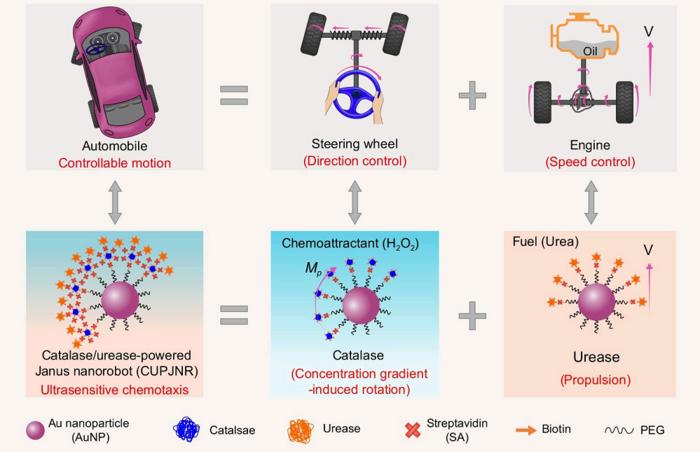
In a study published in the National Science Review, the researchers unveiled a new breed of “Janus nanorobots” that function like tiny, self-driving cars.
By integrating two specific enzymes, the team created a machine that separates its propulsion from its navigation, allowing it to hunt down tumours with unprecedented precision.
Engine and steering wheel
The design was inspired by the mechanics of an automobile. Just as a car needs an engine to move and a steering wheel to direct it, the nanorobots use two distinct chemical reactions to navigate the body.
- The Engine: The enzyme urease acts as the motor. It reacts with urea – a compound found naturally in the bloodstream – to generate propulsion.
- The Steering: The enzyme catalase acts as the navigator. It senses concentrations of hydrogen peroxide (H2O2), a chemical typically found in the microenvironment surrounding a tumour, allowing the robot to orient itself toward the cancer.
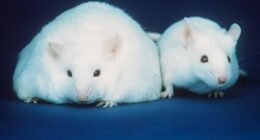
When tested in mice, the results were dramatic.
Because the robots actively swim toward the disease rather than passively drift through the blood, they proved significantly more lethal to cancer cells.
Compared to standard passive drug delivery methods, the nanorobots demonstrated:
- 209 times better tumour-targeting efficiency.
- 1970 times better internalisation into cells.
- Over 10 times deeper penetration into the tissue.
Most importantly, when loaded with anti-tumour drugs, the bots boosted tumour suppression efficacy by approximately 49 times.
Moving to the clinic
The researchers believe this “propulsion-enhanced chemotaxis” strategy could eventually be used to treat not just cancer, but inflammation and infection by tuning the chemical reactions to different biological targets.
To expedite the translation of this technology to patients, the research group has established a dedicated company to advance the nanorobots toward clinical trials.
“With continued optimisation, rigorous evaluation, and interdisciplinary collaboration, the researchers anticipate that injectable nanorobots can move from experimental models to clinical practice in the foreseeable future,” the team stated.