
Soft robots are increasingly being used for everything from delicate object handling to search-and-rescue missions, but traditional manufacturing methods have kept the technology slow and expensive to produce.
Now, engineers at the University of Oxford have developed a rapid, ultra-low-cost technique that can fabricate flexible robotic components in under 10 minutes for less than $0.10 per unit.
Published in the journal Advanced Science, the new approach ditches complex silicone moulding and specialist 3D printing systems in favour of everyday, commercially available materials.
“By lowering the financial and technical barriers to fabrication, this advance could significantly democratise and accelerate soft robotics research and prototyping across laboratories, start-ups, and educational settings,” said Principal Investigator Professor Antonio Forte.
How 10-cent robots are made
The Oxford team’s breakthrough relies on just three basic components: cheap thermoplastic vacuum pouches, a standard vacuum sealing machine, and a desktop laser engraver or cutter.
By removing the air between the layers of plastic before laser processing, the researchers can simultaneously seal and shape inflatable structures with high accuracy in a single “cut-and-seal” step.
Once fabricated, these inflatable actuators bend predictably when pressurised, enabling highly complex and programmable movements. To prove the method’s viability, the team built ultra-light crawling and swimming robots, as well as a soft robotic gripper capable of lifting 25 times its own weight.
Built to last
Despite the ultra-low cost, the Oxford team proved that their thermoplastic structures are incredibly durable. During systematic testing, the actuators demonstrated strong output forces at relatively low pressures and successfully withstood up to 100,000 inflation-deflation cycles.
The researchers also developed a computational design framework that allows engineers to mathematically “program” how actuators will bend by adjusting their geometric parameters, enabling predictable shapes such as spirals and letter-shaped structures.
However, the team also sees significant potential for the technique beyond industrial laboratories.
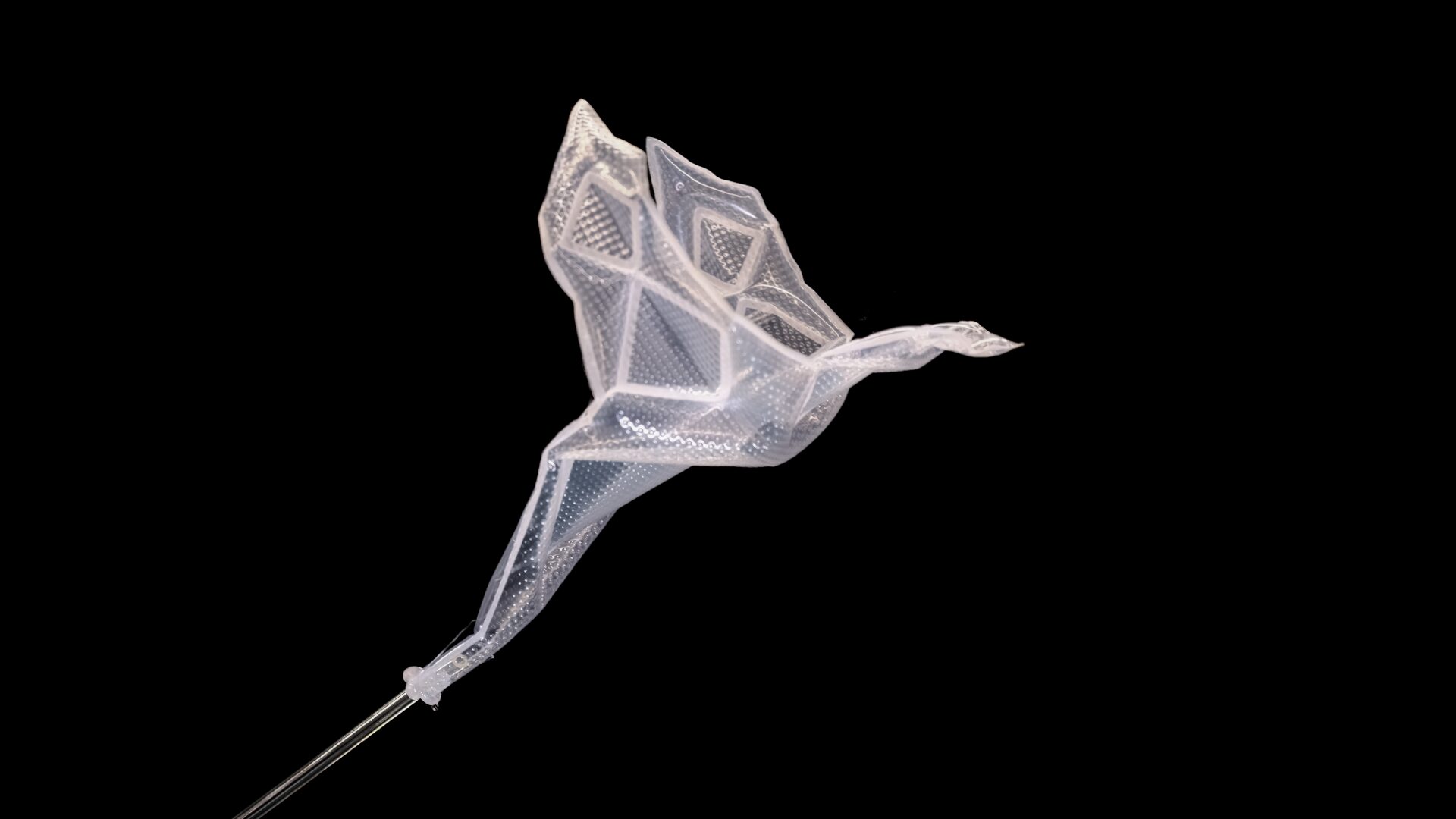
“Using this approach, we even produced inflatable animal structures, including turtles and cranes. By enabling creative and artistic projects, our method could be particularly valuable for education and attracting students to soft robotics,” said lead author and postdoctoral researcher Ashkan Rezanejad.
In future work, the Oxford researchers plan to explore other compatible thermoplastic materials to determine whether the method can be adapted to even more complex, multi-directional movements.



