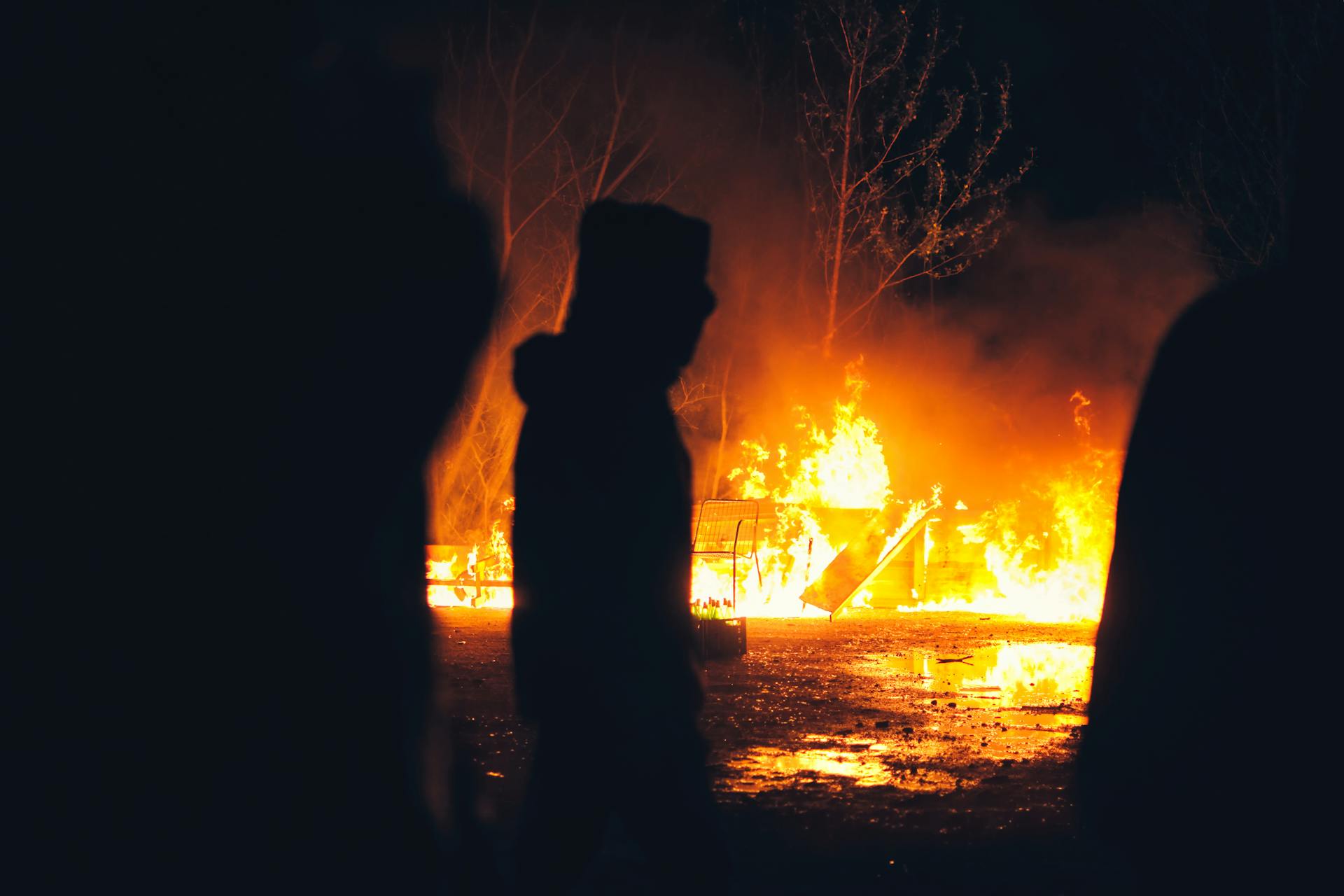

While social media posts by bystanders can help firefighters respond to emergencies more quickly, a new study warns that when a wildfire “goes viral,” it can trigger massive public pressure and costly operational overreactions.
According to research from the University of Waterloo published in the journal Production and Operations Management, emergency response agencies are increasingly falling victim to a “visibility-efficiency paradox”.
By analysing detailed records of California wildfires and their associated Twitter (now X) activity between 2007 and 2021, researchers discovered that high social media visibility acts as a double-edged sword.
The visibility-efficiency paradox
“A post that contains useful location or situational information may help speed up response, but highly emotional posts with limited informational content can also amplify urgency and unintentionally distort how resources are allocated,” explained Dr Garros Gong, who led the study under the supervision of Dr Stan Dimitrov.
Because agencies feel the pressure of this intense public spotlight, high social media visibility is consistently associated with a much heavier deployment of firefighting resources.
“While it was expected that social media could improve responsiveness, it was surprising to find that beyond a certain point, the same visibility can reduce operational efficiency in terms of suppression costs per acre,” Gong said.
The study found that when an incident’s high visibility leads to resource saturation, the suppression cost per acre actually skyrockets, penalising the agency’s overall financial efficiency.
Governing the attention pressure
To help emergency commanders filter out the irrelevant “noise” of viral outrage, the researchers developed a temporal gravity model. This tool quantifies the true seriousness of the social media signal by weighing the volume of tweets against the proximity and size of nearby populations.
Gong noted that as the global frequency of wildfires climbs, agencies cannot simply ignore social media, which is now a permanent part of the operating environment.
“The real challenge is how to govern the attention pressure it creates,” Gong concluded. “Our findings suggest that agencies should pair fast responses with clearer escalation thresholds, disciplined resource-trigger rules and post-event reverse audits to ensure public visibility improves responsiveness without pushing systems into costly over-allocation.”



