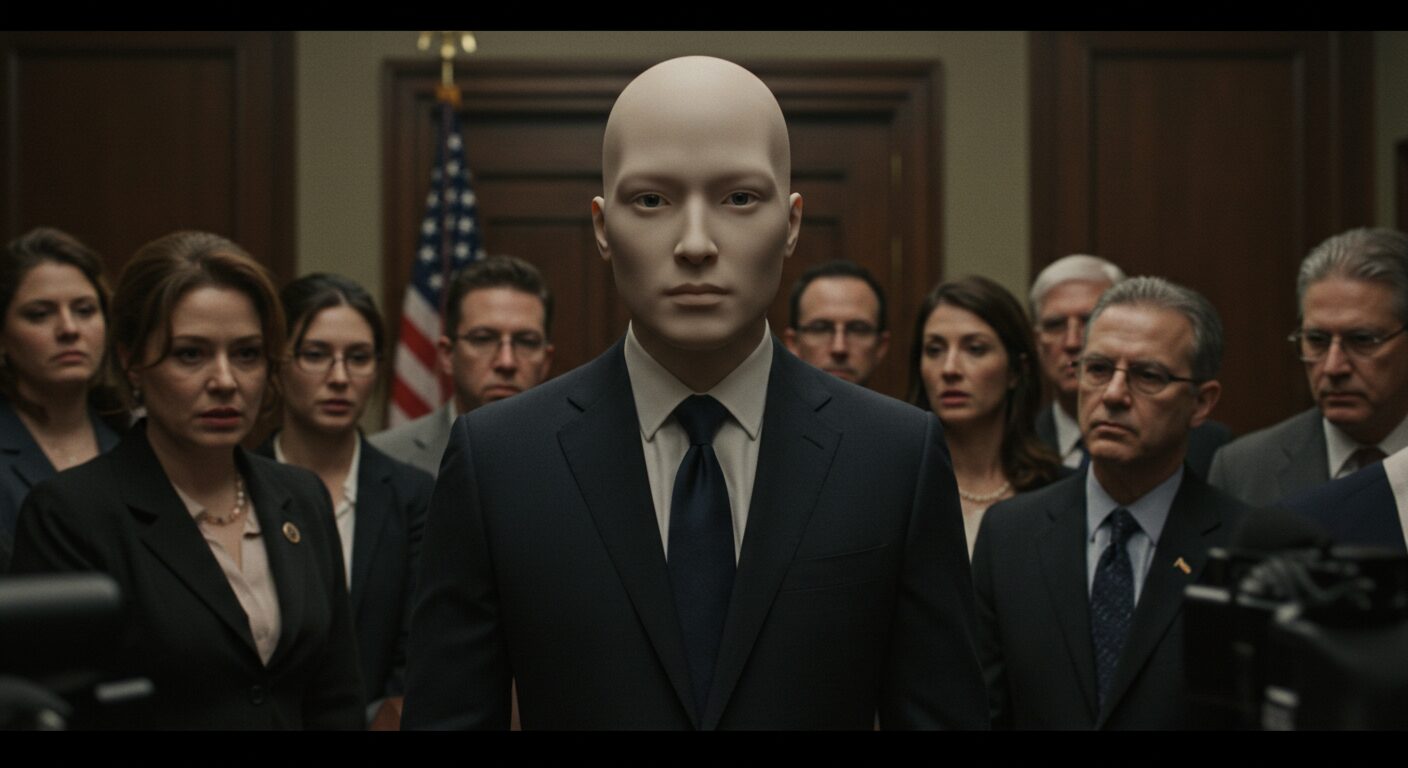

Silicon Valley executives are proposing artificial intelligence systems to replace democratically elected presidents, prompting calls for constitutional conventions to prevent corporate-controlled machines from governing democratic societies.
Writing in The New York Times, Harvard professor Jill Lepore warns that technology leaders are advancing anti-democratic governance models that could culminate in AI-powered presidencies without public constitutional safeguards.
OpenAI chief executive Sam Altman has suggested replacing human presidents with AI systems that could interact with every global citizen, understand their preferences comprehensively, and optimise decision-making for entire populations when speaking to podcaster Joe Rogan.
However, Lepore argues this represents tyranny rather than democratic progress, questioning whether replacing elections with corporate-owned machines operating under private rules constitutes legitimate governance.
The academic proposes reviving America’s constitutional convention tradition as a mechanism for preventing AI presidencies through democratic oversight rather than corporate self-regulation. She traces how states held nearly 250 constitutional conventions between 1776 and present, enabling governmental adaptation through public participation.
Technology leaders increasingly embrace anti-democratic models beyond AI presidencies. Venture capitalist Peter Thiel funds space exploration seeking “escape from world politics,” whilst programmer Curtis Yarvin advocates monarchical rule supported by artificial intelligence systems.
Current AI governance remains limited to corporate initiatives like Anthropic’s “Constitutional AI” programme, which involves company employees writing behavioural principles rather than democratic constitutional processes despite initial suggestions about public involvement.
Altman initially proposed democratic AI oversight in 2016, suggesting elected representatives for global governance boards. “Because if I weren’t in on this I’d be, like, ‘Why do these fuckers get to decide what happens to me?'” he told The New Yorker. However, no such democratic framework materialised.
The approaching 250th anniversary of American independence provides symbolic timing for constitutional initiatives addressing AI governance before corporate executives implement AI presidential systems without public consent.
Lepore argues that without democratic constitutional intervention, technology corporations will continue determining AI’s political role through private decisions, potentially culminating in AI presidencies that replace human democratic leadership entirely.