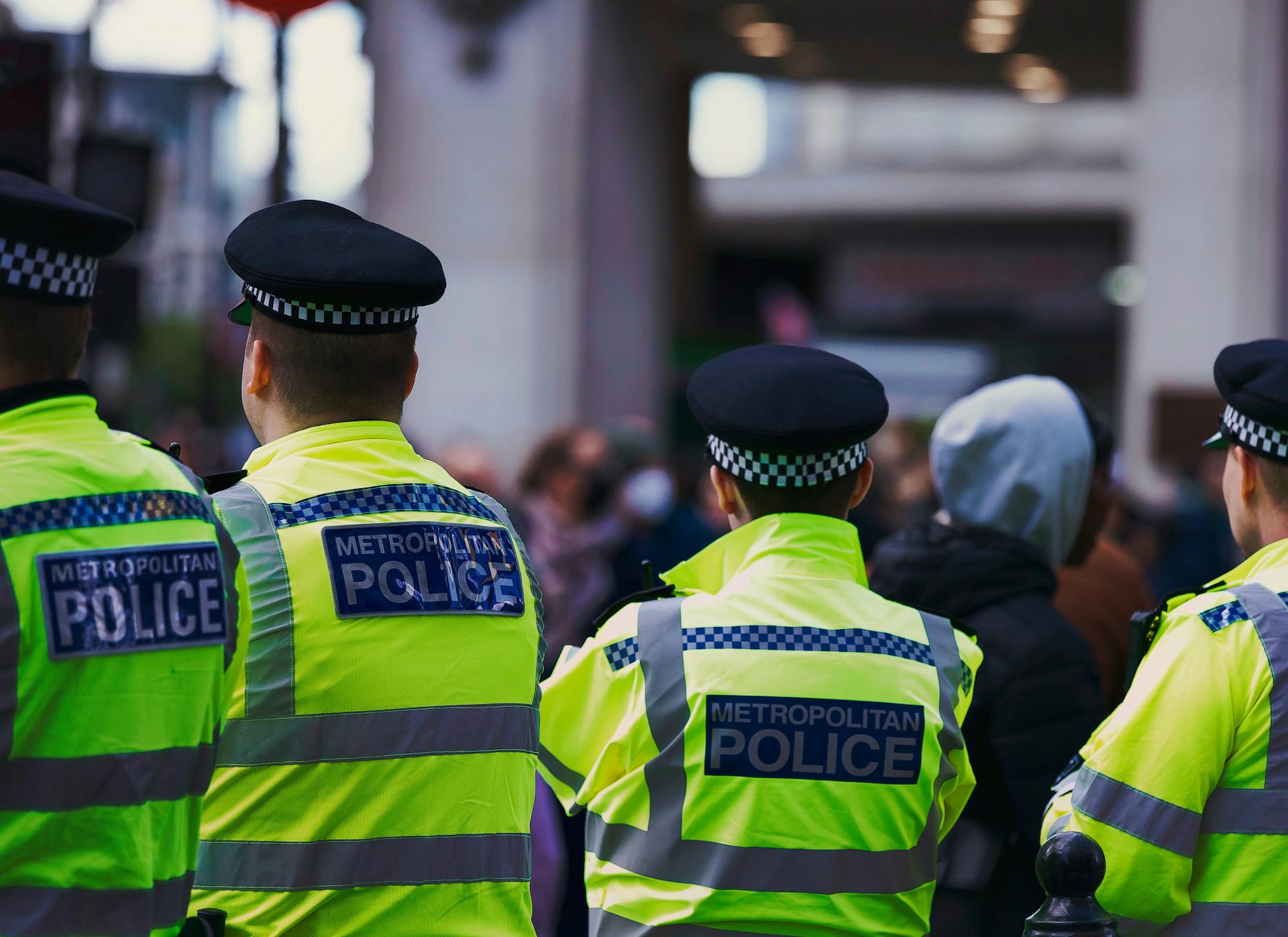

British authorities have significantly expanded their deployment of facial recognition technology and artificial intelligence tools across law enforcement and immigration, sparking debate over the balance between public safety and civil liberties.
The developments, reported by The New York Times, show that since January 2024, London police have charged or cited over 1,000 individuals using live facial recognition systems that match faces against a database containing approximately 16,000 wanted persons.
Under Prime Minister Keir Starmer’s administration, the UK has accelerated its adoption of digital surveillance technologies. Recent initiatives include enhanced internet regulation through the Online Safety Act, which introduced age verification requirements for platforms like Reddit and Instagram in July, and expanded use of AI systems to process asylum applications.
The facial recognition deployment has become particularly visible across London, with mobile units scanning pedestrians on busy shopping streets. At August’s Notting Hill Carnival, authorities made 61 arrests using the technology, targeting individuals wanted for violent offences and crimes against women.
Gavin Stephens, chairman of the National Police Chiefs’ Council, defended the approach in an interview. “Why wouldn’t you use this sort of technology if there were people who were wanted for serious offenses and were a risk to public safety?” he said.
Metropolitan Police data indicates high accuracy rates, with only one misidentification recorded in 2024 from more than 33,000 cases processed. The force plans to integrate facial recognition capabilities directly into officers’ mobile devices and is testing permanent camera installations in specific London areas.
However, the expansion has drawn criticism from privacy advocates and international observers. Jake Hurfurt from Big Brother Watch argued Britain has deployed these tools more extensively than other democratic nations, noting the European Union recently adopted legislation limiting facial recognition use.
The policies have attracted scrutiny from the Trump administration and Republican lawmakers, who have criticised the Online Safety Act as restricting free speech and targeting US technology companies. The administration also intervened earlier this year when Britain demanded Apple create easier access for intelligence agencies to encrypted user data, with officials claiming the UK subsequently withdrew the requirement.
Ryan Wain from the Tony Blair Institute for Global Change acknowledged the broader implications. “There’s a big philosophical debate going on here,” he said. “There’s a big question about what is freedom and what is safety.”
Prison authorities are similarly expanding AI adoption through an “AI Action Plan” introduced in July, incorporating algorithmic tools to assess prisoner risk levels and implementing remote surveillance systems for individuals on parole.
The Department for Science, Innovation and Technology maintained that public expectations justify the technology deployment. “We make no apologies for using the latest tools to help tackle crime, protect children online and secure our borders while safeguarding freedoms and ensuring the internet is safe for everyone,” a spokesman said.
Critics argue the measures represent unprecedented digital surveillance by a Western democracy, while supporters contend they provide necessary adaptation to technological change for enhanced security and public safety.