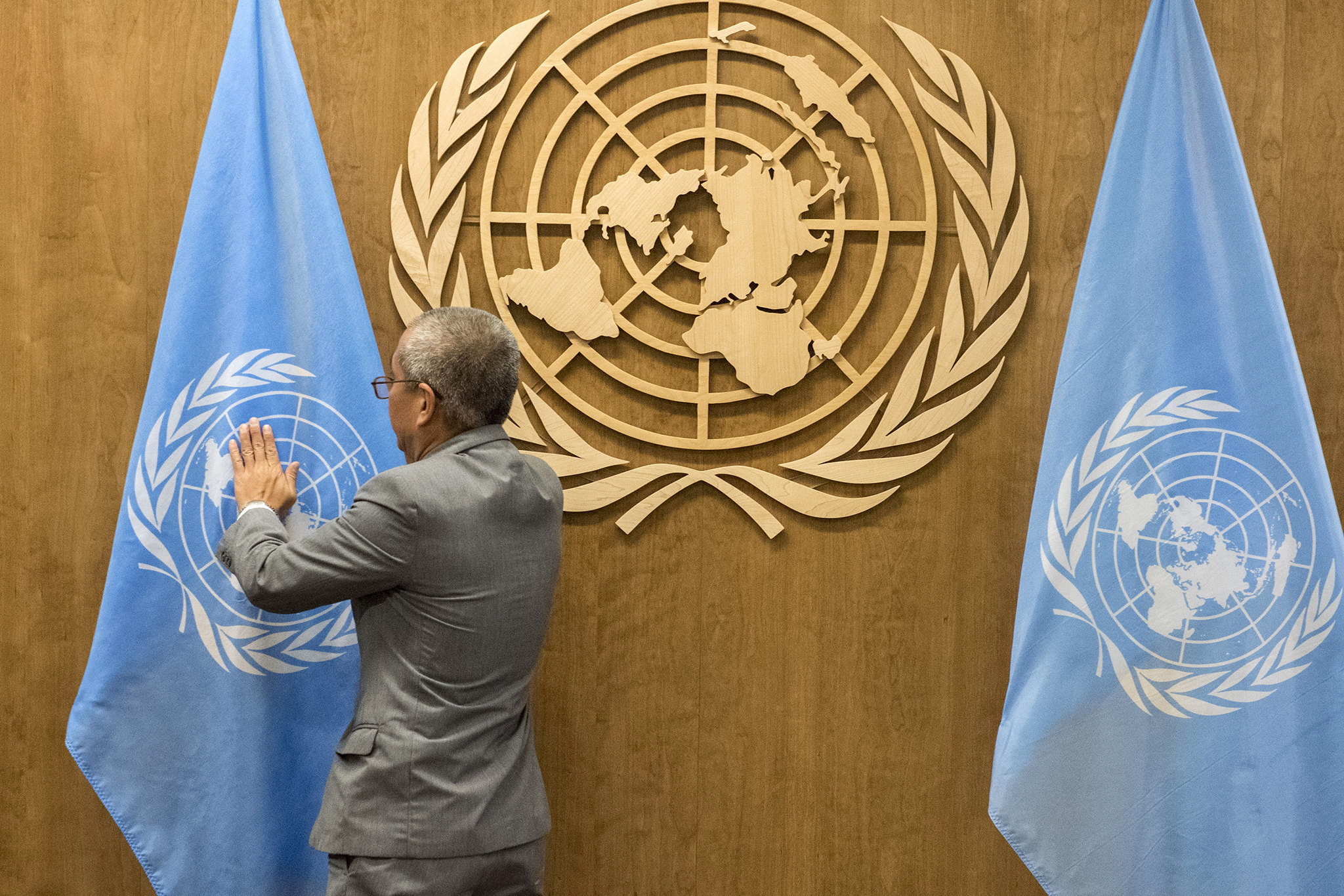
The United Nations Security Council conducted its inaugural open debate on artificial intelligence regulation, addressing concerns that the technology could threaten global stability and peace if left unchecked.
Wednesday’s session, presided over by South Korean President Lee Jae Myung, attracted representatives from 88 nations with discussions scheduled to continue on Thursday, reports The New York Times. Multiple foreign ministers participated in the historic debate focusing on AI’s expanding influence on international security.
Delegates highlighted AI’s capacity to compromise information integrity through fabricated audio and video content, alongside warnings about cybersecurity vulnerabilities and autonomous weapons development. However, some participants suggested that properly regulated AI systems could contribute to peacekeeping efforts.
Secretary General António Guterres, who has led UN efforts to establish AI oversight for the past year, emphasised the Council’s duty to ensure military AI applications comply with international law and UN Charter provisions. “The window is closing to shape AI for peace, for justice, for humanity,” Guterres warned delegates. “We must act without delay.”
Achieving consensus among the Security Council’s permanent members and 193 UN member states presents considerable challenges. The United States, China and Russia maintain distinct positions on national sovereignty over technology regulation, with the first two nations leading AI development whilst competing against each other.
“The United States is committed to creating, promoting and protecting the most innovative AI ecosystem in the world,” stated Michael Kratsios, director of the White House office of science, technology and policy. “We totally reject all efforts by international bodies to assert centralised control in global governance of AI.”
AI regulation first appeared on the Security Council’s agenda in 2023 when Guterres proposed creating a UN watchdog agency similar to existing bodies overseeing aviation, climate and nuclear energy. Military applications remain particularly contentious following incidents such as Israel’s 2020 AI-assisted assassination of Iranian nuclear scientist Mohsen Fakhrizadeh using satellite-controlled robotics.
The General Assembly recently established an Independent International Scientific Panel on Artificial Intelligence alongside an annual Global Dialogue on AI Governance. Thursday’s conference will focus on promoting responsible innovation whilst prioritising humanitarian considerations in AI development.