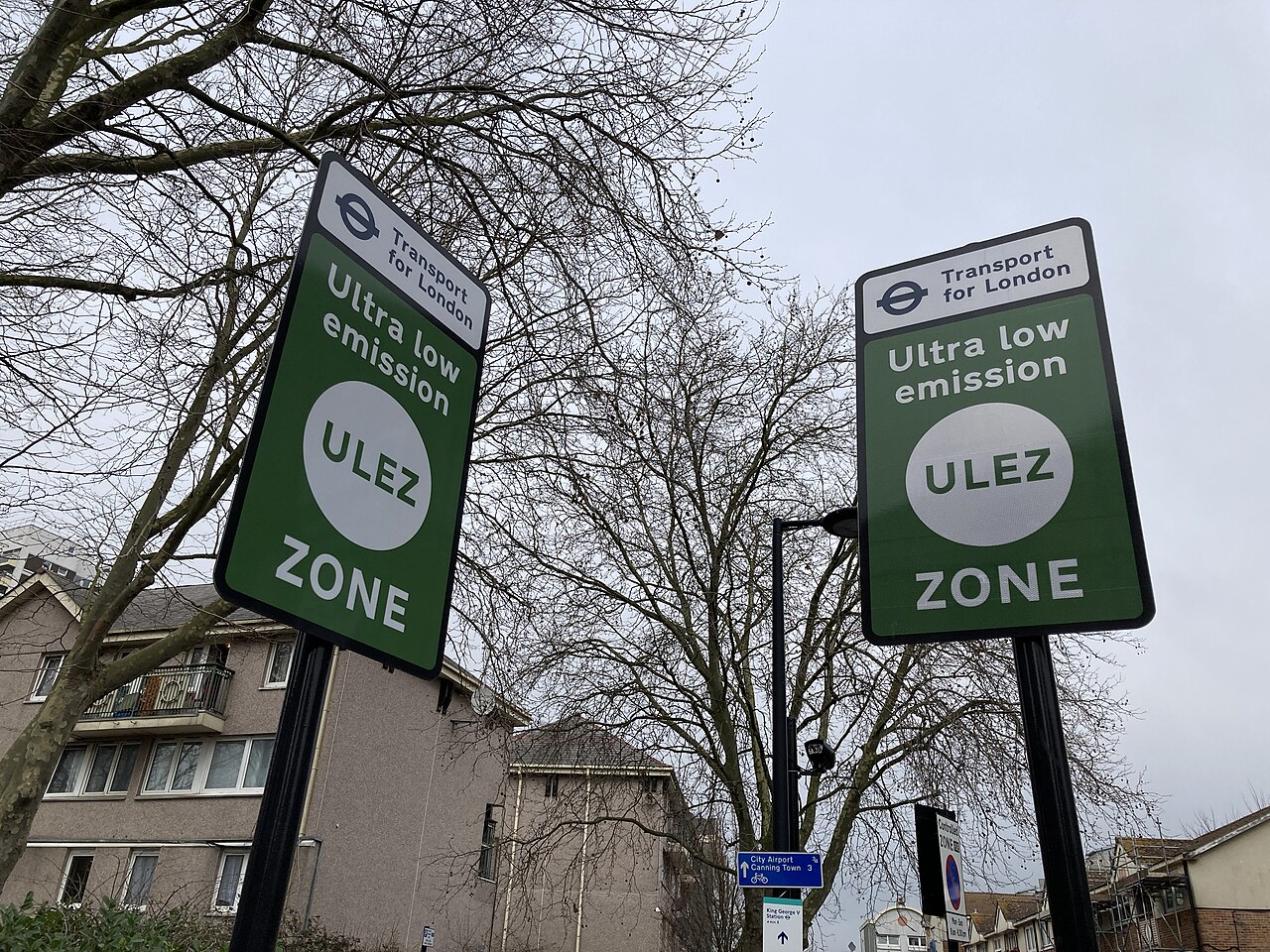

University of Birmingham research published today reveals that London’s ultra-low emissions zone delivered substantial reductions in nitrogen-based pollutants following its 2019 introduction. However, high vehicle compliance appears to have left little room for further improvements after the 2023 expansion.
The study, published in npj Clean Air, shows nitrogen dioxide fell 19.6 per cent at roadside sites in central London within three months of ULEZ implementation in April 2019, whilst nitrogen oxides dropped 28.8 per cent in the same period. The improvements reached areas later covered by the 2023 expansion.
Machine learning analysis of 124 monitoring sites across London enabled researchers to isolate ULEZ’s impact from weather variations. The team analysed hourly air pollution data across multiple years to assess both the 2019 introduction and 2023 expansion.
Transport for London data shows non-compliant vehicles operating in central London fell from 39.1 per cent at ULEZ’s launch to 27.5 per cent within three months. By the 2023 expansion, just 7.4 per cent of vehicles across London were non-compliant, dropping further to 4.2 per cent three months later.
The “anticipation effect”
Researchers detected no significant impact on nitrogen dioxide or nitrogen oxides following the 2023 expansion. Professor Zongbo Shi, who oversaw the study, attributes this to an “anticipation effect” where commitments to expansions encouraged earlier transitions to cleaner vehicles.
The research reveals a critical limitation: PM2.5 fine particle pollution showed no significant improvement and remains well above World Health Organisation guidelines across London.
Associate Professor Suzanne Bartington, a senior co-author of the study, emphasises ULEZ doesn’t address significant traffic-related public health issues like PM2.5 pollution, requiring a modal shift to active travel and public transport to reduce non-tailpipe emissions.
The study was partially funded by WM-Air and supported by the Natural Environment Research Council’s Regional Impact from Science of the Environment initiative. Previous WM-Air studies have linked air pollution in the West Midlands to up to 2,300 premature deaths annually.



