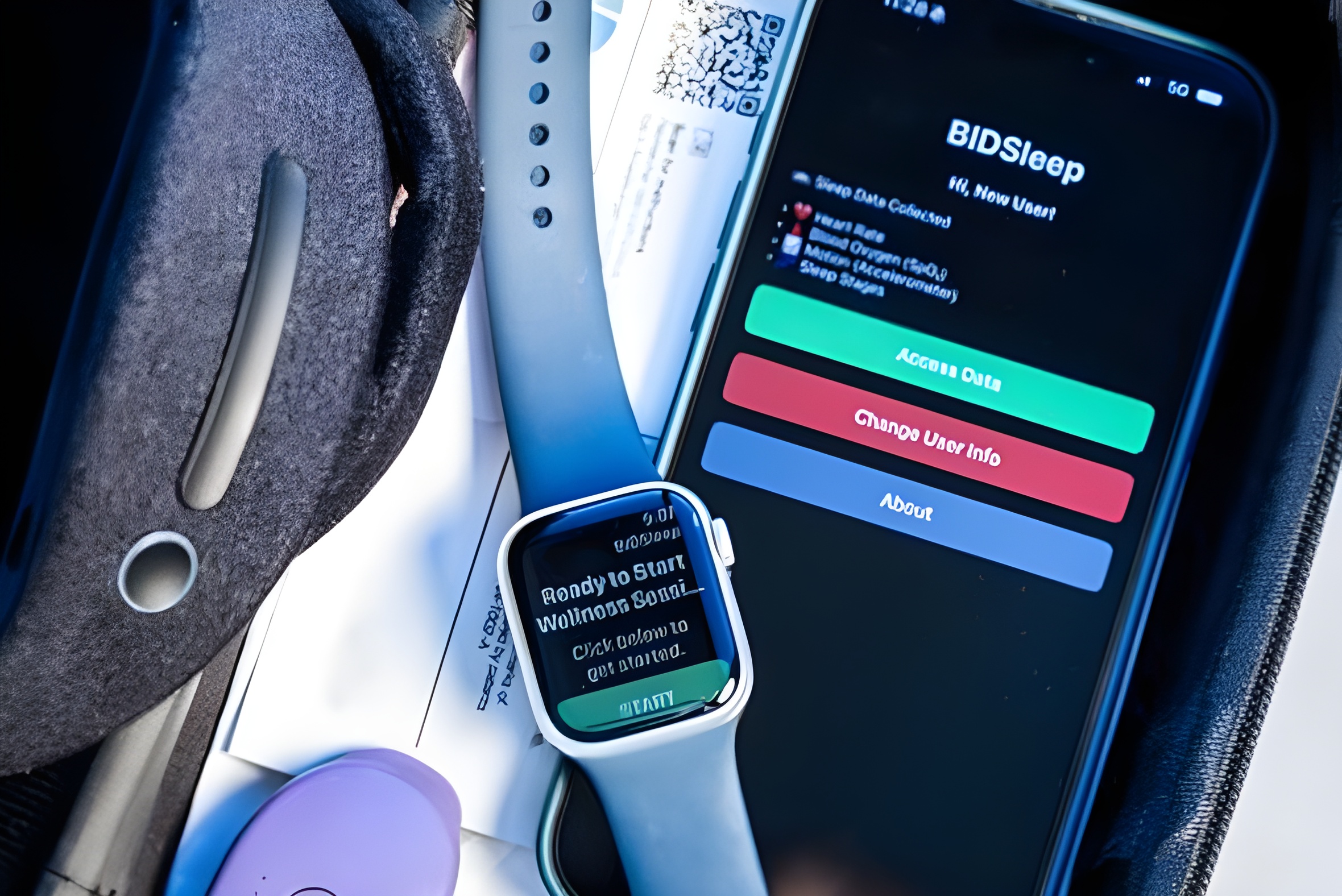

Researchers at the University of Massachusetts Amherst have developed an app that converts a consumer Apple Watch into a sophisticated tool for monitoring sleep stages.
The app, called BIDSleep, and its corresponding AI code are described as convenient and effective alternatives to complex and costly sleep study equipment. The new Apple Watch app will be incorporated into ongoing research examining links between disruptive sleep patterns and Alzheimer’s disease.
Currently, the gold standard for sleep studies is through lab-based assessments, which are complex, expensive, and typically last only one night.
“Our goal was to get as rugged as possible with a non-specialised consumer wearable device, which is the Apple Watch,” says Joyita Dutta, professor of biomedical engineering at UMass Amherst and senior author of the research, published in IEEE Transactions on Biomedical Engineering.
BIDSleep collects data on instantaneous heart rate, as this measure varies depending on the stage of sleep. These data feed into the researchers’ new AI model, which is available to other researchers.
Identifying deep sleep
On average, the model accurately identified the correct sleep stage 71% of the time, outperforming other well-known approaches used by the sleep research community. Dutta also notes that their model is even more accurate at identifying deep sleep.
“Our method works better for basically all of these metrics,” adds Tzu-An Song, a postdoctoral research fellow in Dutta’s lab and first author on the paper. The AI model produced results closest to the gold standard of EEG-based sleep staging compared to other modelling approaches.
Dutta notes that they did not compare their technology to the Apple Watch’s native sleep-staging capabilities because that feature was not available at the time of their study.
“Ultimately, we’d love for researchers and clinicians to use this app, which is why we created it in a style where you can easily port the data and get multi-night information out of it,” says Dutta.