
An underwater robot searching for Sir Ernest Shackleton’s lost ship Endurance has discovered more than 1,000 icefish nests arranged in geometric patterns off Antarctica. The nesting grounds were found in a remote part of the Western Weddell Sea, in an area previously hidden beneath a 200-metre-thick ice shelf.
The area became accessible after the 5,800 square kilometre A68 iceberg calved from the Larsen C Ice Shelf in 2017. A remotely operated vehicle (ROV) exploring the seafloor revealed the circular nests, each cleared of the plankton detritus that covered surrounding areas.
Science and search
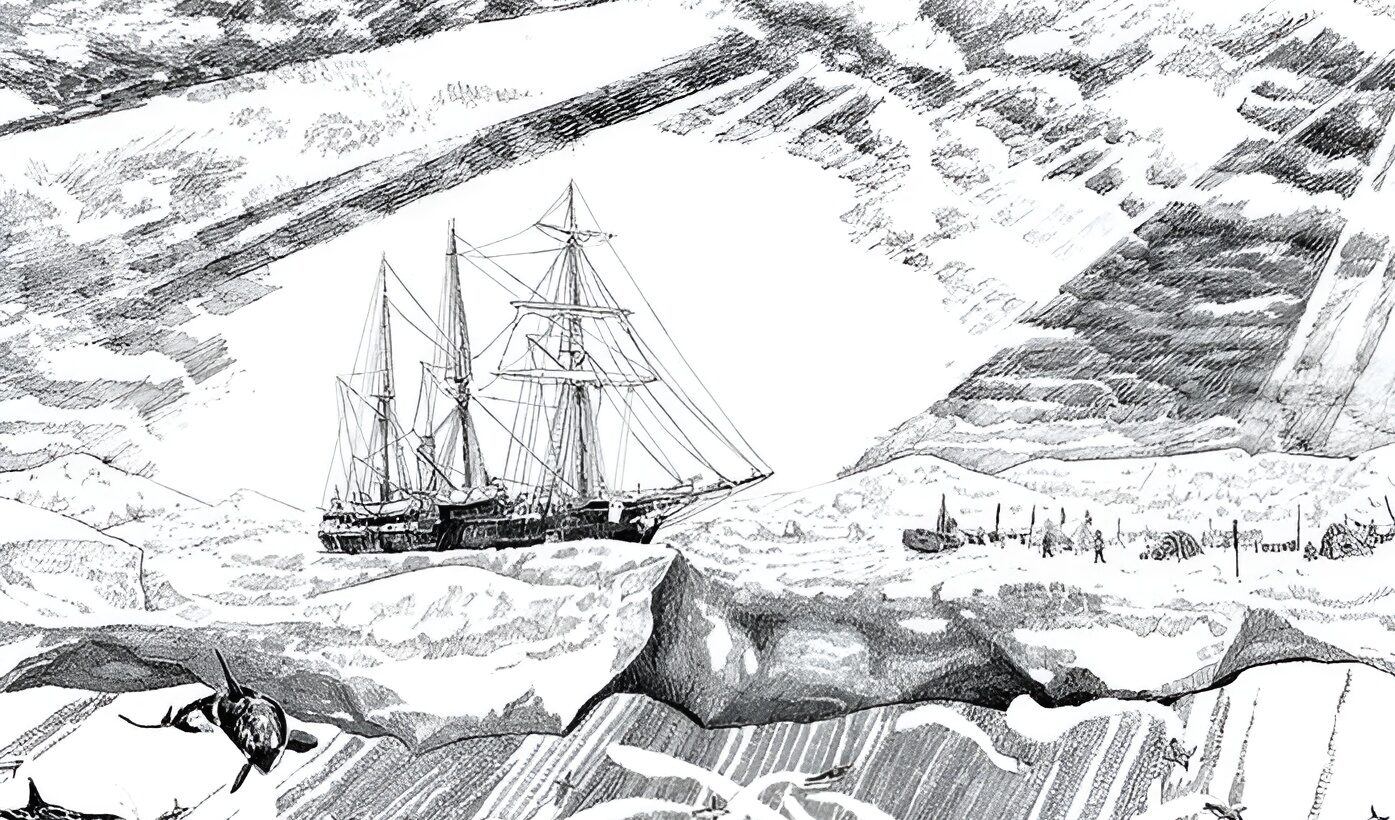
The discovery was made during the Weddell Sea Expedition 2019, which had two aims: to conduct interdisciplinary science and to locate the Endurance, which sank in 1915. The 2019 search for the ship failed due to thick multi-year pack ice. However, the experience gained assisted the subsequent Endurance22 expedition, which successfully located the wreck in March 2022 at 3,008 metres below sea level.
The nests belong to a rockcod species known as the yellowfin notie (Lindbergichthys nudifrons). Each nest would have been guarded by a parent fish protecting its eggs. Researchers believe the organised patterns are a survival strategy demonstrating the ‘selfish herd’ theory, where individuals in the centre of the group gain protection. Solitary nests on the outskirts are thought to be occupied by larger, stronger individuals.
This find provides evidence of a Vulnerable Marine Ecosystem (VME), a unique and fragile habitat. It builds on previous work, such as a 2022 study that revealed one of the largest known fish breeding colonies on Earth, and supports the formal designation of the Weddell Sea as a Marine Protected Area.



