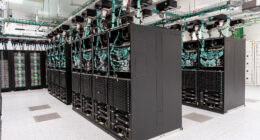

The microchip era faces obsolescence as wafer-scale integration technology promises to shrink vast energy-hogging data centres into boxes, eliminating the need for individual processors and bypassing current physical limitations on chip size.
“We are in the microchip era, which promises an industrial revolution that will bring artificial intelligence to almost all human activity,” writes George Gilder, author of Life After Capitalism: The Information Theory of Economics, in the Wall Street Journal.
The reticle limit, roughly 800 square millimetres or 1.25 square inches, prevents further chip miniaturisation and drives mounting complexity in hyperscale data centres. The reticle defines the maximum size of chips, determining how many graphics processing units must be linked to perform AI tasks.
Nvidia currently exemplifies the microchip era, with a market capitalisation of around $5 trillion, making it the world’s most valuable company. The company’s latest chips hold as many as 208 billion transistor switches and cost about $30,000. Colossus 2 in Memphis, Tennessee, integrates an estimated one million Nvidia chips in one vast computer serving as the engine for Elon Musk’s xAI.
However, wafer-scale integration bypasses chips altogether by inscribing circuits directly onto silicon wafers. Cerebras, based in Palo Alto, California, utilised the concept in its WSE-3 wafer-scale engine, which boasts approximately 4 trillion transistors, 14 times as many as Nvidia’s Blackwell chip, with 7,000 times the memory bandwidth. The company stacked its wafer-scale engines 16 times, reducing a data centre to a small box with 64 trillion transistors.
Microchips with legs
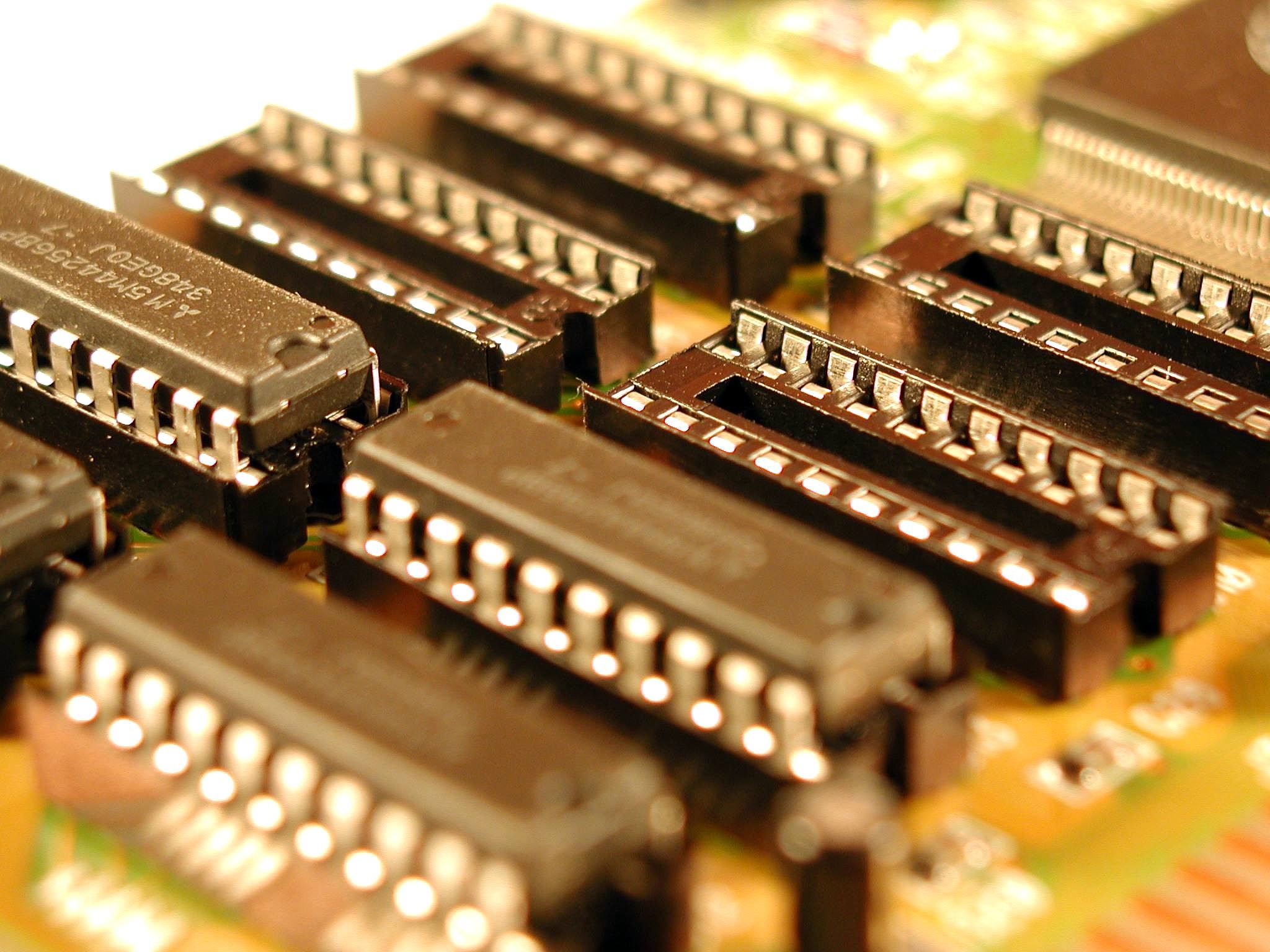
“The ‘chip’ has so captivated the minds of our time that even makers of new devices call its potential successor a ‘giant chip’ or ‘superchip,'” Gilder writes. “But the new device is in fact the opposite of a microchip, lacking separate processing units or memories in plastic packages with wire ‘legs.'”
The technology eliminates the need for complex packaging, wires and fibre-optic links between separate chips. Calculations no longer need to be dispersed across multiple chips and then recompiled, reducing communication overhead.
David Lam, founder of Lam Research Corp., the world’s third-largest wafer-fabrication equipment company, founded Multibeam Corp. in 2010, which created a machine that performs multi-column e-beam lithography. The technology allows manufacturers to bypass the reticle limit, with Multibeam already demonstrating the capability to inscribe 8-inch wafers.
The shift comes as US industrial policies face challenges. The 2022 Chips Act authorised more than $200 billion to support chip fabrication in the US and restrict access to China. However, by cutting off the Chinese chip market, which contains the majority of semiconductor engineers, these policies have hampered American producers of wafer-fabrication equipment. Chinese semiconductor capital equipment production has risen by 30 per cent to 40 per cent annually since 2020, compared with annual growth of about 10 per cent in the US.
“The post-microchip era, with data centres in a box of wafer-scale processors, is coming,” Gilder writes. “America, not China, should lead the way.”